

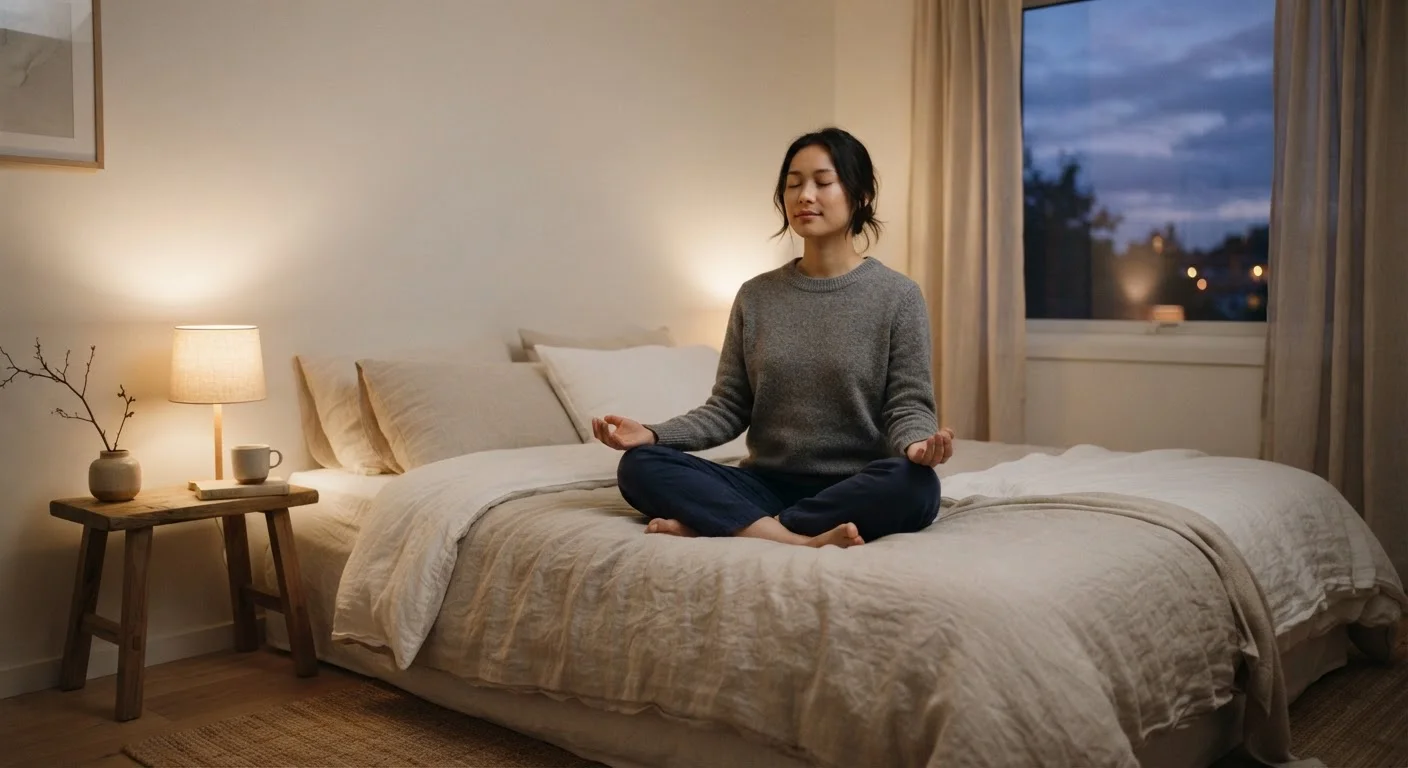
Why Sleep and the Mind Are So Closely Linked
Poor sleep rarely exists in isolation. Racing thoughts, unresolved stress, and chronic low-grade worry are among the most commonly reported barriers to falling and staying asleep. This is why interventions that target mental activity — rather than only physical sleep hygiene — have attracted growing scientific interest.
The brain's arousal systems don't have a simple off switch. Rumination, anticipatory anxiety, and emotional processing can keep those systems active long after the body is physically tired. Meditation, in its many forms, trains the practitioner to observe mental activity without being driven by it — a skill that may carry real value at the boundary between wakefulness and sleep.
For a broader look at lifestyle factors that influence rest, see the Sleep & Recovery hub and its companion mental wellness sleep resources.
What the Research Suggests
The evidence base for meditation and sleep is promising but should be understood in context. Multiple systematic reviews — including a widely cited 2015 JAMA Internal Medicine analysis by Black and colleagues — found that mindfulness meditation programs produced moderate improvements in insomnia symptoms, sleep quality, and daytime fatigue compared to control conditions. Effect sizes are generally small to moderate rather than dramatic.
Most well-designed studies use structured programs such as Mindfulness-Based Stress Reduction (MBSR) or Mindfulness-Based Cognitive Therapy (MBCT), delivered over six to eight weeks. Shorter, self-guided app-based interventions show more mixed results, though some positive signals exist.
Moderate
Effect size for mindfulness on insomnia symptoms
A 2015 JAMA Internal Medicine meta-analysis found mindfulness meditation programs produced moderate improvements in insomnia, sleep quality, and fatigue compared to controls.
6–8 weeks
Typical program length in positive-outcome studies
Most clinical trials reporting meaningful sleep benefits used structured mindfulness programs delivered over six to eight weeks of regular practice.
~40%
US adults reporting insufficient sleep
CDC population surveys consistently estimate that roughly 1 in 3 American adults report sleeping fewer than the recommended seven hours per night.
It is important to distinguish this emerging research from established medical consensus. Meditation is not a first-line clinical treatment for diagnosed sleep disorders such as chronic insomnia disorder — that role belongs to Cognitive Behavioral Therapy for Insomnia (CBT-I). However, meditation may complement evidence-based approaches and support overall sleep hygiene. For a comparison of relaxation methods, explore meditation versus progressive muscle relaxation for pre-sleep calm.
How Consistent Practice May Change Sleep Over Time
The keyword here is consistent. Single sessions of meditation can produce measurable reductions in heart rate and cortisol reactivity, but structural changes in how you sleep — reduced sleep onset latency, fewer nighttime awakenings, more time in slow-wave or restorative sleep — appear to emerge from sustained, regular practice over weeks.
Physiologically, regular meditators tend to show lower baseline sympathetic nervous system activity. This matters for sleep because the transition from wakefulness to sleep requires the parasympathetic nervous system to take the lead. Practitioners who have built this regulatory capacity may find that transition smoother.
Build the Habit Before Optimizing the Technique
In the early weeks, consistency matters more than perfect form. A simple five-minute breath-awareness practice done every evening will likely produce more sleep benefit over time than a sophisticated technique practiced sporadically. Set a fixed time, keep it brief, and let regularity do the work.
Behaviorally, a consistent pre-sleep meditation ritual also functions as a reliable sleep cue — a signal to the brain that wind-down is beginning. This is consistent with general sleep hygiene principles. See sleep hygiene habits that actually make a difference for additional context.
If you're early in your practice and sessions feel difficult, that's normal. Understanding why meditation sessions sometimes feel worse before they improve can help you persist through the adjustment period.
Practical Starting Points for a Sleep-Supportive Practice
You don't need an elaborate setup to begin. A quiet space, a consistent time, and a chosen technique are the core requirements. Three approaches have the most research support for sleep-related outcomes:
- Body scan meditation: A slow, systematic attention sweep from head to feet, releasing held tension in each region. Particularly effective practiced lying down before sleep.
- Breath-focused mindfulness: Anchoring attention on the natural rhythm of breathing, gently returning when the mind wanders. Builds the mental de-arousal capacity most relevant to sleep onset.
- Yoga nidra (yogic sleep): A guided progressive relaxation technique that systematically moves through physical, mental, and emotional layers. Often practiced in Savasana (lying flat) and may induce states described as the threshold between waking and sleep.
Even ten to fifteen minutes of consistent daily practice is a reasonable starting point. As you build the habit, you may notice other markers of progress beyond sleep — steadier moods, better stress tolerance, and improved body awareness. Learn more about signs your mind-body practice is actually working.
Diet also interacts with sleep quality. Combining a meditation practice with mindful eating patterns may offer complementary benefits — see the role of diet in sleep quality for details. Similarly, sleep itself has downstream effects on immunity, explored in sleep and immune function.
This article is for general informational and educational purposes only and does not constitute medical advice. If you are experiencing persistent sleep difficulties, please consult a qualified healthcare professional.
Frequently Asked Questions
Most studies reporting sleep improvements used programs lasting four to eight weeks of daily or near-daily practice. Individual responses vary considerably. Some people notice subtle changes in sleep ease within the first two weeks, while for others benefits accumulate more slowly.
No single style has been proven definitively superior. Body scan meditation, breath-focused mindfulness, and yoga nidra are frequently studied and reported as helpful for pre-sleep relaxation. The most effective style is generally the one you will practice consistently.
No. Meditation is a general wellness practice, not a medical treatment. Anyone considering changing or stopping prescribed sleep medication should discuss this with their prescribing physician before making any adjustments.
Both timings offer benefits. Morning meditation can set a calmer baseline for the day, while evening practice may directly ease the transition into sleep by lowering physiological arousal. Experimenting with both can help you find what fits your routine.
Temporary increases in restlessness or surfacing emotions are common early in a meditation practice. This often normalizes with continued, gentle practice. If anxiety feels significant or persistent, speaking with a mental health professional is advisable.
The content on this site is for informational purposes only and is not a substitute for professional advice. Always consult a qualified professional for guidance specific to your situation.