

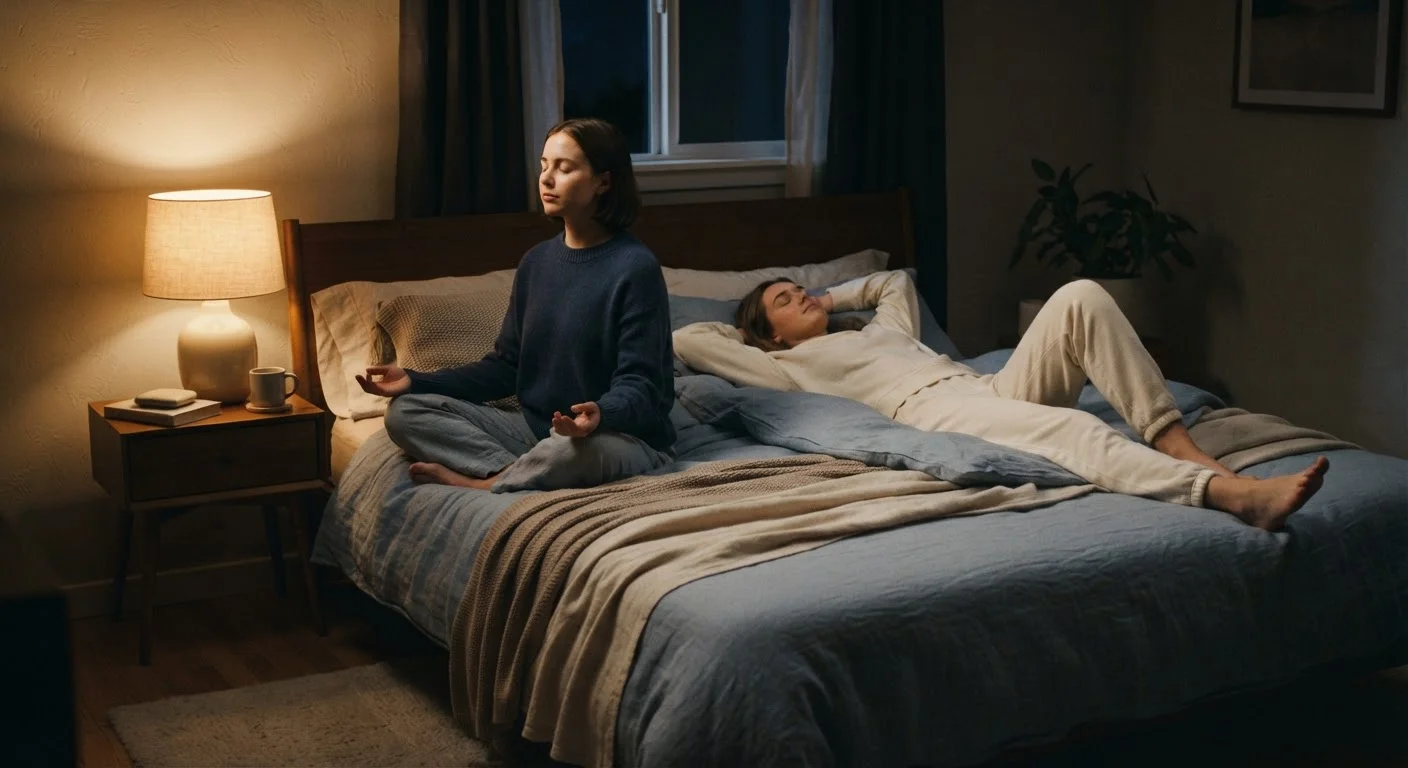
Option A
Meditation (Mindfulness-Based)
The mind-centered approach to pre-sleep stillness.
Best for: People who want to quiet mental chatter and cultivate a non-reactive awareness before bed.
Option B
Progressive Muscle Relaxation (PMR)
The body-first technique for releasing physical tension.
Best for: People who carry stress physically — tight muscles, tension headaches, or a restless body at bedtime.
What Each Practice Actually Involves
Understanding how these two methods work mechanically is the clearest starting point for choosing between them.
Mindfulness-based meditation for sleep typically involves directing attention — usually to the breath, body sensations, or a guided visualization — and noticing when the mind wanders without judgment. The goal is not to force sleep but to create the mental conditions in which sleep can naturally arise. Common formats include breath-focused meditation, body scan meditation, and guided sleep meditations available through apps or audio recordings.
Progressive Muscle Relaxation (PMR) is a structured technique developed by physician Edmund Jacobson in the early 20th century. It involves deliberately tensing specific muscle groups for several seconds, then fully releasing that tension, working systematically through the body — often from feet to face or face to feet. The contrast between tension and release trains the body to recognize and deepen its resting state. A full PMR session typically takes 15–25 minutes.
For a broader look at how these practices compare in everyday stress contexts, see our comparison of mindfulness meditation and PMR for everyday stress.
What the Research Shows
Both approaches have a meaningful evidence base, though the quality and focus of the research differs somewhat.
| Criterion | Meditation | Progressive Muscle Relaxation |
|---|---|---|
| Primary target | Mental activity and cognitive arousal | Physical muscle tension |
| Technique | Breath focus, body scan, or visualization | Sequential tense-and-release of muscle groups |
| Session length | 5–30 minutes (flexible) | 15–25 minutes (structured) |
| Learning curve | Moderate; benefits build over weeks | Low; noticeable effect often in first session |
| Evidence for sleep | Strong; reduces pre-sleep rumination | Strong; component of CBT-I protocol |
| Physical requirements | Minimal; adaptable to any position | Requires ability to contract muscles safely |
| Best entry point | Guided app or audio recording | Written script or audio guide |
Meditation: A 2015 randomized controlled trial published in JAMA Internal Medicine found that mindfulness meditation improved sleep quality in older adults with moderate sleep disturbance significantly more than sleep hygiene education. Research also suggests mindfulness may reduce pre-sleep cognitive arousal — the mental spinning that delays sleep onset. Consistent meditation practice may also influence sleep architecture over time, potentially increasing slow-wave sleep.
PMR: Multiple studies and clinical reviews support PMR's effectiveness for reducing sleep-onset latency (the time it takes to fall asleep) and improving subjective sleep quality, particularly in populations with anxiety or chronic pain. PMR is also a core component of Cognitive Behavioral Therapy for Insomnia (CBT-I), widely regarded as the first-line, evidence-based treatment for chronic insomnia.
~55%
Reduction in insomnia severity with CBT-I (which includes PMR)
A meta-analysis in Sleep Medicine Reviews found CBT-I, which incorporates PMR, reduced insomnia severity scores by roughly 55% on average.
~43%
Improvement in sleep quality scores with mindfulness meditation
A 2015 JAMA Internal Medicine RCT reported significant improvements in sleep quality among older adults practicing mindfulness meditation compared to controls.
It is important to note that most sleep studies involve relatively small samples and self-reported outcomes. Neither method is a guaranteed cure, and individual responses vary considerably.
This article is for informational purposes only and does not constitute medical advice. If you are experiencing persistent sleep difficulties, please consult a qualified healthcare professional.
Practical Differences: Time, Skill, and Accessibility
Knowing the evidence is only part of the picture. How each practice fits into real life matters just as much.
Special Populations: A Note of Caution
Individuals with post-traumatic stress disorder (PTSD), panic disorder, or certain anxiety conditions may find body-focused techniques — including both PMR and body scan meditation — activating rather than calming. If you have a diagnosed mental health condition, please discuss relaxation practice options with your therapist or healthcare provider before starting a new routine. Pregnant individuals and those with cardiovascular conditions should also seek professional guidance.
Learning curve: PMR is typically easier to learn from a written or audio guide because it follows a predictable physical sequence. Many people feel a noticeable relaxation response in their first or second session. Meditation, by contrast, can feel frustrating early on — mind-wandering is universal, and the sense of "not doing it right" is a common barrier. The benefits of meditation often compound gradually over weeks of consistent practice.
Physical considerations: PMR requires the ability to tense and release muscle groups, which may be uncomfortable for people with muscle injuries, chronic pain conditions, or certain neuromuscular disorders. In these cases, a gentler body-scan meditation may be preferable. Meditation, meanwhile, can be practiced lying down, making it highly adaptable for people who find seated positions uncomfortable at bedtime.
Combining both: The two approaches are not mutually exclusive. Some clinicians and sleep specialists recommend beginning with PMR to release physical tension, then transitioning into a brief breath-awareness meditation to settle the mind. This layered approach addresses both dimensions of pre-sleep arousal — somatic and cognitive.
The content on this site is for informational purposes only and is not a substitute for professional advice. Always consult a qualified professional for guidance specific to your situation.