

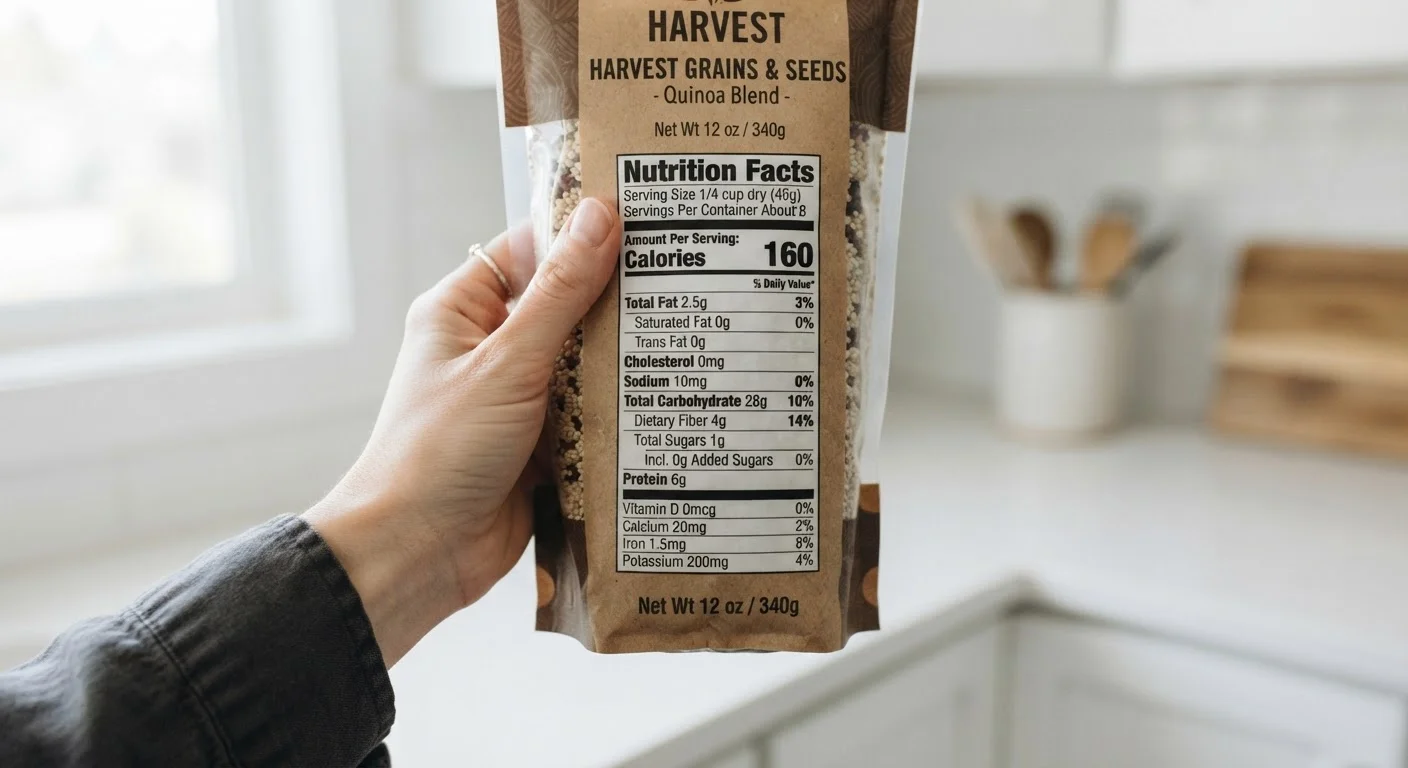
Why Nutrition Labels Are Worth the Effort
The Nutrition Facts label is one of the most information-dense tools available to everyday consumers, yet most people glance at it and move on. Part of the challenge is format: a compact panel packed with grams, percentages, and micronutrient names doesn't immediately translate into practical guidance. Understanding the underlying structure changes that.
The FDA updated the mandatory label format in recent years to better reflect current nutritional science — including the separation of added sugars from total sugars and an expanded list of required vitamins and minerals. These changes make the label more useful, but only if you know how to read them.
Nutrition labels are a starting point for informed food choices, not a rigid scorecard. The goal is to build a mental framework that makes comparisons faster and more meaningful — across products and across your overall dietary pattern. For definitions of key dietary terms referenced throughout this process, the Natural Diet Plans reference glossary is a useful companion resource.
Nutrition Facts Label
The FDA-mandated panel on packaged foods that discloses nutrient content per serving.
Ingredient List
Reveals all ingredients in descending order by weight, helping assess food quality and processing level.
Smartphone or notepad
Useful for comparing labels across products or tracking key nutrients while shopping.
What you will need
Step-by-Step: Decoding the Label
Follow the steps below using any packaged food product with a standard Nutrition Facts panel. Working through a real label while reading makes the process faster to internalise.
Locate and understand the serving size
The serving size sits at the very top of every Nutrition Facts label for a reason: every single number below it is calculated based on that amount. Serving sizes are standardised by the FDA to reflect amounts people typically consume, but they may not match what you actually eat in one sitting.
Check both the serving size and the number of servings per container. A small bag of chips labelled as containing 2.5 servings means all nutrient values must be multiplied by 2.5 if you eat the whole bag.
Interpret calories in context
Calories represent the total energy provided per serving. The FDA's general guidance uses 2,000 calories per day as a reference, though individual needs vary based on age, sex, body size, and activity level.
Rather than fixating on calorie counts in isolation, use them alongside the nutrient breakdown to judge whether a food delivers meaningful nutrition relative to its energy content — a concept sometimes called nutrient density.
Use % Daily Value as your quick guide
The % Daily Value (%DV) column is one of the label's most practical tools. It shows how much of a nutrient one serving contributes toward a daily reference intake. The FDA's rule of thumb: 5% DV or less is considered low; 20% DV or more is considered high.
Use %DV to quickly identify foods that are high in nutrients you want to seek out — such as fibre, calcium, and potassium — and to flag foods that are high in nutrients most people benefit from limiting, such as saturated fat, added sugars, and sodium.
Distinguish total sugars from added sugars
Total sugars include naturally occurring sugars (from fruit, dairy, or vegetables) as well as sugars added during processing. The added sugars line, introduced in updated FDA label requirements, isolates only those sugars that manufacturers have incorporated — syrups, cane sugar, honey, and their many equivalents.
Dietary guidelines recommend keeping added sugar to less than 10% of total daily calories. Foods with high added sugars relative to total calories offer limited nutritional value beyond energy.
Evaluate fats with nuance
The fat section lists total fat, then breaks it down into saturated fat, trans fat, and sometimes monounsaturated and polyunsaturated fats. Current dietary science distinguishes clearly between these types.
Saturated fats are worth monitoring — most health authorities recommend limiting them. Industrially produced trans fats are strongly linked to cardiovascular risk and are largely phased out of the US food supply, but checking for partial hydrogenation in the ingredient list remains prudent. Unsaturated fats from whole-food sources support heart and brain health.
Check the ingredient list for the full picture
Ingredients are listed in descending order by weight, meaning the first few items dominate the product's composition. A whole grain, legume, or vegetable appearing first signals a more nutrient-rich foundation. Conversely, added sugars or refined flours near the top of a long list are informative signals about processing level.
For a deeper look at how ingredient labels work across different product categories — including herbal supplements — see how to read a label thoughtfully. To understand where packaged foods sit on the broader food quality spectrum, the whole foods vs. processed foods guide offers useful framing.
Once you're comfortable reading individual labels, the next step is applying that knowledge at the shopping level — the nutrient-rich grocery list framework offers a structured approach for translating label literacy into a practical weekly shop.
This article is for general informational and educational purposes only and does not constitute medical or nutritional advice. Individual dietary needs vary. Please consult a qualified healthcare professional or registered dietitian before making significant changes to your diet, particularly if you have an existing health condition.
The content on this site is for informational purposes only and is not a substitute for professional advice. Always consult a qualified professional for guidance specific to your situation.