

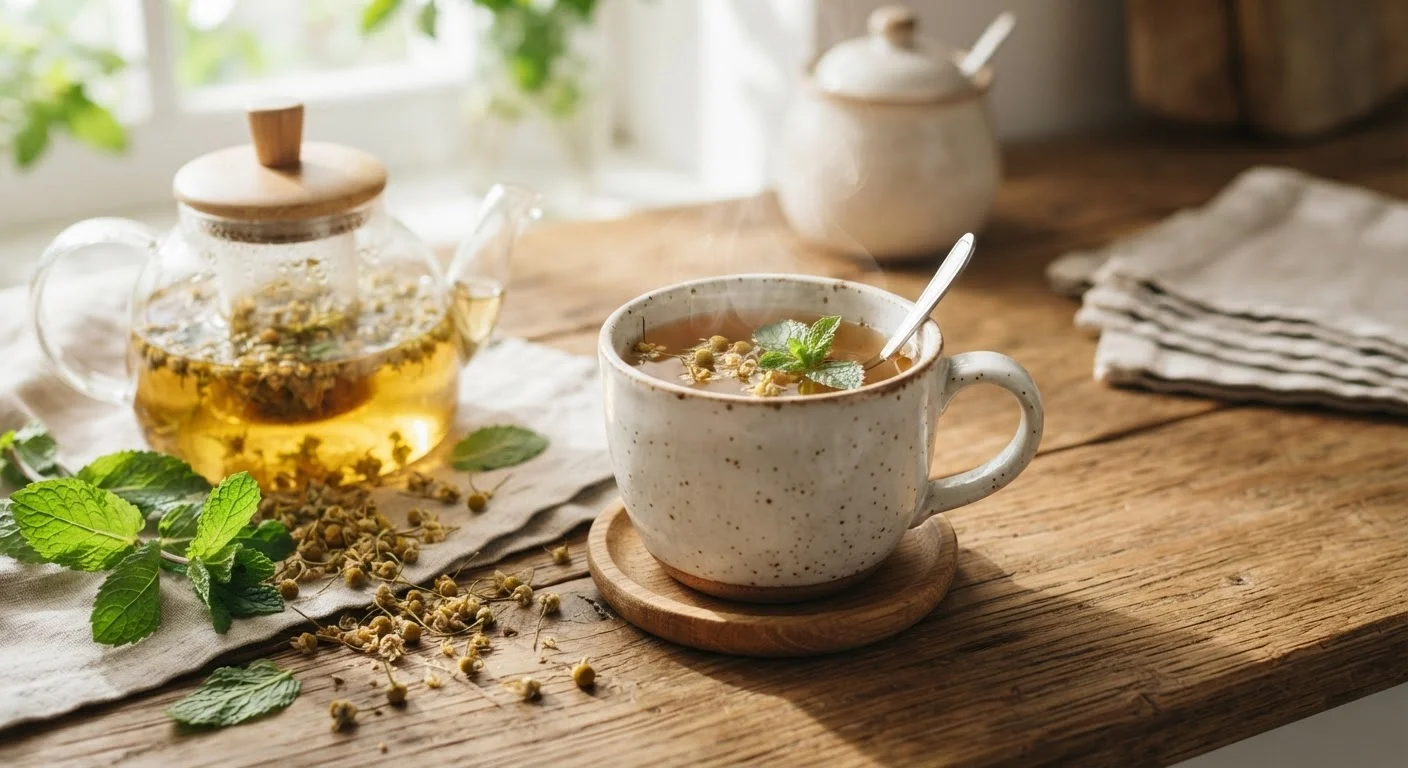
Understanding What an Herbal Infusion Actually Is
An herbal infusion is the simplest form of water-based herbal preparation: hot water poured over plant material and allowed to steep. It is distinct from a decoction — the method used for tougher plant parts like roots, bark, and seeds, which require sustained simmering to release their constituents. Infusions are best suited to aerial parts of the plant: leaves, flowers, and some soft stems.
The water acts as a solvent, drawing out water-soluble compounds including flavonoids, volatile oils, mucilages, and certain tannins. Which compounds are extracted — and in what quantities — depends heavily on water temperature, steeping time, herb-to-water ratio, and whether the vessel is covered. Understanding these variables is why preparation quality matters. For a broader look at how preparation choices affect what you actually consume, see how preparation method shapes what you get from an herb.
Herbal infusions sit within the broader landscape of home remedies — straightforward, accessible preparations that have been used across cultures for centuries. Their appeal lies in simplicity, but that simplicity does not mean they are without nuance or risk. If you are new to this practice, a grounded introduction to herbal wellness is a useful starting point before you begin.
Consult a Professional Before Starting
Herbal infusions are not a substitute for medical treatment. Some herbs interact with medications or are contraindicated in pregnancy, breastfeeding, or certain health conditions. If you are managing a health condition, pregnant, or giving herbs to children, speak with a qualified healthcare provider before use. This guide is general educational information, not personal medical advice.
Choosing the Right Herbs and Equipment
For beginners, three widely studied and relatively well-tolerated herbs make sensible starting choices:
- Chamomile — traditionally used for relaxation and mild digestive discomfort; supported by a modest body of clinical research, though evidence remains preliminary in many areas.
- Peppermint — commonly used for digestive support; some research supports its use for symptoms of indigestion, though individual responses vary.
- Lemon balm — traditionally associated with mild calming effects; early-stage research suggests possible benefits for stress and sleep, though larger trials are still needed.
Source herbs from suppliers who clearly label botanical names and country of origin, and who ideally provide quality testing information. Herb quality varies considerably, and preparation errors are a common reason infusions underperform — a pattern explored in why home remedies sometimes don't work as expected.
Kettle or saucepan
Used to heat water to the appropriate temperature for steeping.
Kitchen thermometer
Helps verify water temperature, especially critical for delicate herbs that require sub-boiling heat.
Ceramic or glass mug (8–12 oz)
Holds the infusion during steeping; non-reactive materials preserve flavour and integrity.
Fine mesh strainer or tea infuser
Filters plant material from the finished liquid before drinking.
Dried or fresh herbs
The core ingredient — choose high-quality, correctly identified plant material.
Small saucer or lid
Covers the mug during steeping to retain volatile aromatic compounds.
Identify Herbs Carefully Before Use
Always source herbs from a reputable supplier and confirm accurate identification before preparing any infusion. Misidentified herbs can pose serious health risks. If you are foraging or using unfamiliar plant material, seek expert guidance before proceeding.
Step-by-Step Preparation
Follow the steps below to prepare a well-extracted, properly handled herbal infusion. Each variable — temperature, time, and vessel coverage — plays a distinct role in the final result.
What you will need
Select and measure your herbs
Choose a single herb or a simple combination appropriate for your wellness goal. Common beginner-friendly options include chamomile (Matricaria chamomilla) for its traditionally calming properties, peppermint (Mentha × piperita) for digestive support, or lemon balm (Melissa officinalis) for mild relaxation. For dried herbs, a general starting point is 1–2 teaspoons per 8 oz of water. For fresh herbs, roughly double that quantity, as fresh plant material contains more water and less concentrated compounds.
Heat water to the correct temperature
Temperature is one of the most consequential variables in herbal preparation. Delicate aerial parts — leaves and flowers — generally respond best to water between 190°F and 205°F (88°C–96°C), just below a full boil. Boiling water (212°F / 100°C) can degrade certain heat-sensitive compounds and increase bitterness in some herbs. If you do not have a thermometer, bring water to a full boil, then allow it to rest for 60–90 seconds before pouring.
Place herbs in your mug or infuser
Add your measured herbs directly into a fine mesh infuser basket or place them loose in your mug. If using loose herbs, you will strain them after steeping. Pre-warming the mug by swirling a small amount of hot water in it and discarding is optional but helps maintain a more consistent steeping temperature throughout the process.
Pour hot water and cover immediately
Pour your heated water slowly over the herbs, ensuring all plant material is submerged. Immediately cover the mug with a saucer or small lid. This step is especially important for aromatic herbs, where volatile oils — key carriers of both fragrance and many bioactive properties — can escape in steam if left uncovered.
Steep for the appropriate duration
Steeping time varies by herb. A practical general range for leaf-and-flower infusions is 5–15 minutes. Chamomile and lemon balm typically perform well at 5–10 minutes. Peppermint can stand up to 10–15 minutes. Steeping too briefly under-extracts active constituents; steeping too long often increases tannin extraction, producing an overly astringent taste. Follow guidance specific to the herb you have chosen, and adjust based on your experience and taste preference.
Strain and serve
Remove the infuser basket or pour the liquid through a fine mesh strainer into a clean mug, discarding the spent plant material. Allow the infusion to cool slightly before drinking to a comfortable temperature. Herbal infusions are typically consumed plain, though a small amount of raw honey may be added if desired. Drink the infusion while fresh; prepared infusions are generally best consumed within a few hours and should be stored covered in the refrigerator if kept longer than that.
Cover Your Mug While Steeping
Placing a small saucer or lid over your mug during steeping traps steam and preserves delicate volatile oils — particularly important for aromatic herbs like peppermint and chamomile. These compounds contribute significantly to both aroma and potential therapeutic value.
For guidance on storing any unused infusion safely, or on understanding appropriate frequency of use, refer to our overview of safe preparation and storage principles for home remedies.
This article is for general informational and educational purposes only and does not constitute medical advice. Always consult a qualified healthcare professional before using herbal preparations, particularly if you have an existing health condition, take medications, are pregnant, or are preparing infusions for children or elderly individuals.
The content on this site is for informational purposes only and is not a substitute for professional advice. Always consult a qualified professional for guidance specific to your situation.