

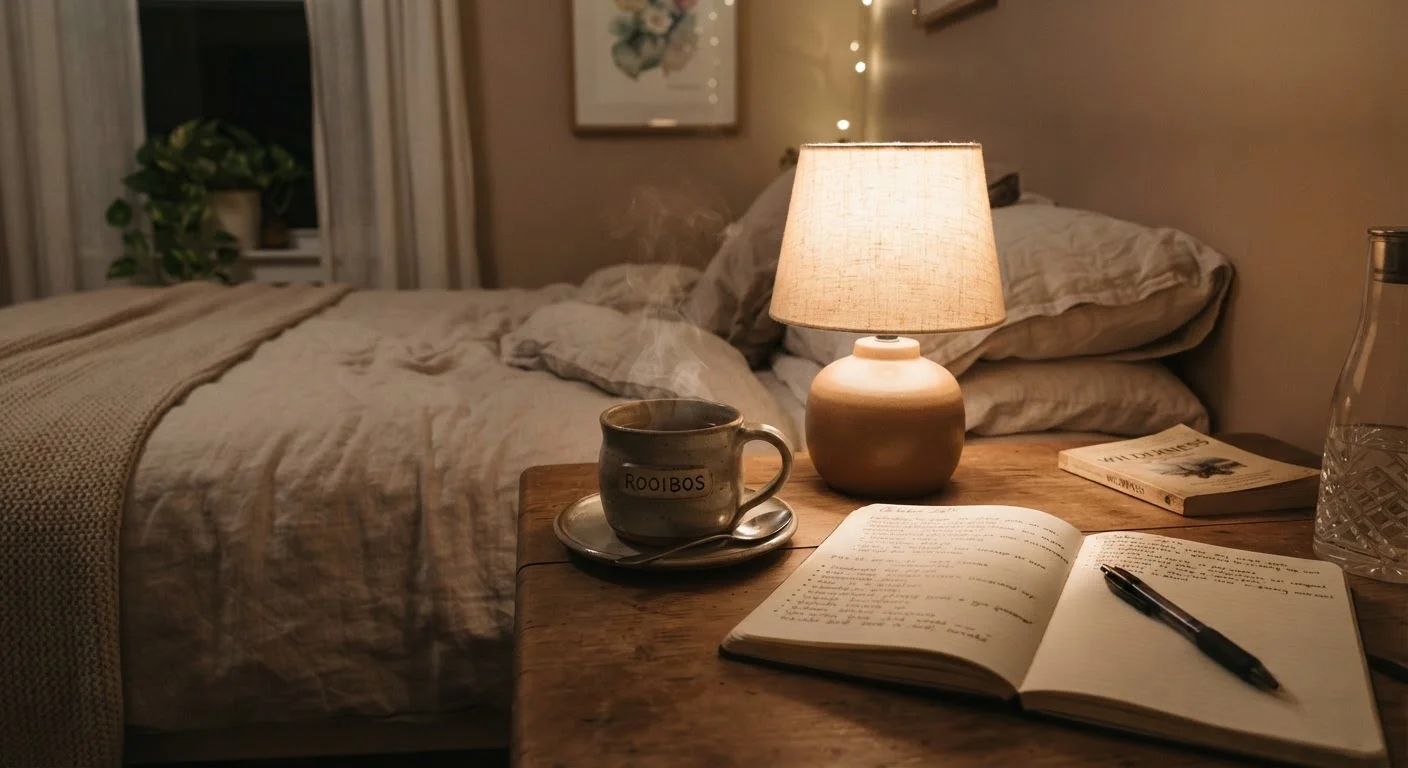
Why Your Evening Hours Shape Sleep Quality
The quality of your sleep isn't determined at the moment your head hits the pillow — it's shaped by the 60 to 90 minutes beforehand. During this window, your body begins its biological transition toward rest: core temperature drops slightly, melatonin rises, and the nervous system gradually downshifts from the alertness of the day. Disrupting that transition with bright screens, stimulating conversations, or late-night work sends conflicting signals and delays the onset of deeper sleep stages.
Understanding this process matters because sleep isn't merely passive rest — it's when the brain consolidates memory, regulates emotion, and clears metabolic waste. Chronically disrupted sleep is associated with elevated stress hormones, increased anxiety sensitivity, and reduced cognitive resilience. In short, how you wind down directly influences how you show up the next day.
See why your evening routine may be the most influential window in your day for a deeper look at the science behind this critical period.
Evidence-Informed Evening Practices Worth Adopting
The following practices are grounded in sleep research, circadian biology, and behavioral health — not wellness trends. While individual responses vary, these approaches have the most consistent support for promoting natural sleep onset and sleep quality.
Dim artificial lights and avoid blue-light-emitting screens for at least 60 minutes before bed.
Blue-spectrum light suppresses melatonin production, effectively tricking the brain into thinking it's still daytime. Reducing light exposure during the pre-sleep window allows melatonin to rise naturally, supporting earlier and easier sleep onset.
Keep your bedroom cool, dark, and quiet as your sleep environment.
Core body temperature naturally drops as part of sleep initiation. A cooler room — generally between 65–68°F (18–20°C) is commonly cited in sleep research — supports this process. Darkness and reduced noise prevent micro-arousals that fragment sleep architecture.
Incorporate a brief mental decompression practice — such as journaling or a body-scan breathing exercise — as a nightly ritual.
Unprocessed thoughts and unresolved worries activate the brain's threat-detection system, making it hard to transition into a relaxed state. Externalizing concerns through writing or deliberately shifting attention to the body via breath-focused techniques interrupts this arousal loop.
Avoid caffeine after early afternoon and limit alcohol in the hours before sleep.
Caffeine's half-life means it can remain active in your system for six or more hours, delaying sleep onset and reducing slow-wave sleep. While alcohol may induce initial drowsiness, it disrupts REM sleep in the second half of the night, leaving people feeling unrestored.
Finish vigorous exercise at least two to three hours before your target bedtime.
Intense physical activity raises core body temperature and stimulates the sympathetic nervous system — responses that are helpful during the day but counterproductive at night. Gentle movement such as yoga or walking, however, can be beneficial in the evening.
Herbal and Nutritional Support: What the Research Actually Shows
Certain plant-based teas and botanicals have been studied for their potential to support relaxation and sleep. Chamomile contains apigenin, a compound that binds to receptors associated with calming effects. Passionflower and lemon balm have been explored in small studies for their mild anxiolytic properties. Magnesium-rich foods in the evening — such as pumpkin seeds, leafy greens, or a small handful of almonds — may support muscle relaxation and sleep architecture.
It's worth being honest about what the evidence currently supports: most herbal sleep studies are small, short-term, and use standardized extracts that differ from typical grocery-store teas. These approaches are generally considered low-risk for healthy adults, but they are not replacements for consistent behavioral habits — and anyone with a health condition, pregnancy, or who takes medications should consult a healthcare provider before adding supplements or herbal preparations to their routine.
For a thorough breakdown of what's been studied, explore the research on herbs most commonly linked to sleep support.
A Note on Supplements and Individual Variation
Herbal preparations and sleep supplements — including melatonin — are not regulated as strictly as medications in the United States, meaning potency and purity can vary between products. Response to these preparations also varies significantly between individuals. If you have an existing health condition, are pregnant or nursing, or take prescription medications, consult a healthcare provider before adding any supplement to your routine.
Building Consistency: The Foundation Everything Else Rests On
No single evening ritual compensates for erratic sleep schedules. The human circadian rhythm — your internal biological clock — is synchronized primarily by light exposure and consistent timing. Going to bed and waking at roughly the same times each day, even on weekends, strengthens this rhythm in ways that directly improve both sleep onset speed and slow-wave (deep) sleep duration.
Think of your evening ritual not as a checklist of techniques, but as a repeatable signal to your nervous system. The more consistently you run through the same sequence — dimming lights, stepping away from screens, brewing a calming tea, doing a few minutes of breathing — the more effectively your brain learns to associate those cues with sleep. Over time, the ritual itself begins to induce drowsiness.
Building a wind-down routine that prepares your mind for rest offers practical guidance on designing a sequence that fits your life and schedule. And if you're evaluating which habits are worth your time, these evidence-informed sleep hygiene habits are the ones most consistently linked to measurable improvement.
This article is for general informational and educational purposes only and does not constitute medical advice. If you are experiencing persistent sleep difficulties or related health concerns, please consult a qualified healthcare professional.
The content on this site is for informational purposes only and is not a substitute for professional advice. Always consult a qualified professional for guidance specific to your situation.