

Summary
22 items · 20–40 minutes
Why a Checklist Approach Works for Home Fitness
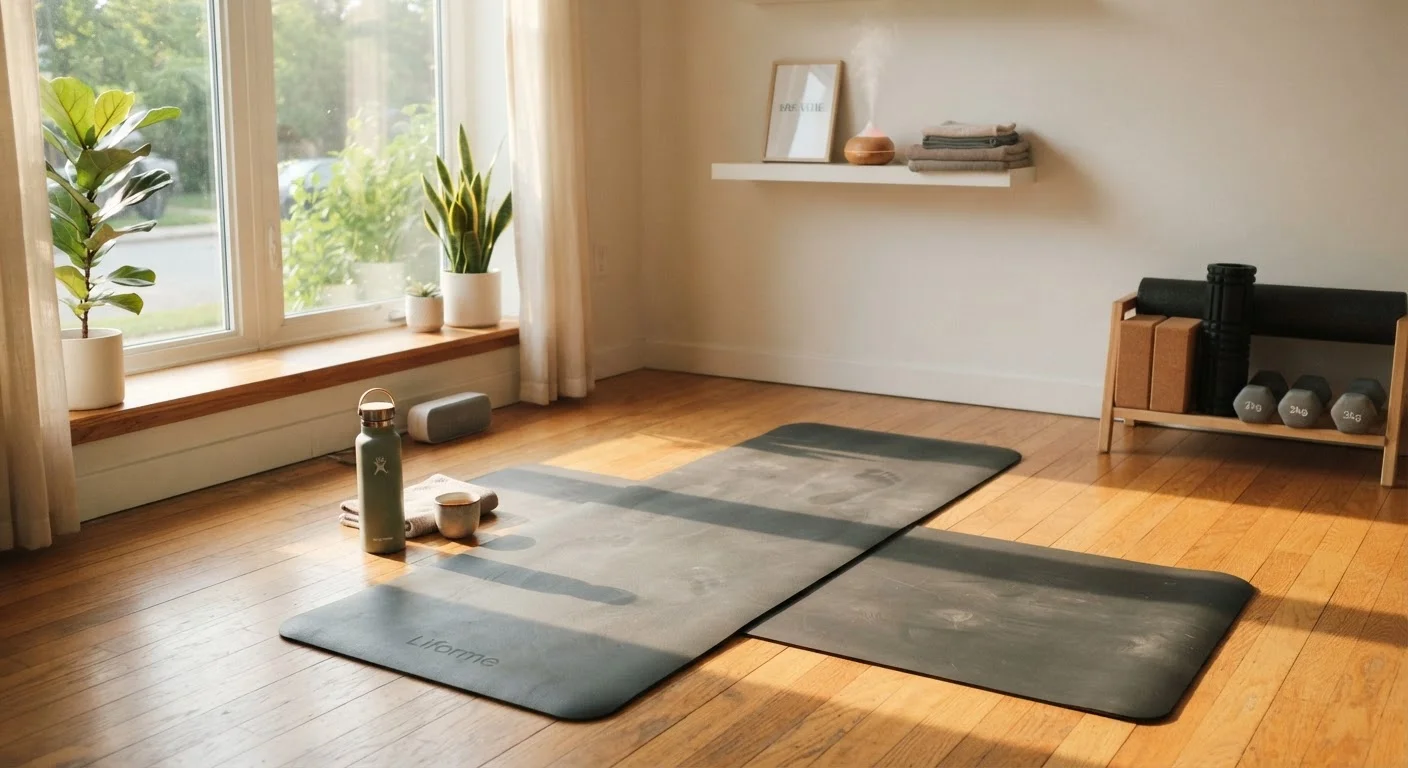
Starting a home fitness routine sounds simple — until you're staring at an empty living room at 7 a.m., unsure where to begin. The gap between intention and action is often filled with small, solvable problems: a cluttered space, no clear schedule, or no system for tracking progress. A structured checklist eliminates that friction before it has a chance to derail you.
This checklist covers three interdependent pillars — space, schedule, and consistency — because neglecting any one of them undermines the others. Use it as a one-time audit when you're starting out, or return to it periodically to troubleshoot why sessions have been slipping. For a broader foundation, see The Complete Guide to Home-Based Fitness for Long-Term Health, which covers training principles and recovery in depth.
Setting Up Your Training Space
Building Your Weekly Schedule
Habit and Consistency Systems
Safety and Readiness
Tools You'll Need (Most Are Optional)
One of the greatest advantages of home training is that expensive equipment is rarely a prerequisite. The list below reflects what's genuinely useful — not what's heavily marketed. Prioritize the required items; add optional ones only when your routine calls for them.
Exercise mat
Provides cushioning for floor-based exercises and marks your dedicated training zone.
Water bottle
Keeps you hydrated throughout the session without interrupting your flow.
Workout log (paper or digital)
Tracks completed sessions, exercises, and progress over time to reinforce consistency.
Resistance bands
Adds progressive overload to bodyweight movements without requiring heavy equipment or much storage space.
Adjustable timer or interval app
Structures work and rest periods for circuit-style or timed workouts.
Foam roller
Supports muscle recovery and mobility work during cool-down phases.
Once your space and equipment are sorted, the next step is planning your week. Our guide to structuring a week of home workouts can help you balance intensity, rest, and muscle group rotation from session one.
Applying the Checklist: What to Do After You've Ticked Every Box
Completing this checklist means your environment and schedule are aligned — but sustainability depends on what happens week to week. A few principles to carry forward:
- Start smaller than feels necessary. Two to three sessions per week at moderate intensity builds the habit without burning out motivation early.
- Treat your first four weeks as a pilot. Adjust session length, timing, and exercise selection based on what actually fits your life — not what looks ideal on paper.
- Plan for disruptions in advance. Decide now what a minimum viable workout looks like on a low-energy or time-pressured day. Even 10 minutes preserves the habit. For strategies on staying on track through busy stretches, see staying motivated to train at home when life gets in the way.
- Layer in pre-session preparation. Before each strength or flexibility session, use the movement readiness checklist to assess how your body is feeling and set up safely.
Don't Skip the Warm-Up
Jumping into intense exercise without preparing your joints and muscles raises injury risk, particularly for movements like squats, lunges, and push-up variations. Even five minutes of light movement — marching in place, arm circles, or hip rotations — meaningfully reduces that risk. Review what research says about warming up at home to build this habit into every session.
This article is for general informational purposes only and does not constitute medical advice. If you have an existing health condition, injury, or any concern about beginning an exercise program, consult a qualified healthcare professional before starting.
The content on this site is for informational purposes only and is not a substitute for professional advice. Always consult a qualified professional for guidance specific to your situation.