

Summary
22 items · 15–30 minutes
Why a Weekly Eating Audit Matters
Most people have a reasonably clear sense of what they should eat. The gap, more often than not, lies between intention and consistent practice. Day-to-day decisions about food are shaped by habit, convenience, mood, and schedule — and those pressures rarely show up in a single meal. They accumulate across a week.
A structured weekly review gives you a realistic picture of your dietary patterns rather than a snapshot of one unusually good or difficult day. It surfaces the gaps — not enough vegetables on most evenings, hydration that drops off by Thursday, protein that relies too heavily on one or two sources — and helps you make targeted, realistic adjustments.
This audit works best when treated as a reflective practice, not a scoring system. There are no pass or fail thresholds here. The objective is honest awareness. If you also want to examine how your broader wellbeing habits are tracking, the daily wellness audit covers sleep, movement, and stress alongside nutrition.
Food Variety and Balance
Whole Foods vs. Processed Foods
Hydration
Meal Timing and Patterns
Mindful Eating
Fibre and Gut Health
Tools and Resources for Your Audit
You don't need sophisticated technology to complete this review, but a few practical resources can make the process more accurate and useful.
Food diary or notes app
Log meals retrospectively across the week to give you a more accurate basis for the audit than memory alone.
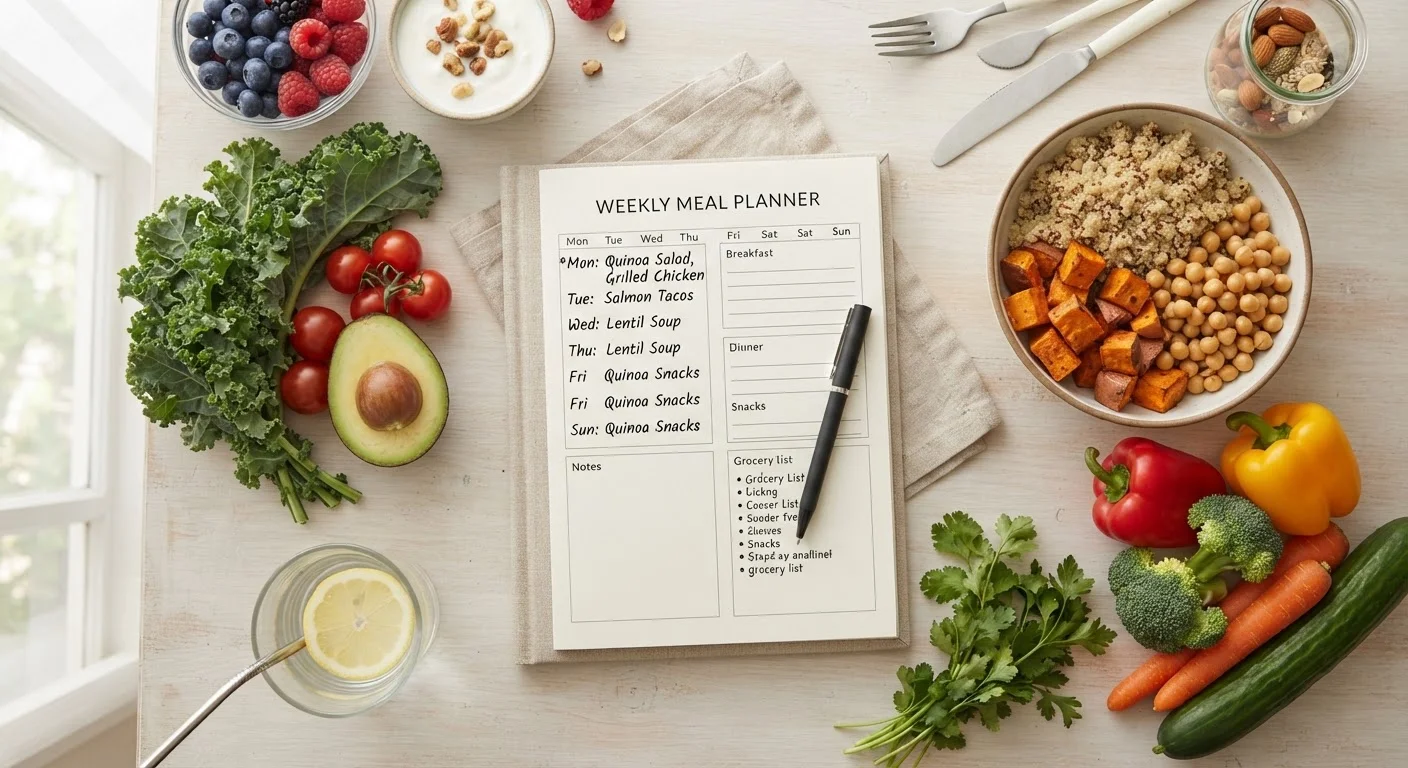
Printed or digital weekly planner
Map your meals by day to spot skipped meals, patterns of repetition, or food groups that drop off mid-week.
MyPlate or similar nutrition reference
Use as a visual reference for recommended food group proportions when assessing balance across your week.
Registered dietitian (for follow-up)
Consult a credentialed professional if your audit reveals persistent gaps or dietary concerns linked to a health condition.
Once you've identified gaps in your eating patterns, you may find it useful to revisit your shopping habits. A more intentional approach to the grocery list is one of the most direct ways to shift what ends up on your plate. Our nutrient-rich grocery list framework provides a structured approach to closing common nutritional gaps at the source.
Audit Results Are a Starting Point, Not a Diagnosis
A self-directed eating audit is a tool for raising awareness — it is not a clinical assessment of nutritional status. If you identify significant concerns, such as difficulty eating balanced meals due to a health condition, persistent digestive symptoms, or restrictive eating patterns, speak with a registered dietitian or your primary care provider before making substantial dietary changes.
Putting Your Findings Into Practice
After working through the checklist, you're likely to notice a handful of recurring patterns — perhaps a particular food group that's consistently underrepresented, a tendency to skip breakfast under time pressure, or hydration that falls short across most days. These are the areas worth prioritising first.
Resist the urge to overhaul everything at once. Research on habit formation consistently shows that targeted, incremental changes outperform sweeping dietary resets in terms of long-term adherence. Choose one or two focus areas from your audit results each week and build from there.
It's also worth noting that gut health and eating habits are closely linked. If your audit surfaces concerns around digestive comfort, energy levels, or irregular patterns, exploring the gut health habits audit may provide useful complementary insights. For any symptoms or concerns about your diet's effect on specific health conditions, consult a qualified healthcare provider or registered dietitian before making significant changes.
This article is for general informational and educational purposes only. It is not a substitute for personalised medical or nutritional advice. Always consult a qualified healthcare professional before making significant changes to your diet, particularly if you have an existing health condition or are pregnant, breastfeeding, or managing a chronic illness.
The content on this site is for informational purposes only and is not a substitute for professional advice. Always consult a qualified professional for guidance specific to your situation.