

What Antioxidants Actually Do — and What They Don't
Antioxidants are compounds that can donate electrons to unstable molecules called free radicals, neutralizing them before they damage cells. Free radicals are generated through normal metabolic processes, as well as external exposures like air pollution, ultraviolet radiation, and cigarette smoke. The body produces its own antioxidant defenses — including enzymes like superoxide dismutase and glutathione peroxidase — while dietary antioxidants such as vitamins C and E, beta-carotene, and polyphenols provide additional support.
The critical nuance is that this chemistry in a test tube does not automatically translate to measurable health protection in a living human being. Absorption, metabolism, tissue distribution, and interaction with gut microbiota all affect whether a particular antioxidant compound does anything useful once eaten. This gap between lab evidence and real-world benefit is precisely where marketing overreaches and where informed readers need a reliable filter.
For a broader framework on eating patterns that genuinely support wellbeing, see our complete guide to evidence-informed whole-food eating.
Myth
More antioxidants always means better health protection — the higher the dose, the better.
Fact
At high doses, some antioxidants can act as pro-oxidants, potentially promoting the same cellular damage they are meant to prevent.
The concept of a dose-response relationship is well established in nutrition: what is beneficial in physiological amounts can become harmful in excess. Vitamin E at supplemental doses, for example, has been associated with increased all-cause mortality in some meta-analyses. Beta-carotene at high doses increased lung cancer risk in two major trials involving smokers. The body tightly regulates its own oxidative balance — overwhelming that system with concentrated antioxidant supplements can disrupt rather than enhance it.
Myth
ORAC scores are a reliable guide to choosing the most health-promoting foods.
Fact
The USDA withdrew its ORAC database in 2012, concluding the scores do not reliably predict antioxidant effects in the human body.
ORAC (Oxygen Radical Absorbance Capacity) measures how well a substance neutralizes free radicals in a laboratory setting — not in a living digestive system. Many high-ORAC compounds are poorly absorbed, rapidly metabolized, or modified by gut bacteria in ways that change their activity entirely. The withdrawal of the ORAC database reflects scientific consensus that in-vitro antioxidant capacity is a poor proxy for in-vivo benefit. Food marketing still leans heavily on ORAC language, so it is worth treating such claims with healthy skepticism.
Myth
Antioxidant supplements are a reliable substitute for getting these compounds from food.
Fact
Whole foods deliver antioxidants within a complex matrix of nutrients that interact synergistically; isolated supplements consistently fail to replicate this effect in clinical trials.
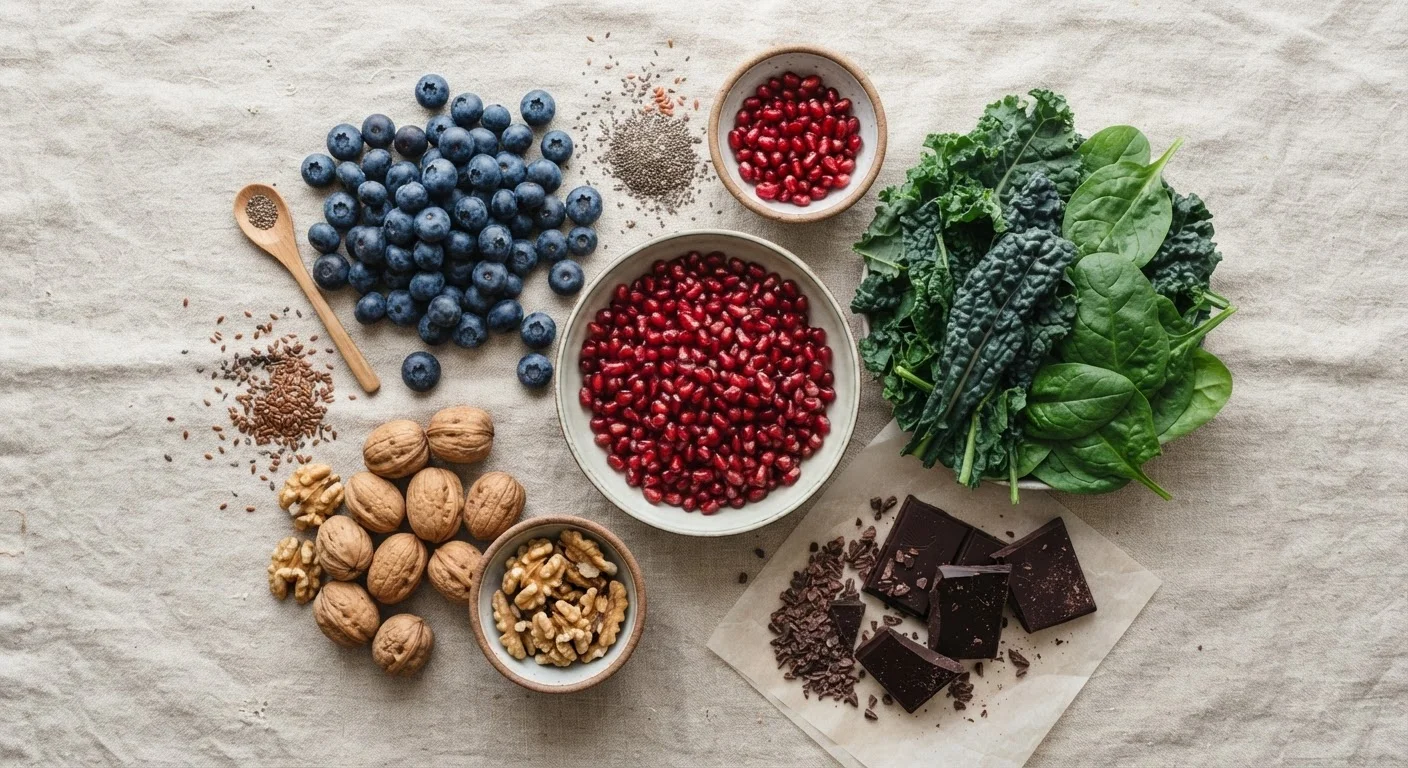
When researchers have tried to isolate the "active" antioxidant from a food and administer it as a supplement, results have repeatedly fallen short of the protective associations observed in populations eating those foods. This suggests that synergy — between fiber, polyphenols, vitamins, minerals, and phytochemicals — drives much of the observed benefit. A blueberry, for instance, contains hundreds of distinct compounds beyond anthocyanins, many of which interact with each other and with the gut microbiome in ways that a standardized extract cannot fully replicate.
Myth
All "superfoods" labeled as antioxidant-rich deliver proven, significant health benefits.
Fact
The term "superfood" has no regulated definition; the antioxidant content of a food does not automatically translate to a clinically meaningful health outcome.
Food marketing routinely elevates specific items — acai, goji berries, moringa — using antioxidant content as evidence of exceptional health properties. While these foods can be nutritious, the evidence for specific, measurable health outcomes in humans is generally limited to small or short-duration studies. A diverse plate of everyday whole foods — spinach, lentils, apples, walnuts — delivers comparable or broader nutritional value than any single exotic item. Concentrating spending and attention on "superfoods" can distract from the dietary variety that evidence most consistently supports.
Myth
Cooking destroys antioxidants, so raw food is always the superior nutritional choice.
Fact
Cooking affects different antioxidants differently — some are reduced, while others become more bioavailable after heat exposure.
Vitamin C and certain heat-sensitive polyphenols do degrade with prolonged cooking. However, the antioxidant lycopene in tomatoes becomes significantly more bioavailable when tomatoes are cooked, particularly with a small amount of fat. Carotenoids in carrots and other orange-red vegetables are similarly better absorbed from cooked forms. Blanching, steaming, and light sautéing generally preserve more heat-sensitive nutrients than boiling in large volumes of water. The evidence supports dietary flexibility — a mix of raw and appropriately cooked vegetables — rather than a rigid raw-only approach.
What the Research Actually Supports
The strongest and most consistent evidence for antioxidants comes not from isolated supplements but from dietary patterns rich in whole plant foods. Large observational studies — including those underpinning Mediterranean and DASH dietary patterns — associate high fruit, vegetable, legume, and whole-grain intake with lower rates of cardiovascular disease and certain cancers. Researchers generally attribute part of this benefit to the collective action of thousands of phytochemicals, including antioxidants, rather than to any single compound.
~30
Years of major antioxidant supplement trials
Decades of large randomized controlled trials have generally failed to show that isolated antioxidant supplements reduce cardiovascular disease or all-cause mortality in well-nourished populations.
2012
Year USDA removed ORAC database
The USDA discontinued its ORAC food database citing lack of evidence that ORAC values predict antioxidant effects in the human body.
Hundreds
Distinct polyphenols in a single blueberry
Research has identified hundreds of individual phytochemical compounds in common berries, illustrating why whole-food complexity is difficult to replicate in supplement form.
Randomized controlled trials on antioxidant supplements, by contrast, have produced far more mixed results. Several large trials — including studies of beta-carotene supplementation in smokers — found no benefit and, in some cases, suggested harm. This pattern highlights an important principle: the food matrix matters. Nutrients consumed alongside fiber, healthy fats, and other phytochemicals behave differently than the same compound delivered in isolation at pharmacological doses.
This mirrors findings discussed in our analysis of anti-inflammatory eating patterns, where dietary variety consistently outperforms single-nutrient interventions. Similarly, readers interested in how these principles apply to immune health will find relevant context in our look at common assumptions about immune-boosting foods.
Supplements Are Not Nutritional Insurance
High-dose antioxidant supplements are not a safe or proven substitute for a varied whole-food diet. In some populations and at specific doses, supplemental beta-carotene and vitamin E have been associated with adverse outcomes in clinical trials. Anyone considering antioxidant supplementation — particularly at doses above standard dietary reference intakes — should consult a qualified healthcare or registered dietitian professional before proceeding. This is especially important for people who smoke, are pregnant, or have chronic health conditions.
The practical takeaway is straightforward: build meals around a variety of deeply colored fruits, vegetables, legumes, nuts, seeds, and whole grains. This approach delivers a spectrum of antioxidant compounds alongside the fiber, minerals, and healthy fats that support their absorption and activity — and aligns with the dietary patterns most strongly supported by current evidence.
This article is for informational purposes only and does not constitute medical or nutritional advice. Consult a qualified healthcare professional before making significant changes to your diet or beginning any supplement regimen.
The content on this site is for informational purposes only and is not a substitute for professional advice. Always consult a qualified professional for guidance specific to your situation.