

Summary
22 items · 30–90 minutes to set up initially; a few minutes to maintain daily
Why Your Environment Shapes Your Practice
Many practitioners discover that where they sit is nearly as important as how they sit. The brain is highly responsive to environmental cues — when you return to the same spot, at roughly the same time, your nervous system begins to associate that space with stillness. Over weeks, simply arriving at your meditation area can help ease the mental transition from activity to quiet attentiveness.
This doesn't mean you need a dedicated room. A consistent corner, a particular chair, or even a spot on the floor works well. What matters is intention and repetition. If you're just beginning to build a practice, see our guide for beginners whose minds won't sit still for foundational context before setting up your space.
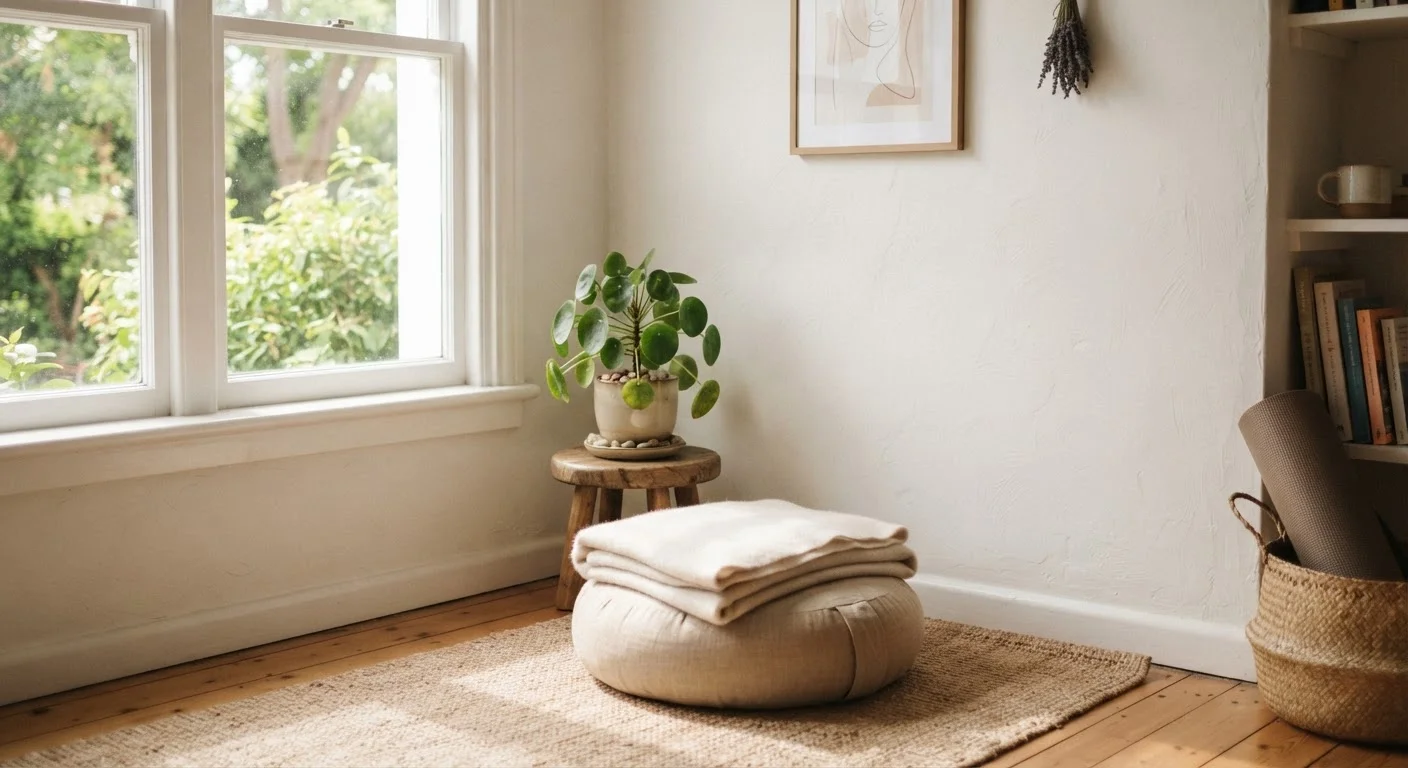
This checklist covers the practical elements: sensory environment, posture support, minimising interruptions, and small touches that make returning to your space easier day after day.
Location & Consistency
Light & Temperature
Sound Management
Posture Support
Minimising Interruptions
Optional Sensory Anchors
Tools That Make Setup Easier
You don't need to purchase anything to begin — improvising with what you have is perfectly valid. That said, a few purposeful items can meaningfully reduce physical discomfort and sensory distraction, freeing your attention for practice itself.
Meditation Cushion or Zafu
Elevates the hips to reduce lower-back strain and encourage an upright, sustainable seated posture.
Firm Folded Blanket
A versatile alternative to a dedicated cushion — can be stacked to adjust height and used to warm the body during practice.
Meditation Bench (Seiza Bench)
Supports kneeling posture with the body weight distributed over the shins, relieving ankle and knee pressure.
Upright Chair
Provides a dignified, pain-free alternative to floor sitting, especially for those with hip, knee, or back concerns.
Timer or Meditation App
Tracks session length and signals the end gently so you can sit without watching the clock.
Eye Pillow or Eye Mask
Blocks light and adds gentle weight to the eye area, encouraging inward focus during longer sessions.
Once your space is established, consider how your choice of meditation style interacts with it. The differences between guided and silent meditation can influence whether you need a speaker, phone, or simply quiet — worth thinking through before finalising your setup.
Don't Let Setup Become Procrastination
It's easy to spend more time arranging the perfect space than actually sitting in it. Start with whatever you have — a folded towel and a quiet corner is more than enough. Refine your space incrementally as you identify genuine friction points in your practice, not in anticipation of problems that may never arise.
If you plan to combine seated meditation with movement, the guide to building a unified yoga and meditation practice outlines how to arrange your space to support both activities within the same routine.
This article is for general informational purposes only and does not constitute medical advice. If you have any physical conditions that affect your posture or comfort during seated practice, consult a qualified healthcare professional before making changes to your routine.
The content on this site is for informational purposes only and is not a substitute for professional advice. Always consult a qualified professional for guidance specific to your situation.