

What the Research Actually Shows
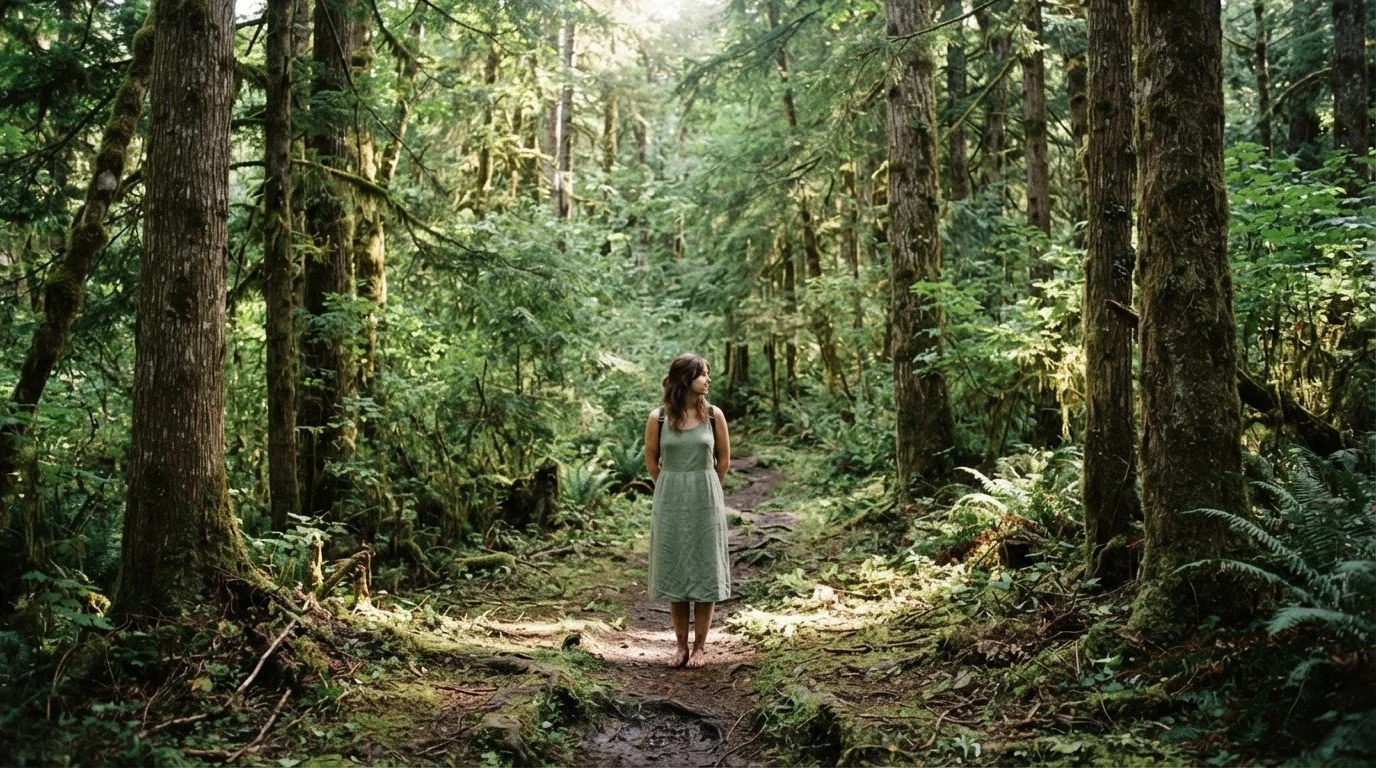
A growing body of peer-reviewed research suggests that time spent in natural environments — forests, parks, gardens, even green urban corridors — is associated with reduced physiological markers of stress. Studies have measured decreases in salivary cortisol, lower blood pressure, slower heart rate, and reduced activity in prefrontal brain regions linked to rumination after participants spent time in nature compared with urban or indoor settings.
One widely cited area of inquiry is shinrin-yoku, a Japanese practice loosely translated as "forest bathing" — the deliberate, unhurried immersion in a forest environment using all the senses. Controlled studies published in journals including Environmental Health and Preventive Medicine have reported that forest walks produced lower cortisol concentrations and improved mood scores relative to urban walks of equivalent duration and effort. It is worth noting, however, that many studies in this space use small sample sizes and self-reported outcomes, so conclusions should be held with appropriate caution.
For a broader view of how environment fits alongside other stress levers, see our whole-life stress guide.
~21%
Cortisol reduction after forest walking
A meta-analysis in <cite>Environmental Research</cite> found forest environments associated with roughly 21% lower salivary cortisol compared with urban control conditions across multiple studies.
20 min
Minimum effective dose for stress hormone reduction
Research published in <cite>Frontiers in Psychology</cite> identified approximately 20 minutes of nature contact as the threshold at which cortisol reduction becomes most pronounced.
Two Theories That Explain Why Nature Helps
Researchers have proposed several frameworks to explain nature's apparent stress-buffering effects. Two have attracted the most empirical attention.
Attention Restoration Theory (ART)
Developed by environmental psychologists Rachel and Stephen Kaplan, ART proposes that natural environments engage a form of effortless, involuntary attention — watching leaves move, tracking water flow — that allows the directed, effortful attention we use for work and decision-making to replenish. The theory suggests that mental fatigue, which amplifies stress sensitivity, decreases in restorative environments characterized by fascination, extent, and a sense of "being away."
Stress Recovery Theory (SRT)
Proposed by Roger Ulrich, SRT takes a more evolutionary view: humans may be hardwired to respond with calm to certain natural settings — open savanna-like landscapes, moderate vegetation, the presence of water — because such environments historically signaled safety and resource availability. Psychophysiological measurements have supported this: participants exposed to nature scenes after a stressor showed faster cardiovascular recovery than those shown urban scenes.
Both theories are plausible and not mutually exclusive — in practice, natural environments may work through multiple pathways simultaneously. Complementary approaches like breathwork techniques and mind-body practices may amplify these effects.
Best Practices for Using Nature Exposure as a Stress Tool
Evidence-informed practice means more than simply going outdoors. How you engage with natural settings shapes how much benefit you receive.
Engage nature with deliberate sensory attention, not passive presence
Research on forest bathing emphasizes active sensory engagement — noticing sounds, textures, scents, and light — rather than merely being physically present. Passive presence without attention may yield fewer restorative benefits because the attention-restoration mechanism requires genuine disengagement from directed thought.
Aim for at least 20 minutes of nature contact per session for measurable effect
A study published in Frontiers in Psychology found that cortisol reduction was most pronounced after approximately 20–30 minutes in a natural setting, with diminishing additional returns beyond that threshold. Short exposures still offer benefit, but duration matters for physiological impact.
Reduce digital stimulation during nature time
The restorative effect of natural environments depends partly on cognitive downshift — reducing the volume of competing stimuli. Scrolling social media or taking calls while outdoors reintroduces directed attention demands and may partially negate the recovery benefit.
Incorporate nature exposure consistently rather than sporadically
Like other behavioral stress-management strategies, nature contact appears to build cumulative benefit over time. Irregular, high-intensity doses (a single long hike every few months) are likely less effective than shorter, more frequent exposure integrated into weekly routines.
Use nature-based environments that include water or varied vegetation where accessible
Studies informed by Stress Recovery Theory suggest that environments featuring water (rivers, lakes, coastlines) or diverse vegetation produce particularly strong physiological calming responses, possibly due to evolutionary associations with safety and resource abundance.
Fitting Nature Into a Broader Stress Strategy
Nature exposure is a powerful complement — not a standalone solution — within a layered approach to stress management. Pairing outdoor time with practices like mindfulness or progressive muscle relaxation, regular physical movement, and strong social connections creates compounding benefits that no single technique achieves alone.
If access to green spaces is limited, emerging research suggests that even indoor plants, nature sounds, or window views of greenery may offer modest benefits — though evidence here is more preliminary. Contrast this with screen-time reduction strategies explored in our digital detox article: both approaches address the overstimulation side of modern stress, but through different mechanisms.
A Note on Seasonal Allergies and Outdoor Exposure
For individuals with seasonal allergies, spending time outdoors in high-pollen conditions may introduce competing physiological discomfort that offsets stress-relief benefits. Monitoring local pollen counts and choosing lower-pollen times (after rain, early morning on calm days) can help. Our guide to managing seasonal allergies covers strategies that may make outdoor time more comfortable year-round. Always consult a healthcare professional if allergy symptoms are significant.
This article is for general informational and educational purposes only and does not constitute medical advice. If you are experiencing significant or persistent stress, anxiety, or related symptoms, please consult a qualified healthcare professional.
The content on this site is for informational purposes only and is not a substitute for professional advice. Always consult a qualified professional for guidance specific to your situation.