

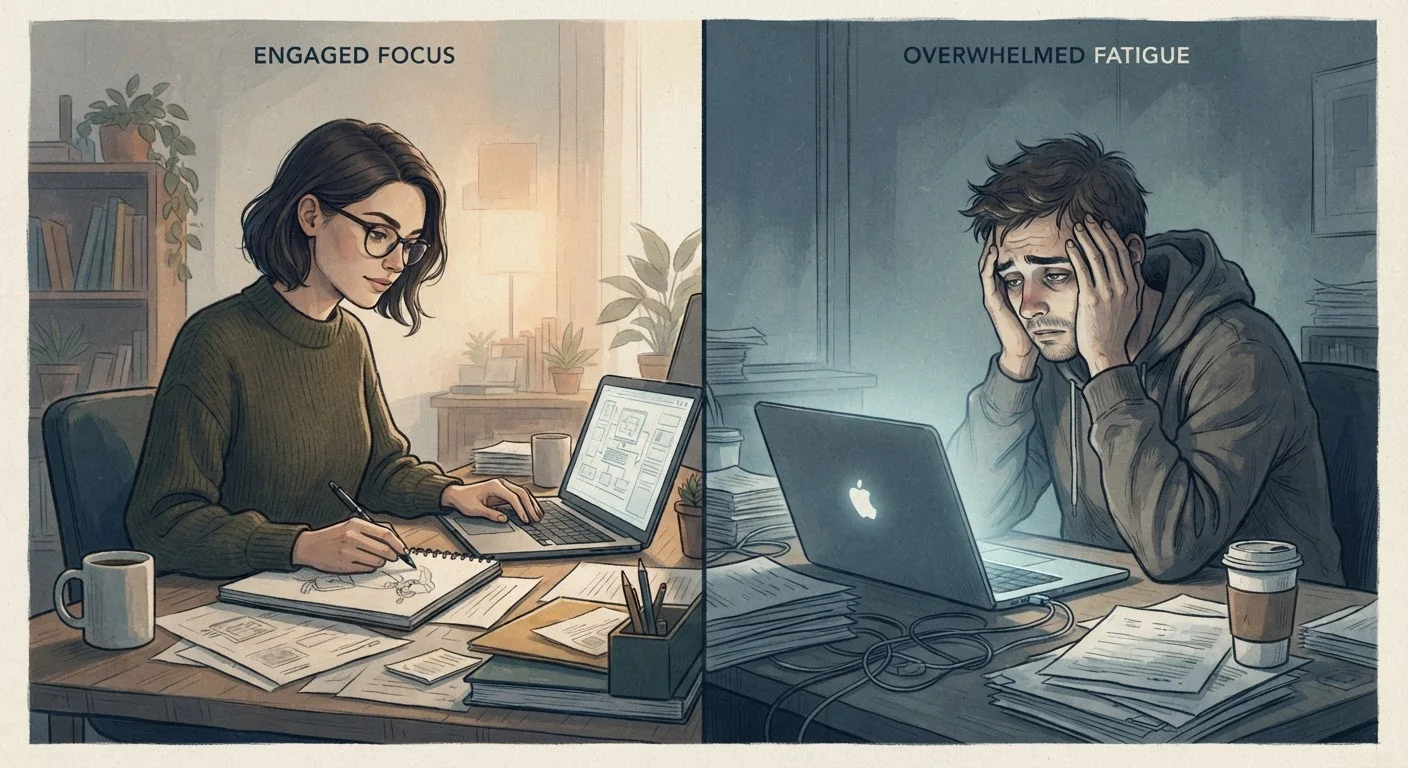
Option A
Acute Stress
The short-lived, often adaptive stress response.
Best for: Understanding brief, situation-specific pressure that typically resolves on its own and can even sharpen performance.
Option B
Chronic Stress
The persistent strain that silently wears the body down.
Best for: Recognizing long-term, unrelenting pressure patterns that require active, sustained management strategies.
Two Types of Stress, Two Very Different Stories
Most people use the word "stress" as if it were a single experience. In reality, stress is a spectrum — and where your stress falls on that spectrum has significant implications for your physical and mental health.
Acute stress is the body's immediate reaction to a perceived threat or demand. It's the surge of alertness before a job interview, the spike of adrenaline when you brake suddenly in traffic. This response is evolutionarily ancient and genuinely useful: it mobilizes energy, sharpens focus, and subsides once the trigger passes.
Chronic stress, by contrast, is what happens when the nervous system never fully returns to baseline. It's the relentless weight of financial insecurity, a strained relationship, or an overwhelming workload that stretches across weeks, months, or years. The body treats this sustained pressure the same way it treats an acute threat — but the hormonal response was never designed to run continuously.
Understanding which type you're dealing with isn't just semantically interesting. As with other health distinctions — see how acute vs. chronic inflammation plays out — the nature of the pattern shapes which approaches are most helpful.
What's Actually Happening Inside Your Body
Both stress types activate the hypothalamic-pituitary-adrenal (HPA) axis and the sympathetic nervous system, triggering the release of cortisol, adrenaline (epinephrine), and noradrenaline. The difference lies in duration and recovery.
With acute stress, cortisol rises quickly and falls just as fast once the stressor resolves. Heart rate increases temporarily, digestion slows, and muscles prime for action — then the parasympathetic nervous system restores calm. This is the well-functioning fight-or-flight cycle working as intended.
Chronic stress keeps cortisol elevated for prolonged periods. Research consistently associates chronically high cortisol with:
- Suppressed immune function, leaving the body more vulnerable to infection
- Elevated blood pressure and increased cardiovascular disease risk
- Disrupted sleep architecture, particularly reduced slow-wave and REM sleep
- Impaired memory consolidation and cognitive function
- Heightened risk of anxiety disorders and depression
77%
Adults reporting physical stress symptoms
According to the American Psychological Association's ongoing Stress in America survey, a large majority of adults experience physical symptoms they attribute to stress.
2–3x
Increased cardiovascular risk with chronic stress
Multiple prospective studies suggest chronically high psychological stress is associated with a significantly elevated risk of cardiovascular events compared to low-stress counterparts.
8 weeks
Duration of MBSR programs showing cortisol reduction
Mindfulness-Based Stress Reduction programs of approximately 8 weeks have been shown in peer-reviewed research to measurably reduce cortisol levels and perceived stress.
The physiological overlap between chronic stress and chronic pain — both involving sensitized nervous systems — is also worth noting. You can explore that connection further in our piece on acute vs. chronic pain.
Side-by-Side: How They Compare
Placing the two types side by side makes the key differences immediately clear.
| Criterion | Acute Stress | Chronic Stress |
|---|---|---|
| Duration | Minutes to hours | Weeks, months, or years |
| Cortisol pattern | Short spike, rapid recovery | Persistently elevated |
| Evolutionary purpose | Adaptive and protective | No adaptive advantage |
| Health impact | Generally minimal if recovered | Linked to serious long-term risks |
| Common triggers | Deadlines, conflict, sudden change | Financial strain, caregiving, ongoing pressure |
| Key management approach | In-the-moment breathing, grounding | Lifestyle change, therapy, social support |
| Sleep disruption | Temporary, typically self-resolving | Persistent, often compounding |
One important nuance: the line between acute and chronic stress isn't always sharp. Repeated acute stressors — without adequate recovery — can accumulate into a chronic stress state. This is particularly relevant in high-demand workplaces or caregiving roles.
Natural Strategies Matched to Each Stress Type
The good news is that lifestyle-based approaches are well-supported for managing both types — though the strategies differ in scope and intensity.
For Acute Stress
In-the-moment tools tend to work best here. Slow, diaphragmatic breathing (such as the 4-7-8 technique) activates the vagus nerve and can shift the nervous system toward calm within minutes. Grounding exercises — noticing five things you can see, four you can touch — interrupt the mental loop of anticipatory anxiety. Brief physical movement also helps metabolize circulating stress hormones.
For Chronic Stress
Because chronic stress is systemic, it requires systemic responses. Evidence-informed approaches include:
- Regular aerobic exercise: Shown to reduce baseline cortisol and improve HPA axis regulation over time
- Mindfulness-based stress reduction (MBSR): An 8-week program with substantial research support for reducing perceived stress and cortisol reactivity
- Consistent sleep hygiene: Chronic stress disrupts sleep, and poor sleep amplifies stress — breaking this cycle is foundational
- Social connection: Supportive relationships buffer the biological impact of chronic stress, partly through oxytocin release
- Nature exposure: Even brief time in natural environments is associated with reduced cortisol in multiple studies
If chronic stress is significantly affecting daily functioning, speaking with a mental health professional is strongly encouraged — not a last resort. Cognitive behavioral therapy (CBT) and somatic approaches have strong evidence bases for stress-related conditions.
This article is for general informational purposes only and is not a substitute for personalized medical or mental health advice. Please consult a qualified healthcare professional regarding any symptoms or concerns.
The content on this site is for informational purposes only and is not a substitute for professional advice. Always consult a qualified professional for guidance specific to your situation.