

Option A
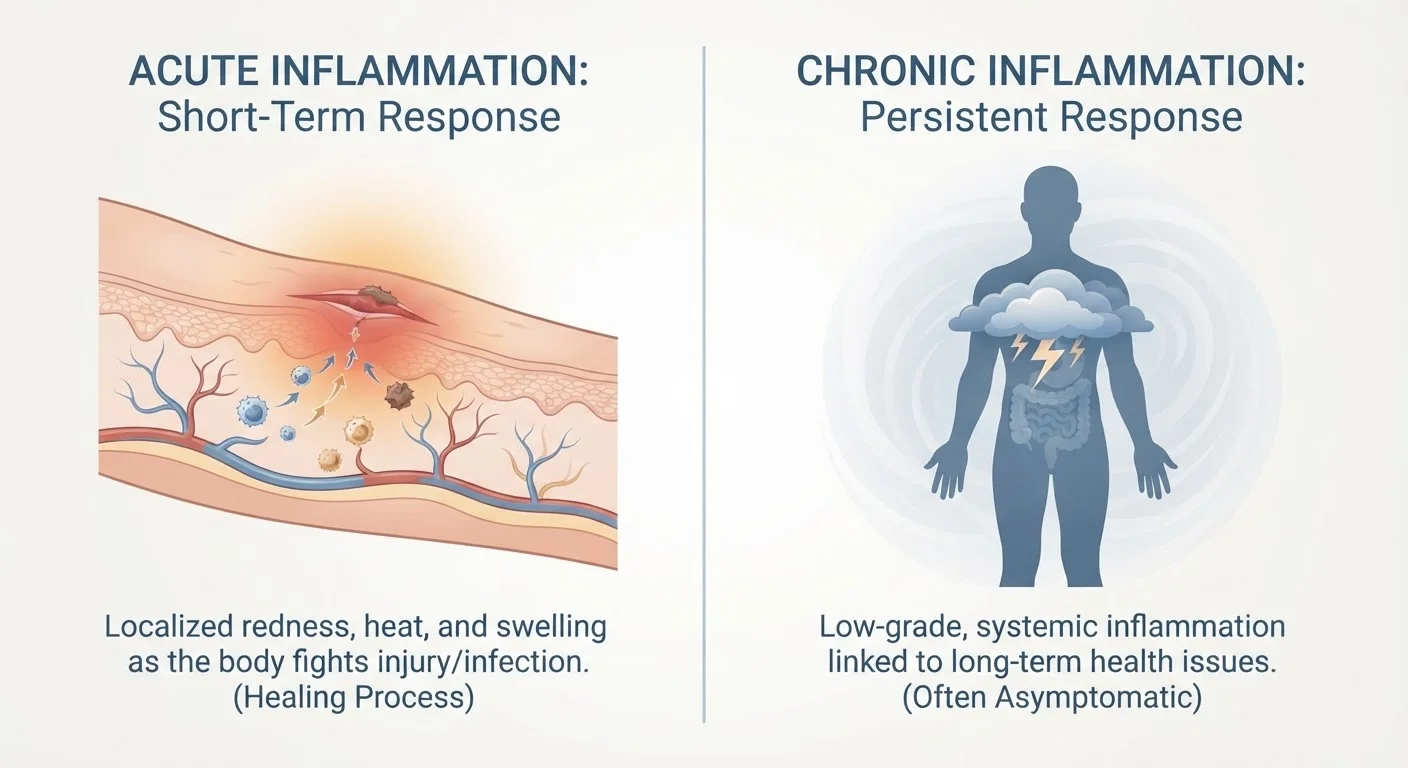
Acute Inflammation
The body's fast, purposeful healing response.
Best for: Short-term injury, infection, or tissue damage requiring rapid immune mobilisation and repair.
Option B
Chronic Inflammation
A slow-burning immune state with long-term consequences.
Best for: Understanding underlying disease risk and developing lasting lifestyle-based management strategies.
What Is Acute Inflammation?
Acute inflammation is the immune system's immediate, coordinated response to a clear threat — a cut, a sprained ankle, a bacterial infection, or surgery. Within seconds to minutes of tissue damage, the body releases signalling molecules called cytokines and histamines that dilate nearby blood vessels and increase their permeability. This allows immune cells, particularly neutrophils, to flood the affected area and begin neutralising pathogens or clearing damaged tissue.
The hallmark signs — redness, swelling, heat, pain, and temporary loss of function — are not the problem; they are evidence that the body's repair machinery is working. Acute inflammation generally resolves within hours to a few days once the triggering stimulus is eliminated. At that point, the immune response winds down and tissue repair begins in earnest.
This process is essential. Without it, even minor infections could become life-threatening. Suppressing acute inflammation prematurely — without medical guidance — can interfere with healing. That said, excessive or uncontrolled acute responses, as seen in sepsis or severe allergic reactions, do require prompt medical care.
What Is Chronic Inflammation?
Chronic inflammation is a fundamentally different biological state. Rather than a targeted surge of immune activity, it is a persistent, low-grade immune activation that continues long after any initial threat has passed — or in some cases, with no clear triggering event at all.
Unlike the rapid, localised response of acute inflammation, chronic inflammation operates system-wide. It is characterised by the ongoing presence of monocytes, macrophages, and lymphocytes, along with elevated levels of inflammatory markers such as C-reactive protein (CRP) and interleukin-6 (IL-6). Over time, this sustained immune activity begins to damage healthy tissue rather than protect it.
Research associates chronic inflammation with a wide range of conditions, including cardiovascular disease, type 2 diabetes, autoimmune disorders, and certain cancers. It is also implicated in neurodegenerative diseases and metabolic dysfunction. Chronic inflammation's role in long-term health is increasingly recognised as central to understanding why so many common diseases develop and progress.
Crucially, chronic inflammation is often silent — producing no obvious pain or swelling — which makes it harder to detect and easier to overlook until downstream effects emerge.
| Criterion | Acute Inflammation | Chronic Inflammation |
|---|---|---|
| Duration | Hours to days | Months to years |
| Onset | Rapid, clearly triggered | Gradual, often without obvious cause |
| Primary immune cells | Neutrophils, mast cells | Macrophages, lymphocytes |
| Location | Localised to site of injury | Systemic, whole-body |
| Symptoms | Redness, swelling, heat, pain | Often silent; fatigue, general malaise |
| Purpose | Protect and initiate repair | Dysregulated; damages healthy tissue |
| Associated conditions | Infections, injuries, surgery | Heart disease, diabetes, autoimmune disorders |
| Management focus | Support healing; avoid suppression | Lifestyle modification; address root causes |
Key Drivers and Natural Management Strategies
The causes of each type differ markedly. Acute inflammation is triggered by identifiable events: physical injury, pathogens, toxins, or extreme temperature. Chronic inflammation, by contrast, is driven by sustained exposures and lifestyle patterns. Common contributors include a diet high in ultra-processed foods, physical inactivity, chronic psychological stress, poor sleep quality, environmental pollutants, and gut microbiome imbalance.
Everyday inflammatory triggers span diet, environment, and behaviour — and many are modifiable. This is where natural management strategies become meaningful, particularly for chronic inflammation.
Evidence-informed approaches include:
- Dietary patterns: Mediterranean-style diets, rich in vegetables, oily fish, olive oil, and whole grains, are associated with lower inflammatory markers in population studies.
- Gut health: The gut microbiome modulates immune signalling. Probiotics and prebiotics may support a microbial environment less conducive to chronic immune activation.
- Stress reduction: Psychological stress activates inflammatory pathways. As explored in research on acute vs. chronic stress, long-term stress exposure has distinct biological effects that compound inflammation.
- Sleep: Insufficient sleep elevates pro-inflammatory cytokines. Prioritising consistent, quality sleep is among the most accessible lifestyle interventions available.
- Movement: Regular moderate exercise is consistently associated with reduced systemic inflammation, while sedentary behaviour amplifies it.
50%+
Deaths linked to chronic inflammatory disease
According to the Global Burden of Disease study, more than half of all global deaths are attributable to inflammation-related diseases.
3–5 days
Typical resolution time for acute inflammation
Most uncomplicated acute inflammatory responses — such as those following minor injury or common infection — resolve within this window as published in standard immunology literature.
72%
Adults with at least one chronic inflammatory condition
The CDC estimates that roughly 6 in 10 US adults have a chronic disease, many of which involve inflammatory pathways as a core mechanism.
This article is for general informational purposes only and does not constitute medical advice. Always consult a qualified healthcare professional regarding personal health concerns, symptoms, or before making changes to any treatment plan.
The content on this site is for informational purposes only and is not a substitute for professional advice. Always consult a qualified professional for guidance specific to your situation.