

How Sleep Cycles Are Structured
Each night, the brain cycles through two broad categories of sleep: NREM (Non-Rapid Eye Movement) and REM (Rapid Eye Movement) sleep. NREM is further divided into three stages — N1 (light sleep), N2 (the most time-spent stage), and N3 (deep or slow-wave sleep). These stages don't occur randomly; they follow a predictable architecture across the night.
In the early part of the night, cycles tend to contain more deep NREM sleep. As the night progresses, REM periods lengthen and become richer. This is why cutting sleep short — even by an hour or two — disproportionately reduces REM, since that stage is concentrated in the second half of the night. For a deeper look at what's happening biologically during each stage, see what actually happens to your body during sleep.
90 min
Average length of one full sleep cycle
Research into human sleep architecture consistently identifies cycles of approximately 90 minutes, repeating four to six times per night in healthy adults.
20–25%
Proportion of total sleep spent in REM
According to sleep science literature, healthy adults typically spend roughly one-fifth to one-quarter of total sleep time in REM — a stage critical for emotional regulation and memory.
13–23%
Typical proportion of sleep in slow-wave (deep) stage
Studies of sleep architecture in healthy adults suggest deep NREM sleep accounts for roughly 13–23% of total sleep time, with the highest concentrations occurring in the first half of the night.
Why Deep Sleep (Slow-Wave Sleep) Is Critical
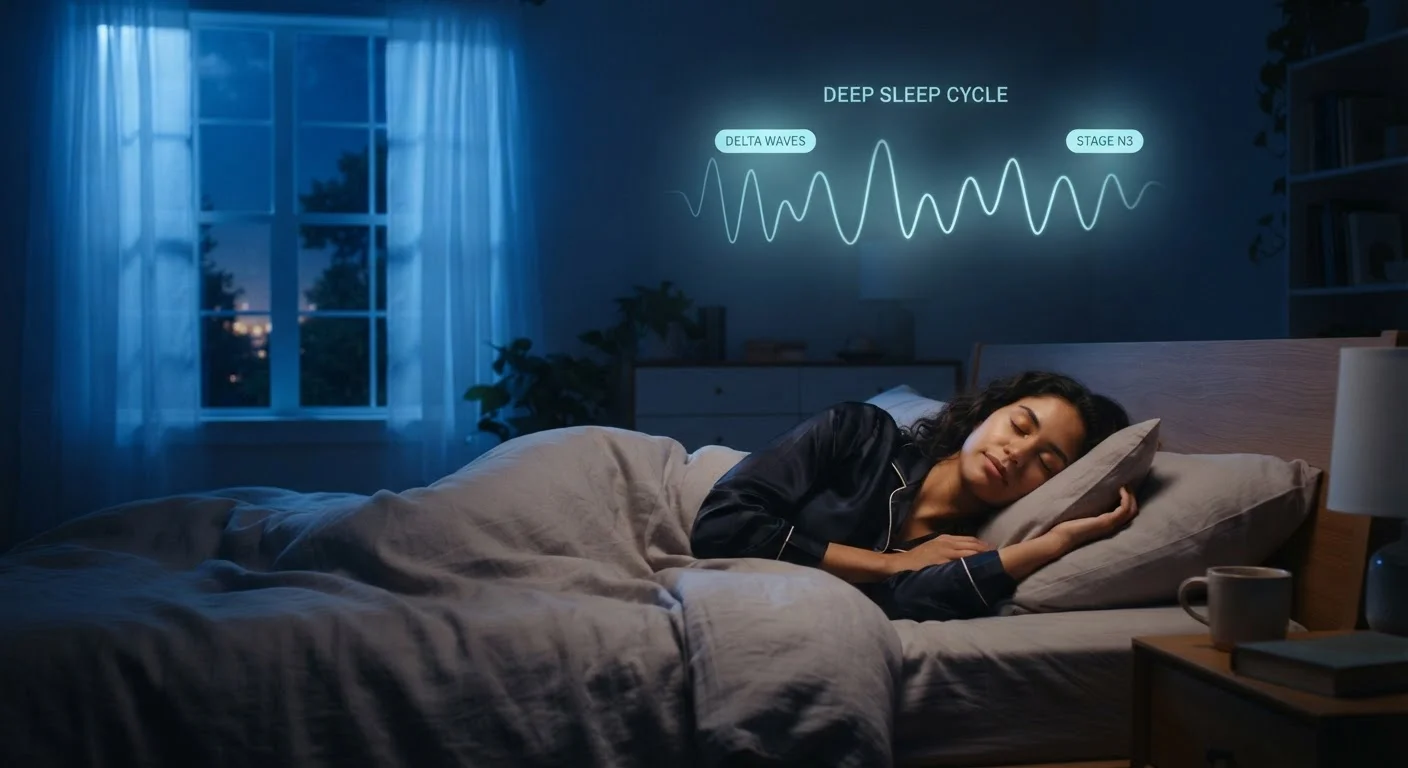
Stage N3 — commonly called deep sleep or slow-wave sleep — is the most physically restorative stage. During this phase, the brain produces slow delta waves, growth hormone is released, and the body carries out cellular repair. The glymphatic system, a waste-clearance network in the brain, becomes highly active, flushing out metabolic byproducts including proteins associated with neurodegenerative conditions.
Deep sleep is also when stress hormones like cortisol are regulated. Poor or insufficient deep sleep has been linked to elevated cortisol levels the following day, reduced immune function, and impaired memory consolidation. For those experiencing chronic stress or anxiety, this creates a reinforcing cycle: stress disrupts deep sleep, and disrupted deep sleep amplifies stress reactivity.
Support Deep Sleep With Evening Habits
Keeping your bedroom cool (around 65–68°F is commonly cited in sleep hygiene research), avoiding caffeine after early afternoon, and dimming lights an hour before bed may all support the brain's transition into deep sleep. These environmental cues help align your body clock with your desired sleep window. Small, consistent shifts in evening routine tend to have a compounding effect on sleep quality over time.
The Emotional Role of REM Sleep
REM sleep is where the brain does much of its emotional housekeeping. During this stage, the amygdala — the brain's emotion-processing center — is highly active, while stress neurochemicals like norepinephrine are suppressed. Researchers, including those working in the field of affective neuroscience, have proposed that this combination allows the brain to replay emotionally significant memories in a lower-stress chemical environment, helping to reduce their emotional charge over time.
This may explain why people who are consistently REM-deprived tend to show heightened emotional reactivity and reduced capacity for empathy. REM sleep also supports creative thinking and flexible problem-solving. Understanding how sleep fits within whole-person health frameworks highlights why this stage is treated as foundational rather than optional.
What Disrupts Sleep Architecture — and What Supports It
Several common habits interfere with the natural progression through sleep stages. Alcohol, even in moderate amounts consumed hours before bed, suppresses slow-wave activity and fragments REM sleep. Irregular sleep timing — staying up late on weekends, for example — misaligns the body's internal clock with the sleep cycle pattern, reducing architectural efficiency. Artificial light exposure, particularly blue-spectrum light from screens, delays melatonin release and pushes the onset of deep sleep later into the night.
On the supportive side, consistent sleep and wake times allow the brain to anticipate and optimize its cycling patterns. A cool, dark sleep environment and a wind-down routine that signals the transition from wakefulness have both been associated with improved sleep quality in behavioral research. Sleep timing itself carries significant weight — exploring the role of circadian rhythm in sleep timing can help contextualize why when you sleep is nearly as important as how long.
This article is for general informational and educational purposes only and does not constitute medical advice. If you are experiencing persistent sleep difficulties or have concerns about your sleep health, please consult a qualified healthcare professional.
Frequently Asked Questions
Most adults benefit from four to six complete sleep cycles per night, which corresponds to roughly seven to nine hours of sleep. Each cycle lasts approximately 90 minutes. Consistently completing fewer cycles is associated with reduced cognitive performance and mood disruption.
Both deep NREM sleep and REM sleep play crucial roles in mental wellness. Deep sleep regulates stress hormones like cortisol, while REM sleep supports emotional processing and memory. Research suggests that deficits in either stage can contribute to anxiety, low mood, and impaired resilience.
Alcohol consumption, irregular sleep schedules, blue light exposure before bed, and high stress levels are among the most well-documented disruptors of deep sleep. Even consuming alcohol a few hours before sleep can suppress slow-wave activity, reducing the restorative depth of rest.
The brain does show some ability to increase slow-wave sleep after sleep deprivation — a process sometimes called sleep pressure recovery. However, chronic sleep loss is not fully reversible through a single night of extended rest. Consistent, regular sleep is more protective than periodic "catch-up" sleep.
Yes. Research consistently shows that slow-wave (deep) sleep decreases naturally with age, while sleep becomes lighter and more fragmented. Older adults often experience more nighttime awakenings and less time in the deepest restorative stages, which can affect memory, mood, and physical recovery.
REM sleep is the stage most strongly associated with vivid dreaming, though some dreaming can occur in lighter NREM stages. During REM, the brain is highly active while the body remains largely still — a state that supports emotional memory consolidation and creative problem-solving.
The content on this site is for informational purposes only and is not a substitute for professional advice. Always consult a qualified professional for guidance specific to your situation.