

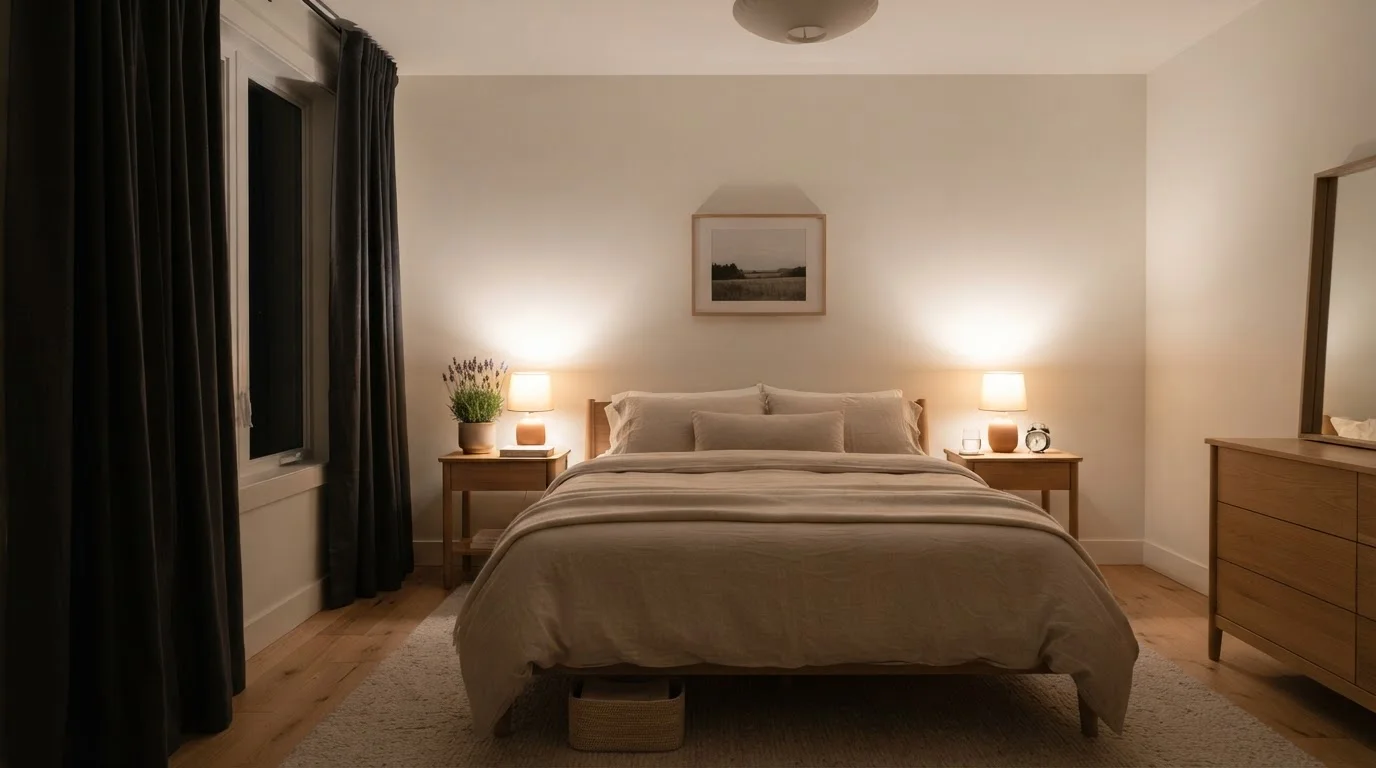
Summary
18 items · 30–90 minutes
Why Your Bedroom Environment Matters for Mental Wellness
Sleep is not passive. During the night, your brain consolidates memories, regulates emotions, and clears metabolic waste — processes that are fundamental to mental clarity, mood stability, and resilience. When your sleep environment works against you, these restorative cycles are disrupted in ways that compound over time.
The good news is that your bedroom is one of the most controllable variables in your sleep equation. Temperature, light, sound, and sensory cues all send signals to your brain and autonomic nervous system about whether it is safe to fully disengage into deep sleep. Optimising these factors does not require expensive renovations — it requires intentional, systematic attention to what your space is already communicating.
This checklist walks you through every major environmental lever, grouped by category, so you can audit your space methodically rather than guessing. Pair it with evidence-informed behavioral habits by reviewing our sleep hygiene habits guide for a complete approach to better rest.
Persistent Sleep Problems Need Professional Attention
Environmental changes can meaningfully support better sleep for most people, but they are not a substitute for medical evaluation if you experience chronic insomnia, excessive daytime sleepiness, or symptoms of a sleep disorder such as sleep apnea. If sleep difficulties are significantly affecting your daily functioning or mental health, please consult a qualified healthcare professional. This article provides general wellness information, not medical advice.
How to Use This Checklist
Work through each category in a single session if possible — ideally on an afternoon when you can make changes before your next sleep window. Mark items as must priorities first, then return to should and nice-to-have items in follow-up sessions.
You do not need to implement everything at once. Even addressing light and temperature alone can produce noticeable improvements for many people. The goal is to reduce the friction between being awake and falling asleep, and to make your bedroom a place your nervous system genuinely associates with safety and recovery.
Blackout Curtains or Sleep Mask
Blocks external light to support natural melatonin production and uninterrupted sleep.
White Noise Machine or Fan
Provides consistent background sound to mask disruptive noise and reduce nighttime awakenings.
Smart Thermostat or Portable Fan
Helps maintain the optimal cool room temperature associated with faster sleep onset.
Essential Oil Diffuser
Disperses calming scents like lavender into the room as a relaxation cue before bed.
Amber or Red Bedside Lamp
Provides warm-toned light that avoids the melatonin-suppressing effects of cool white or blue-spectrum bulbs.
Once your physical environment is addressed, consider layering in consistent pre-sleep routines — your behavioral signals reinforce what your space communicates. Small, durable changes sustained over weeks are more effective than dramatic short-term interventions.
Don't Overlook Hidden Light Sources
Even small amounts of light — from a charging phone, a digital clock, or a hallway gap under the door — can signal wakefulness to your brain. Research suggests that light exposure during sleep is associated with more fragmented rest and reduced slow-wave sleep. Conduct a lights-off scan of your room before bed to identify any overlooked sources.
This article is for general informational and educational purposes only and does not constitute medical advice. Always consult a qualified healthcare professional for concerns about your sleep or mental health.
The content on this site is for informational purposes only and is not a substitute for professional advice. Always consult a qualified professional for guidance specific to your situation.