

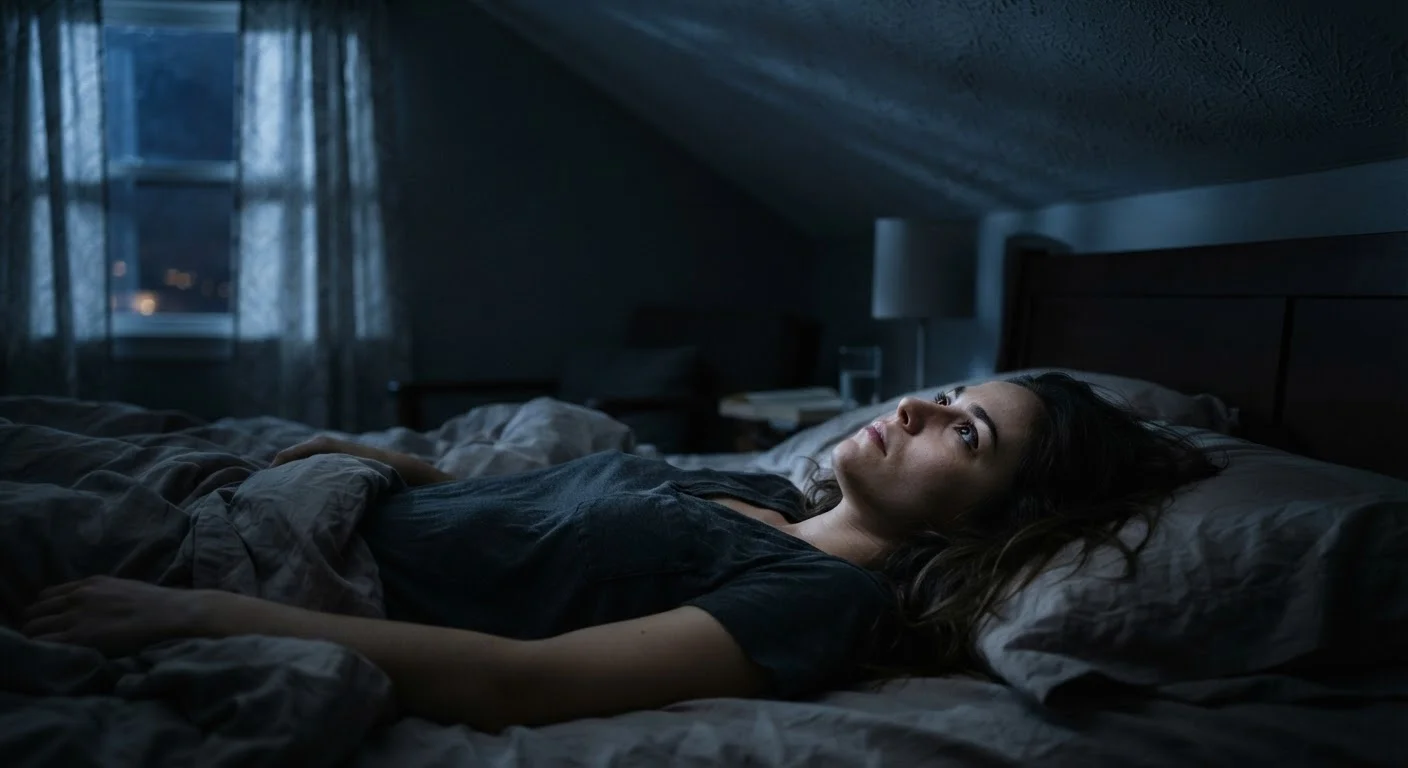
How the Stress Response Disrupts Sleep Architecture
When the brain perceives a threat — real or anticipated — the hypothalamic-pituitary-adrenal (HPA) axis releases cortisol and activates the sympathetic nervous system. This response is adaptive in the short term: it sharpens attention, raises alertness, and prepares the body to act. The problem arises when this activation does not switch off.
Under chronic stress, cortisol levels remain elevated in the late evening, precisely when they should be declining. That evening drop in cortisol is part of the signal that allows melatonin — the hormone that promotes sleep — to rise. When cortisol stays high, melatonin production is suppressed, sleep onset is delayed, and the depth of sleep is compromised.
The disruption is not limited to difficulty falling asleep. Research using polysomnography — the clinical measurement of brain activity during sleep — has documented that chronic stress reduces the proportion of slow-wave (deep) sleep and REM sleep. Slow-wave sleep is essential for physical restoration and immune regulation; REM sleep supports emotional processing and memory. Losing both compounds the toll that stress takes on the body and mind.
Stress, Sleep, and Physical Health
The stress–sleep cycle does not only affect mood and cognition. Disrupted sleep is linked to immune suppression, elevated inflammatory markers, and worsened outcomes in a range of chronic conditions. If you are managing an existing health condition alongside sleep difficulties, consider exploring how these factors interact — our article on sleep and chronic conditions provides useful context.
For a broader look at how disrupted sleep intersects with mental health, see how sleep deprivation and mental health reinforce each other.
Poor Sleep as a Stress Amplifier
The relationship between stress and sleep is bidirectional — a point that is easy to overlook. Most people understand that stress causes poor sleep, but fewer recognize that poor sleep actively intensifies the stress response the following day.
Sleep deprivation — even partial, as in consistently getting one to two hours less than needed — increases reactivity in the amygdala, the brain region most associated with threat detection and emotional intensity. At the same time, it reduces activity in the prefrontal cortex, which is responsible for rational appraisal and emotional regulation. The result is a brain that perceives stressors as larger and is less equipped to respond to them calmly.
HPA axis sensitivity also increases after poor sleep, meaning the stress-hormone response to a given challenge is measurably stronger than it would be after adequate rest. This creates the hallmark feedback loop: stress degrades sleep quality, and degraded sleep heightens stress reactivity, which further disrupts the following night.
~50%
Adults reporting stress-related sleep problems
The American Psychological Association's Stress in America surveys have consistently found that roughly half of adults report lying awake at night due to stress.
24–48 hrs
HPA axis normalization after acute stress
Research indicates cortisol levels can take one to two days to fully normalize after a discrete stressor — longer when stress is chronic or unresolved.
60%
Greater amygdala reactivity after sleep loss
Studies using neuroimaging have found amygdala responses to negative stimuli are substantially amplified following experimental sleep restriction, compared to well-rested baselines.
Understanding this loop is foundational. The bidirectional relationship between sleep and stress is well-documented in sleep science and deserves recognition as a genuine health concern rather than a minor inconvenience.
Practical Approaches to Interrupting the Cycle
Because stress and sleep deprivation reinforce each other, strategies that target only one side of the equation tend to produce limited results. A more effective approach addresses both simultaneously, focusing on reducing physiological arousal and strengthening the conditions that support sleep.
- Consistent sleep timing: Anchoring wake time — even after a poor night — helps stabilize the circadian rhythm and prevents the cycle from deepening.
- Evening wind-down practices: Diaphragmatic breathing, progressive muscle relaxation, and gentle movement are supported by research as ways to activate the parasympathetic nervous system and lower pre-sleep arousal.
- Light management: Reducing bright and blue-spectrum light exposure in the two hours before bed supports melatonin onset. Morning light exposure reinforces circadian cues.
- Physical activity: Regular moderate-intensity exercise is associated with improved sleep quality and reduced HPA axis reactivity, though timing matters — vigorous exercise close to bedtime can have a stimulating effect for some individuals.
- Cognitive approaches: Cognitive behavioral therapy for insomnia (CBT-I) has a strong evidence base and directly addresses the thought patterns and behaviors that sustain chronic insomnia.
For those rebuilding sleep after a prolonged period of stress, the process takes time. A structured approach is explored in our guide on restoring sleep after chronic stress. It is also worth noting that anxiety — while related to stress — operates through partially distinct mechanisms; how chronic anxiety disrupts sleep offers additional context.
This article is for general informational and educational purposes only and does not constitute medical advice. If you are experiencing persistent sleep difficulties, significant stress, or related health concerns, please consult a qualified healthcare professional.
Frequently Asked Questions
Stress activates the sympathetic nervous system, raising heart rate, body temperature, and cortisol levels — all of which signal alertness rather than rest. This physiological arousal competes directly with the biological processes needed to initiate sleep, such as the natural evening rise in melatonin. Racing thoughts associated with stress further increase cognitive arousal, making it difficult for the brain to wind down.
Yes. Research consistently shows that insufficient sleep heightens the amygdala's reactivity to perceived threats and reduces the prefrontal cortex's ability to regulate emotional responses. This means stressors that might be manageable after adequate rest feel significantly more overwhelming after a poor night's sleep, sustaining and often amplifying the stress response.
Slow-wave (deep) sleep and REM sleep are particularly vulnerable. Elevated cortisol tends to fragment slow-wave sleep, which is critical for physical restoration, immune function, and memory consolidation. REM sleep, important for emotional processing, is also curtailed, which may explain the mood and cognitive difficulties that accompany chronic stress.
Recovery timelines vary considerably depending on the severity and duration of the stress, individual biology, and whether supportive habits are in place. Some people notice improvement within days of stress resolution; others require weeks of consistent sleep hygiene and stress management before sleep normalizes. A healthcare provider can offer personalized guidance if difficulties persist.
Evidence supports several lifestyle-based approaches, including consistent sleep and wake times, relaxation practices such as diaphragmatic breathing and progressive muscle relaxation, limiting evening light exposure, and regular physical activity earlier in the day. Cognitive behavioral therapy for insomnia (CBT-I) is also considered a well-supported non-pharmacological intervention. Always consult a healthcare professional before starting any new health regimen.
If sleep difficulties persist for more than a few weeks, significantly impair daily functioning, or are accompanied by symptoms such as prolonged low mood, anxiety, or physical complaints, it is important to seek evaluation from a qualified healthcare professional. Chronic insomnia and stress-related disorders are treatable conditions, and professional assessment rules out underlying causes.
The content on this site is for informational purposes only and is not a substitute for professional advice. Always consult a qualified professional for guidance specific to your situation.