

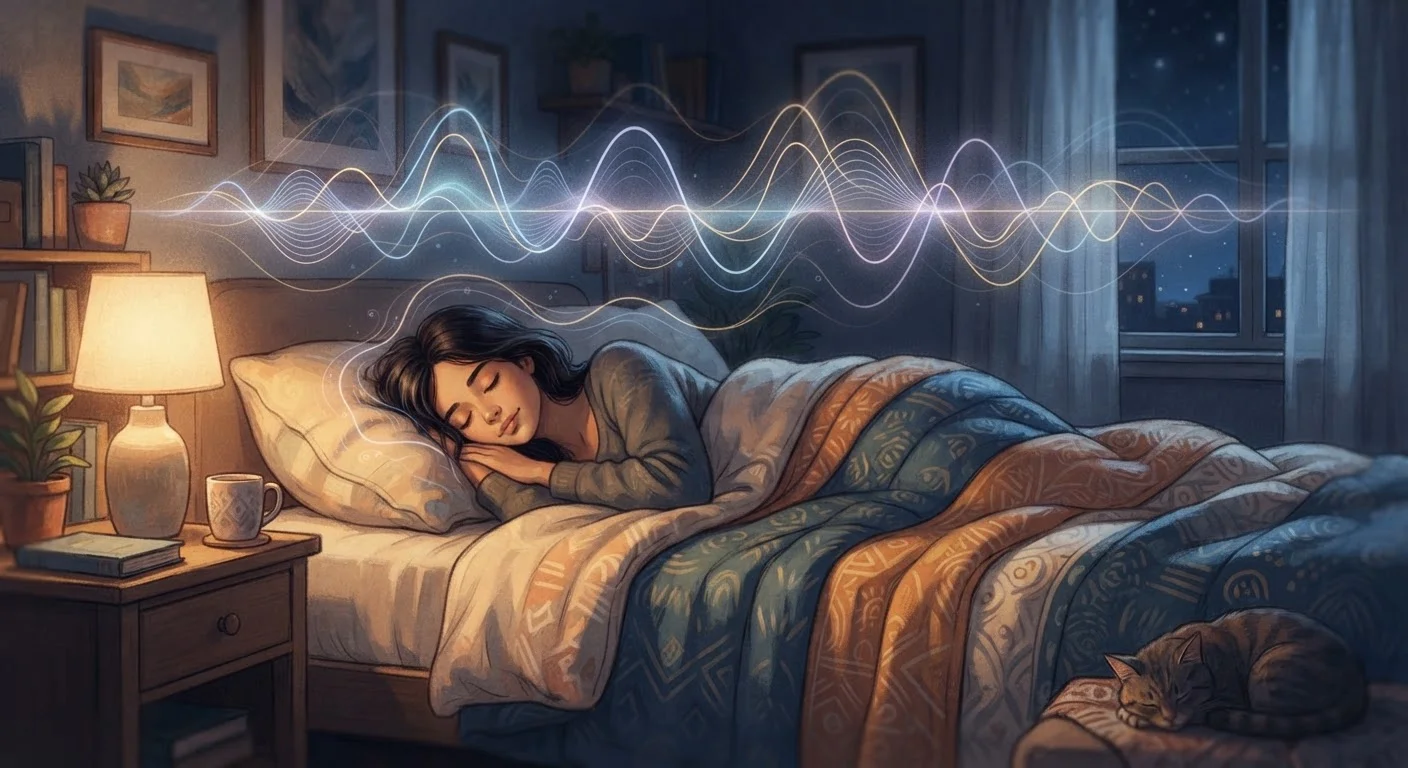
The Four Sleep Stages at a Glance
Sleep is not a single, uniform state. Each night, your brain and body cycle through four distinct stages — one period of REM sleep and three stages of NREM sleep — each serving a specific biological role. Understanding these stages clarifies why logging enough hours is only part of the equation. The quality and composition of those hours matter just as much.
For a deeper look at how these stages interact, see our science-backed exploration of NREM and REM sleep. If you're new to thinking seriously about sleep, start with the fundamentals before diving further.
Breaking Down Each Stage
Stage 1 — Light Sleep (NREM 1)
This transitional stage lasts just one to seven minutes. Brain activity begins to slow from waking rhythms, muscles relax, and the eyes move slowly. It's easy to be roused from Stage 1, which is why a brief noise can jolt you awake without feeling like you were truly asleep.
Stage 2 — Light Sleep (NREM 2)
Stage 2 occupies roughly 45–55% of total sleep time in adults and serves as the primary stage of light sleep. Core body temperature drops, heart rate slows, and the brain produces brief bursts of electrical activity called sleep spindles — thought to play a role in memory consolidation and sensory gating, helping the brain filter external stimuli.
Stage 3 — Deep Sleep (NREM 3)
Often called slow-wave sleep, Stage 3 is the most physically restorative stage. The brain generates high-amplitude delta waves, growth hormone is released, and tissue repair accelerates. This is the stage that leaves you feeling genuinely refreshed. It is hardest to be woken from and is concentrated during the first half of the night. For a thorough look at how deep sleep drives muscle repair and hormonal balance, see your complete guide to sleep and physical recovery.
REM Sleep
REM sleep first appears roughly 90 minutes after sleep onset. The brain becomes highly active — nearly resembling waking patterns — while skeletal muscles are temporarily paralyzed. Dreaming is most vivid here. REM is critical for emotional regulation, creative problem-solving, and memory integration. Its proportion increases across cycles, dominating the second half of the night.
NREM Sleep
Non-Rapid Eye Movement sleep, encompassing Stages 1, 2, and 3. It is characterized by progressively slowing brain activity and is associated with physical restoration.
REM Sleep
Rapid Eye Movement sleep, marked by near-waking brain activity, temporary muscle paralysis, and vivid dreaming. It is critical for emotional and cognitive processing.
Sleep Spindles
Brief bursts of oscillatory neural activity occurring during NREM Stage 2. They are associated with memory consolidation and the brain's ability to filter sensory input during sleep.
Slow-Wave Sleep
Another name for NREM Stage 3, characterized by high-amplitude, low-frequency delta brainwaves. This is the deepest and most physically restorative sleep stage.
Sleep Architecture
The structural organization of sleep stages across a night, including the sequence, proportion, and timing of each stage within sleep cycles.
Delta Waves
High-amplitude, slow-frequency brain oscillations (0.5–4 Hz) that dominate during deep NREM sleep and are considered a marker of restorative slow-wave sleep.
Why Full Sleep Cycles Matter
A complete sleep cycle runs approximately 90 minutes, and a typical night involves four to six cycles. Early cycles are weighted toward deep (NREM 3) sleep; later cycles lean heavily into REM. Cutting sleep short — even by 60 to 90 minutes — disproportionately reduces REM time, which is packed into morning hours.
25%
Portion of adult sleep spent in REM
According to the American Academy of Sleep Medicine, REM sleep typically accounts for roughly 20–25% of total sleep time in healthy adults.
90 min
Time before first REM episode
REM sleep generally first appears about 90 minutes after sleep onset, with each subsequent REM period growing longer through the night.
~50%
Sleep time spent in Stage 2
NREM Stage 2 is the most prevalent sleep stage, accounting for roughly half of total sleep time in adults, per sleep research literature.
Alcohol, late screens, irregular schedules, and sleep disorders can fragment cycles or suppress specific stages without reducing total hours. That's why someone sleeping seven hours with frequent wake-ups may feel less restored than someone sleeping six uninterrupted hours with complete cycles. Sleep architecture also shifts meaningfully across life — a topic explored in detail in how rest needs and patterns change with age.
For a broader overview of natural approaches to sleep quality, visit the Sleep & Recovery hub.
This article is for informational purposes only and is not a substitute for professional medical advice. If you have concerns about your sleep or health, consult a qualified healthcare provider.
The content on this site is for informational purposes only and is not a substitute for professional advice. Always consult a qualified professional for guidance specific to your situation.