

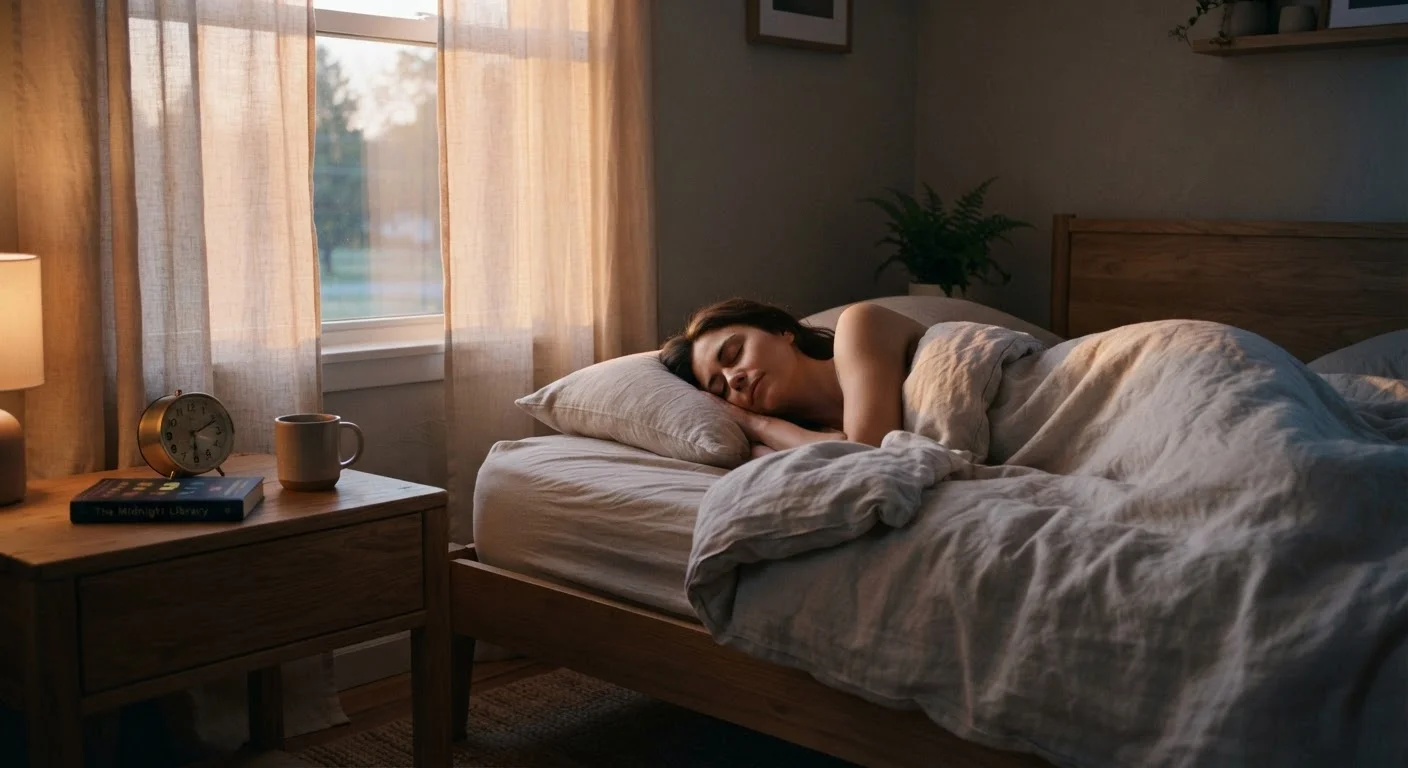
The Daily Hormonal Rhythm of Sleep and Wakefulness
Sleep is not simply the absence of wakefulness — it is an actively regulated biological state driven by a precise hormonal choreography. At the center of that choreography are two hormones with opposing rhythms: melatonin and cortisol. Understanding how they interact across a 24-hour period helps explain why sleep timing matters just as much as sleep duration.
As daylight fades, the pineal gland begins secreting melatonin in response to signals from the brain's master clock, the suprachiasmatic nucleus (SCN). Melatonin levels rise gradually through the early evening, peak in the middle of the night, and then decline toward dawn. This hormonal arc doesn't sedate you — instead, it communicates to every cell in the body that nighttime has arrived, lowering core body temperature and easing the nervous system toward sleep readiness. For a deeper look at how the brain's internal clock coordinates these signals, see our guide to circadian rhythms.
Meanwhile, cortisol follows the inverse arc. Produced by the adrenal glands, it reaches its daily high point roughly 30 to 45 minutes after waking — a phenomenon researchers call the cortisol awakening response. This morning spike is not stress; it is a healthy, functional surge that mobilizes glucose, activates immune responses, and sharpens mental focus. Cortisol then tapers steadily across the day, hitting its lowest point around midnight to allow restorative sleep to proceed uninterrupted.
What Disrupts the Cortisol-Melatonin Balance
Several common modern behaviors interfere with this finely calibrated hormonal balance, often without the individual realizing it.
~90 min
Average melatonin onset before habitual sleep time
Research indicates melatonin secretion typically begins 1–2 hours before an individual's regular sleep time under normal light conditions.
50%
Melatonin suppression from bright evening light
Studies have found that bright indoor or screen light in the evening can suppress melatonin production by approximately half compared to dim-light conditions.
20–30 min
Peak of cortisol awakening response after waking
The cortisol awakening response — a natural, healthy surge — typically peaks within 20 to 30 minutes of waking in most adults.
Artificial light after dark is one of the most well-documented disruptors. Blue-wavelength light from screens and LED lighting suppresses melatonin production because the SCN interprets it as a signal that daytime continues. Research published in peer-reviewed journals has consistently found that evening light exposure delays melatonin onset and shortens the total window for sleep-promoting hormone activity.
Chronic psychological stress introduces a different problem. When the body perceives ongoing threat, cortisol secretion remains elevated well into the evening hours — directly competing with melatonin's sleep-inducing signal. The bidirectional relationship between sleep and stress is well established: poor sleep raises cortisol the following day, and high cortisol disrupts the next night's sleep, forming a self-reinforcing cycle.
Irregular sleep timing also weakens the rhythm. The SCN relies on consistent light-dark cues and behavioral routines — including regular bed and wake times — to anchor melatonin and cortisol release to predictable windows. Frequent schedule shifts, such as those seen in shift work or chronic social jet lag, blunt both hormonal peaks and reduce overall sleep quality. The role of sleep timing in everyday health is often underappreciated compared to sleep duration alone.
Other Hormones That Shape Your Sleep
While cortisol and melatonin are the headline players, several other hormones contribute meaningfully to sleep architecture and depth.
“Sleep is the single most effective thing we can do to reset our brain and body health each day. The hormonal systems that govern it are exquisitely sensitive to the cues we give them.”
— Matthew Walker, Professor of Neuroscience and Psychology, author of research on sleep science
Growth hormone (GH) is secreted predominantly during the first few cycles of slow-wave (deep) sleep. It plays a central role in tissue repair, muscle recovery, and metabolic regulation. Fragmented or insufficient deep sleep reduces GH output, which is one reason adequate sleep is considered essential for physical recovery and long-term metabolic health.
Adenosine is a neuromodulator — technically not a hormone — that accumulates in the brain throughout waking hours, progressively increasing what researchers call sleep pressure. It binds to receptors that slow neural activity and promote drowsiness. Caffeine works precisely by blocking adenosine receptors, which is why it temporarily masks fatigue without actually reducing the underlying adenosine load.
Leptin and ghrelin, hormones that govern appetite and satiety, are also tightly coupled to sleep. Studies have shown that sleep deprivation suppresses leptin (which signals fullness) and elevates ghrelin (which stimulates hunger), a pattern that partly explains why inadequate sleep is associated with increased caloric intake. For broader context on how cortisol interacts with stress and immunity, see what cortisol actually does and when it becomes a problem.
Supporting Healthy Hormonal Sleep Rhythms
Supporting the cortisol-melatonin cycle does not require supplements or medical intervention for most healthy adults. Behavioral and environmental adjustments are often the most effective and sustainable starting point.
Anchor Your Rhythm With Morning Light
Getting 10–15 minutes of natural outdoor light within an hour of waking is one of the most effective ways to calibrate your SCN and set the biological clock for melatonin release that evening. On overcast days, outdoor light still provides significantly more lux than typical indoor lighting. This single habit has downstream benefits for both sleep onset timing and daytime cortisol patterns.
Morning light exposure — ideally natural sunlight within an hour of waking — anchors the SCN's daily rhythm and supports a robust cortisol awakening response, which in turn sets the clock for melatonin release later that night. Dimming artificial lights in the two hours before bed and minimizing blue-light exposure from screens creates conditions that allow melatonin to rise on schedule.
Consistent meal timing, regular physical movement earlier in the day, and evening wind-down practices that lower psychological arousal all contribute to a cortisol decline curve that does not overstay its welcome into the night. Our article on natural ways to support your sleep-wake cycle explores these behavioral strategies in detail.
It is worth emphasizing that individual hormonal patterns vary, and persistent sleep difficulties — particularly those accompanied by mood changes, fatigue, or other symptoms — warrant evaluation by a qualified healthcare professional. This article provides general educational information about sleep physiology and is not a substitute for personalized medical guidance.
This article is for informational purposes only and is not medical advice. Always consult a qualified healthcare professional for concerns about your sleep, health, or hormonal wellbeing.
Frequently Asked Questions
Melatonin signals to your body that it is dark and nighttime, creating conditions favorable for sleep. It doesn't act as a sedative in the way sleep medications do. Think of it as a biological 'lights out' cue rather than a direct sleep switch.
This natural surge, called the cortisol awakening response, helps mobilize energy, sharpen focus, and prepare the body for the demands of the day. It is a healthy, expected part of the morning hormonal transition out of sleep.
Yes. Elevated cortisol in the evening blunts melatonin release and keeps the nervous system in an alert state, making it harder to fall and stay asleep. This is one reason chronic stress is strongly linked to insomnia.
Blue-wavelength light from screens signals to the SCN that it is still daytime, suppressing melatonin production. Reducing screen exposure in the hour or two before bed is one of the most evidence-supported strategies for protecting natural melatonin release.
Yes. Growth hormone is released predominantly during deep slow-wave sleep, adenosine accumulates throughout the day building sleep pressure, and leptin and ghrelin — which regulate appetite — are also influenced by sleep quality and duration.
If you experience persistent sleep difficulties, excessive daytime fatigue, or suspect a hormonal imbalance, a qualified healthcare professional is the right resource. Hormone testing and interpretation require individualized clinical assessment.
The content on this site is for informational purposes only and is not a substitute for professional advice. Always consult a qualified professional for guidance specific to your situation.