

What Cortisol Actually Is
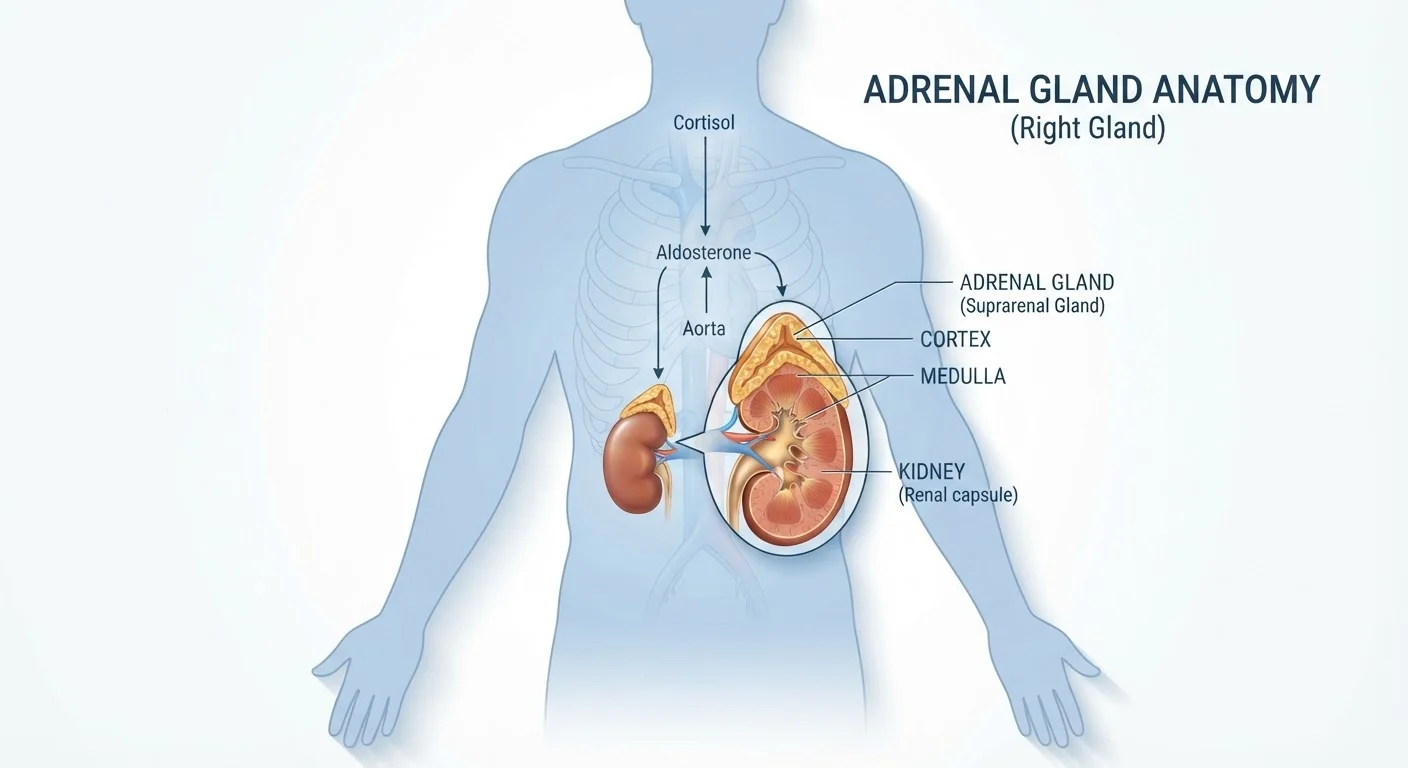
Cortisol is a steroid hormone produced by the adrenal glands — two small structures that sit on top of the kidneys. It belongs to a class of hormones called glucocorticoids and is often labeled the body's primary "stress hormone," though that framing only tells part of the story.
| Hormone class | Glucocorticoid (steroid hormone) |
| Produced by | Adrenal cortex (atop each kidney) |
| Daily peak | 30–45 minutes after waking (Established circadian rhythm research) |
| Primary functions | Stress response, metabolism, immune regulation, blood pressure |
| Regulated by | HPA axis (hypothalamus–pituitary–adrenal) |
| Chronic elevation linked to | Sleep disruption, mood changes, immune suppression, metabolic shifts (Multiple peer-reviewed studies) |
Under normal conditions, cortisol follows a predictable daily rhythm called a diurnal pattern: levels peak shortly after waking — typically within 30 to 45 minutes — then gradually decline throughout the day, reaching their lowest point around midnight. This rhythm supports alertness in the morning and restful sleep at night. It also helps regulate metabolism, blood pressure, and immune function, making cortisol essential rather than inherently harmful.
The Stress Response: How Cortisol Helps
When the brain perceives a threat — physical, emotional, or psychological — the hypothalamus triggers a hormonal cascade. The pituitary gland signals the adrenal glands to release cortisol and adrenaline. Together, these hormones prepare the body for action: blood sugar rises to fuel muscles, heart rate increases, and non-essential functions like digestion are temporarily suppressed.
This response, often called "fight or flight," evolved to handle acute, short-lived threats. Once the threat passes, cortisol levels drop and the body returns to baseline. Research consistently shows this acute stress response is adaptive — it sharpens focus, supports immune defense in the short term, and helps with physical performance.
Glucocorticoid
A class of steroid hormones produced by the adrenal cortex that regulate metabolism, immune response, and the stress response. Cortisol is the most prominent glucocorticoid in humans.
HPA Axis
The hypothalamic–pituitary–adrenal axis is the central hormonal system governing the body's response to stress. It controls cortisol release through a feedback loop between the brain and adrenal glands.
Diurnal rhythm
A natural daily cycle that governs when cortisol levels rise and fall. Cortisol peaks in the morning to promote alertness and gradually declines through the day to prepare the body for sleep.
Cortisol reactivity
The magnitude of the cortisol spike triggered by a stressor. High cortisol reactivity means a stronger hormonal response to perceived threats, which can amplify the effects of chronic stress.
Visceral fat
Fat stored deep in the abdominal cavity around internal organs. Chronic cortisol elevation is associated with increased accumulation of visceral fat, which carries distinct metabolic health implications.
When Cortisol Becomes a Problem
The difficulty arises when stressors are chronic — ongoing work pressure, financial strain, relational conflict, or sleep deprivation — and the cortisol response never fully switches off. Sustained elevated cortisol is associated with a range of health concerns documented in peer-reviewed research:
- Sleep disruption: High evening cortisol interferes with melatonin production, making it harder to fall and stay asleep.
- Mood changes: Prolonged cortisol elevation has been linked to increased risk of anxiety and depressive symptoms.
- Immune suppression: While acute cortisol is briefly anti-inflammatory, chronic elevation can impair the immune system's ability to respond effectively.
- Metabolic effects: Research suggests chronic cortisol elevation promotes visceral fat accumulation and can contribute to blood sugar dysregulation over time.
- Memory and cognition: The hippocampus — a brain region central to memory — is particularly sensitive to sustained glucocorticoid exposure, and prolonged stress may impair memory consolidation.
These associations are well-documented; causality is complex, and individual responses vary considerably based on genetics, lifestyle, and social context.
Evidence-Informed Ways to Support Healthy Cortisol Levels
No single technique eliminates stress, but several lifestyle-based practices have demonstrated meaningful effects on cortisol regulation in clinical studies:
- Consistent sleep schedule: Anchoring wake and sleep times supports the diurnal cortisol rhythm. Even modest improvements in sleep quality are linked to better hormonal balance.
- Mindfulness and meditation: Multiple controlled trials show that regular mindfulness practice reduces cortisol reactivity. Even brief daily sessions appear beneficial over weeks of consistent practice.
- Physical movement: Moderate aerobic exercise lowers baseline cortisol over time, though very intense training without adequate recovery can temporarily elevate it.
- Social connection: Oxytocin released during positive social interaction has a well-documented dampening effect on the stress axis.
- Dietary patterns: Diets rich in whole foods, fiber, and omega-3 fatty acids are associated with lower inflammatory markers and more stable cortisol patterns, though research is still developing in this area.
This article is for informational purposes only and is not a substitute for professional medical advice, diagnosis, or treatment. If you are concerned about your stress levels, mood, or physical health, please speak with a qualified healthcare provider.
The content on this site is for informational purposes only and is not a substitute for professional advice. Always consult a qualified professional for guidance specific to your situation.