

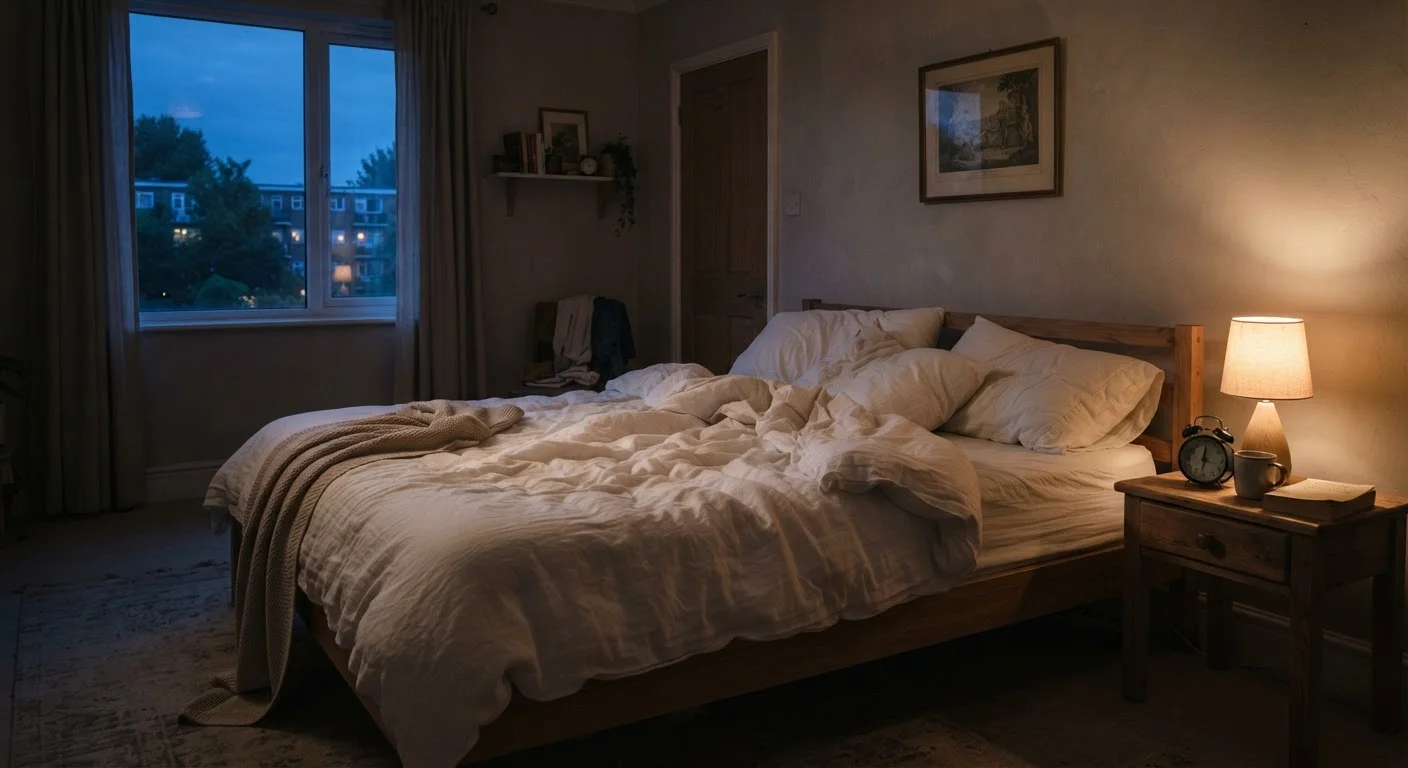
Why Daytime Choices Drive Nighttime Sleep
Most sleep advice focuses on what happens in the hour before bed. But the quality of your rest is shaped far earlier — by the light you see at 7 a.m., the coffee you drink at 3 p.m., and the stress you leave unaddressed by mid-afternoon. Sleep is not an isolated event; it is the downstream result of a cascade of biological signals built across the entire day.
The circadian system — the internal clock governing alertness and sleepiness — is highly sensitive to inputs like light, temperature, meal timing, and activity. When these cues are inconsistent or poorly timed, the system struggles to consolidate sleep efficiently. Understanding why these habits cause harm makes it far easier to change them with intention rather than willpower alone.
For a complementary look at how the hours just before bed compound these effects, see why your evening routine shapes health more than your morning one.
~35%
U.S. adults sleeping less than 7 hours nightly
According to CDC data, approximately one in three American adults regularly does not get the recommended minimum sleep duration.
5–6 hrs
Average caffeine half-life in adults
Research on caffeine pharmacokinetics consistently shows this range, though individual metabolism varies considerably based on genetics and health status.
90 min
Core body temperature drop needed for sleep onset
Sleep research indicates body temperature must fall approximately 1–2°F to initiate sleep, a process influenced by daytime activity and evening environment.
The Most Common Sleep-Undermining Habits — and How to Correct Them
The following mistakes are pervasive precisely because they do not produce obvious, immediate consequences. Sleep debt accumulates quietly; disrupted sleep architecture rarely announces itself the next morning with a clear cause. Recognizing these patterns is the first step toward meaningful change.
Consuming caffeine in the early-to-mid afternoon and assuming it has worn off by bedtime.
Why it happens: The energizing effects of caffeine fade well before the compound clears the body, so people misjudge their actual stimulant load come nightfall.
Keeping an inconsistent wake time on weekends, shifting the body clock by an hour or more.
Why it happens: Sleeping in on days off feels like recovery, but irregular wake times fragment the circadian rhythm — a phenomenon sometimes called social jet lag.
Getting little or no natural light during morning hours, then being exposed to bright artificial light in the evening.
Why it happens: Indoor work and commute lifestyles limit daytime light, while screens and overhead lighting keep the environment bright long after dark — the reverse of what the circadian system expects.
Using alcohol in the evening as a relaxation or sleep aid.
Why it happens: Alcohol's sedative effect at low doses genuinely reduces the time it takes to fall asleep, reinforcing the habit — but the rebound effect in the second half of sleep is often overlooked.
Allowing unresolved mental stress to accumulate throughout the day without any structured release.
Why it happens: Busy daytime schedules push emotional processing to the background; the nervous system then attempts to resolve it at night, feeding rumination and fragmented sleep.
Exercising intensely within two to three hours of bedtime on a regular basis.
Why it happens: Evening workouts fit many schedules, and the general health benefits of exercise are well established — so the timing issue is rarely considered.
Sleep Problems Can Signal Underlying Conditions
Persistent difficulty falling or staying asleep — especially when accompanied by snoring, daytime exhaustion, or mood changes — may indicate conditions such as sleep apnea or a mood disorder. This article provides general health information only. Always consult a qualified healthcare provider for personal evaluation and guidance.
Making even two or three of these adjustments consistently tends to produce noticeable improvements within one to two weeks for most people. If problems persist despite behavioral changes, professional evaluation is the appropriate next step. For a broader set of evidence-backed strategies, the sleep hygiene habits that actually make a difference offers a positive counterpart to this list.
This article is for general informational purposes only and does not constitute medical advice. Consult a qualified healthcare professional for concerns about your sleep or overall health.
The content on this site is for informational purposes only and is not a substitute for professional advice. Always consult a qualified professional for guidance specific to your situation.