

Start here
What the Thyroid Gland Actually Does
Next
The Two Main Thyroid Disorders
Then
Why Thyroid Symptoms Are So Easy to Miss
Deepen your knowledge
Nutrients That Support Thyroid Function
Take action
When to Seek a Professional Evaluation
What the Thyroid Gland Actually Does
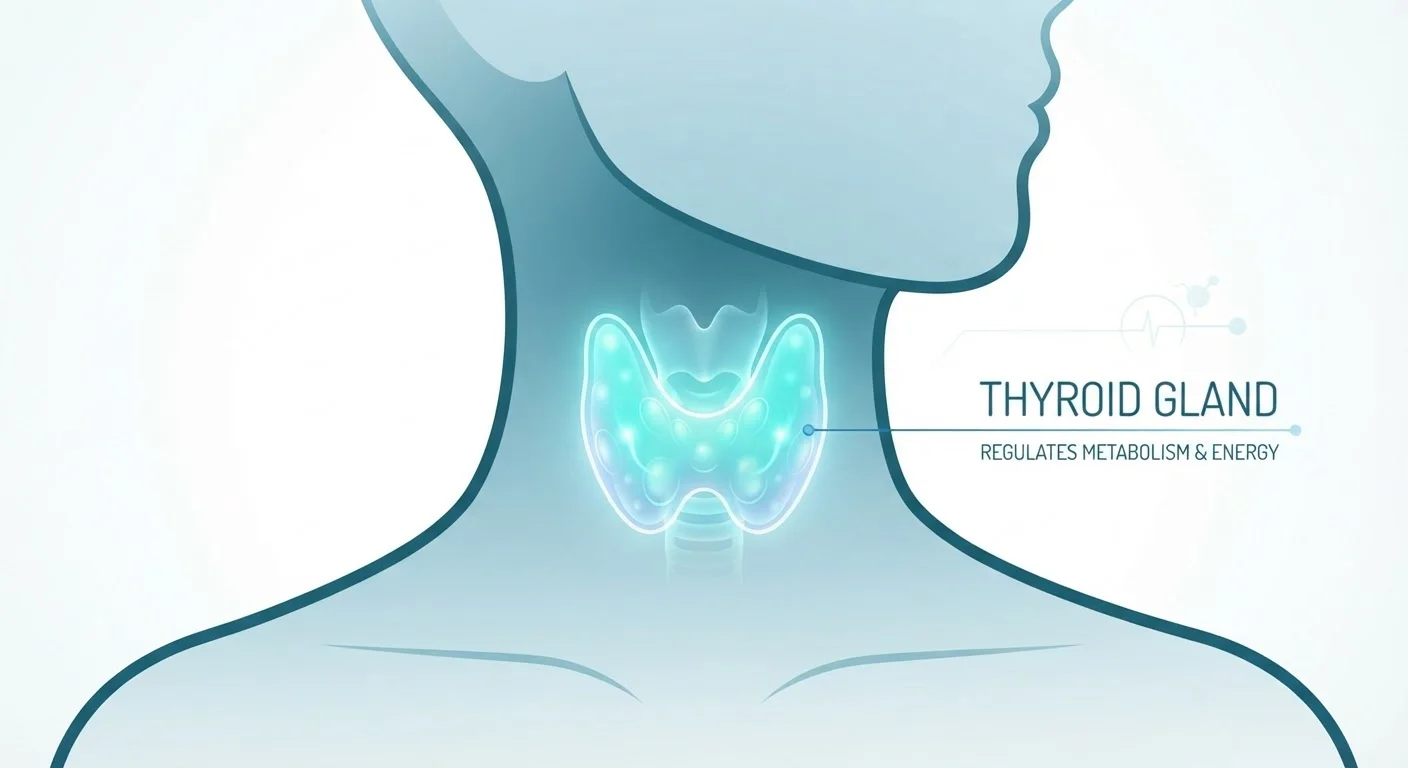
Shaped like a small butterfly, the thyroid sits at the front of the neck, just below the Adam's apple. Despite its modest size, it performs an outsized job: producing hormones that reach virtually every cell in the body.
The two primary hormones it releases — thyroxine (T4) and triiodothyronine (T3) — regulate the rate at which cells convert fuel into energy. This process is commonly called metabolism, but thyroid influence extends well beyond body weight. It shapes resting heart rate, body temperature, digestive speed, mood stability, cognitive sharpness, and reproductive health.
Hormone output is governed by a feedback loop involving the brain. The pituitary gland secretes thyroid-stimulating hormone (TSH), which signals the thyroid to produce more or less T3 and T4 depending on what the body needs. When that loop is disrupted — by autoimmune activity, nutrient deficiency, or other factors — thyroid function shifts out of its normal range.
TSH (Thyroid-Stimulating Hormone)
A hormone produced by the pituitary gland in the brain that tells the thyroid how much hormone to make. High TSH generally signals an underactive thyroid; low TSH may indicate an overactive one.
T3 and T4
The two main hormones the thyroid produces. T4 is the storage form; the body converts it into the more active T3 at the tissue level.
Hypothyroidism
A condition where the thyroid gland produces too little hormone, slowing down many body processes and commonly causing fatigue, weight gain, and cold sensitivity.
Hyperthyroidism
A condition where the thyroid produces excess hormone, accelerating body processes and often causing rapid heartbeat, weight loss, and anxiety.
Autoimmune thyroid disease
A category of thyroid conditions — including Hashimoto's thyroiditis and Graves' disease — where the immune system mistakenly targets the thyroid gland.
Metabolism
The set of chemical processes your body uses to convert food into energy and maintain basic functions. Thyroid hormones act as a primary regulator of this rate.
The Two Main Thyroid Disorders
Most thyroid dysfunction falls into one of two patterns, each with a distinct set of effects:
- Hypothyroidism (underactive thyroid): The gland produces insufficient hormone. Cell processes slow down, commonly causing persistent fatigue, unexplained weight gain, cold sensitivity, constipation, dry skin, and low mood. The most frequent cause in the US is Hashimoto's thyroiditis, an autoimmune condition where the immune system gradually damages thyroid tissue.
- Hyperthyroidism (overactive thyroid): The gland produces excess hormone. This speeds up cellular activity, often resulting in unintended weight loss, rapid or irregular heartbeat, anxiety, heat intolerance, and disturbed sleep. Graves' disease, another autoimmune condition, accounts for most hyperthyroidism cases.
Less commonly, thyroid nodules — small lumps within the gland — can alter hormone output or, in rare cases, require further evaluation. Thyroid cancer is relatively uncommon and is a separate clinical concern from functional disorders.
Track Symptom Patterns Before Your Appointment
If you suspect a thyroid issue, keeping a brief log of symptoms — noting when they occur, how long they last, and any pattern across days or weeks — gives your healthcare provider much more useful information than a general complaint of fatigue or weight change. Even a week of notes can sharpen the clinical picture significantly.
Why Thyroid Symptoms Are So Easy to Miss
One of the most clinically recognized challenges in thyroid health is how effectively its symptoms camouflage themselves as ordinary life. Fatigue reads as overwork. Weight shifts get attributed to diet. Brain fog seems like stress. Cold sensitivity goes unnoticed in winter.
Several factors compound this invisibility:
- Gradual onset: Hypothyroidism especially tends to develop slowly over months or years, giving the body time to adapt and mask its signals.
- Symptom overlap: Fatigue, mood changes, and sleep disruption are shared by dozens of conditions — from iron-deficiency anemia to depression to disrupted circadian rhythms. See our guide to circadian rhythm and daily health for more on how sleep timing shapes energy and mood.
- Subclinical states: TSH levels may sit at the edge of the reference range — not dramatically abnormal, but enough to produce real symptoms that clinicians and patients may dismiss.
The practical takeaway is that persistent, unexplained combinations of these symptoms — particularly fatigue alongside weight change and temperature sensitivity — warrant a conversation with a healthcare provider and a simple blood test rather than assumption.
Nutrients That Support Thyroid Function
The thyroid depends on specific micronutrients to synthesize and activate its hormones. Three stand out as particularly critical:
- Iodine
- Iodine is a structural component of both T3 and T4 — the thyroid cannot make its hormones without it. Iodized salt and dairy products are common dietary sources in the US. Both deficiency and excess iodine can disrupt thyroid function.
- Selenium
- This trace mineral activates enzymes that convert inactive T4 into the more potent T3 form. Selenium also helps protect the thyroid from oxidative damage. Brazil nuts, seafood, and eggs are among the better food sources.
- Zinc
- Zinc supports TSH signaling and thyroid hormone synthesis. Its role in immune regulation is also relevant, given that most common thyroid disorders have an autoimmune component.
For a deeper look at how these minerals function together, our guide to zinc, selenium, and iodine offers plain-language detail. Broader micronutrient gaps — including those affecting energy and immunity — are covered in our overview of micronutrient shortfalls in everyday diets.
Supplements Are Not a Substitute for Medical Care
While adequate dietary intake of iodine, selenium, and zinc supports normal thyroid function, taking high-dose supplements without medical guidance can worsen thyroid conditions — excess iodine, in particular, can trigger or aggravate both hypothyroidism and hyperthyroidism. Always discuss supplementation with a healthcare provider before starting, especially if you have a known thyroid condition or take thyroid medication.
When to Seek a Professional Evaluation
Thyroid disorders are diagnosed through blood tests — primarily TSH measurement — and are among the more straightforward conditions to identify with laboratory testing. Self-diagnosis based on symptoms alone is unreliable given how widely they overlap with other conditions.
Consider speaking with a healthcare provider if you experience:
- Persistent unexplained fatigue lasting several weeks or more
- Noticeable and unintended changes in weight despite stable habits
- Temperature regulation problems (feeling unusually cold or hot)
- Heart palpitations or a noticeably fast resting heartbeat
- Significant mood changes, anxiety, or cognitive slowness without a clear cause
- A visible swelling or lump at the front of the neck
Treatment for confirmed thyroid disorders is typically medical, and decisions about medications or dosages must be made by a qualified clinician. Lifestyle habits — including a nutrient-adequate diet, regular movement, and quality sleep — may complement medical care but are not substitutes for it. Our primer on everyday movement and energy is a useful starting point for building daily activity habits that support overall metabolic health.
This article is for general informational and educational purposes only and does not constitute medical advice, diagnosis, or treatment. Always consult a qualified healthcare professional with any questions you may have about a medical condition or before making changes to your health regimen.
Frequently Asked Questions
The thyroid produces hormones — mainly T3 and T4 — that regulate how your cells use energy. It influences metabolism, body temperature, heart rate, digestion, and mood. Think of it as your body's master speed dial.
Early signs vary by disorder. An underactive thyroid often causes fatigue, weight gain, cold sensitivity, and brain fog. An overactive thyroid may cause unexplained weight loss, anxiety, rapid heartbeat, or heat intolerance. These signs are often mistaken for stress or other conditions.
Adequate intake of iodine, selenium, and zinc is essential for thyroid hormone production. Severe deficiencies in these minerals can impair thyroid function. However, dietary changes should complement — not replace — medical treatment for diagnosed thyroid conditions.
A TSH (thyroid-stimulating hormone) test is the standard first-line blood test for evaluating thyroid function. High TSH often suggests hypothyroidism; low TSH may indicate hyperthyroidism. Your healthcare provider may also order T3 and T4 measurements for a fuller picture.
Yes, thyroid disorders are significantly more common in women than in men, though the exact reasons are not fully understood. Autoimmune thyroid conditions like Hashimoto's thyroiditis and Graves' disease disproportionately affect women. Anyone experiencing persistent symptoms should speak with a healthcare provider.
Eating a varied diet that covers key micronutrients — particularly iodine, selenium, and zinc — supports the thyroid's basic needs. Managing chronic stress and maintaining good sleep habits may also play a supportive role. No food or supplement cures a thyroid disorder, and a qualified clinician should guide any treatment plan.
The content on this site is for informational purposes only and is not a substitute for professional advice. Always consult a qualified professional for guidance specific to your situation.