

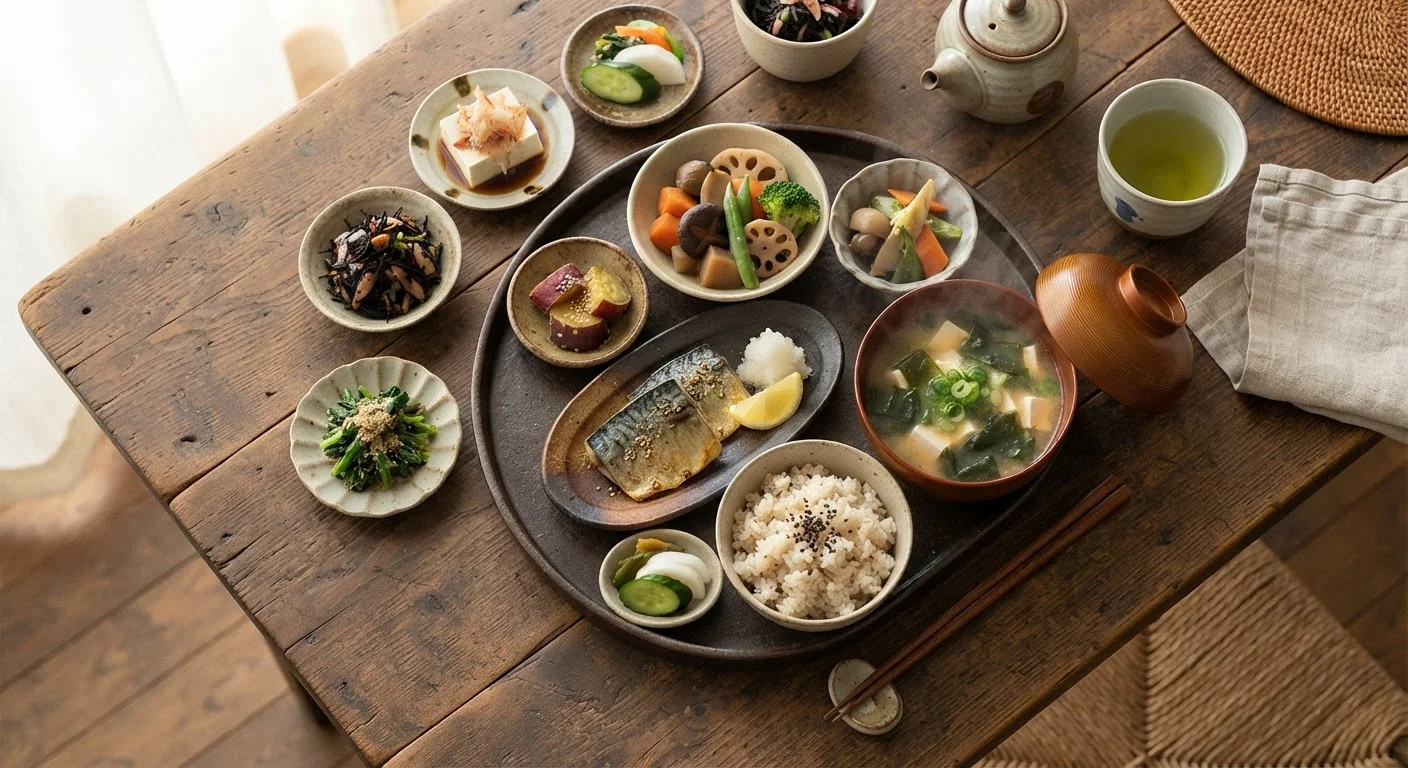
What Makes Okinawa a Blue Zone?
The term 'Blue Zone' was popularized by researcher Dan Buettner and National Geographic to describe regions with unusually high concentrations of centenarians and low rates of chronic disease. Okinawa, Japan's southernmost island chain, is one of five such regions identified globally. Historically, Okinawa recorded among the world's highest rates of individuals living past 100, with remarkably low incidences of cardiovascular disease, certain cancers, and dementia relative to Western populations.
Researchers caution that Blue Zone data is observational and based largely on population-level statistics. Longevity in Okinawa reflects a combination of dietary habits, consistent low-intensity physical activity, strong community ties, and a culturally embedded sense of purpose — known locally as ikigai. Diet is one significant variable among several, not a standalone mechanism. See how Okinawa fits among global traditional eating patterns for broader context.
Core Foods and Nutritional Principles
The traditional Okinawan dietary pattern is defined more by what it emphasizes than what it excludes. Purple sweet potato (beni-imo) historically accounted for a substantial portion of daily caloric intake — an important distinction from rice-heavy mainland Japanese diets. These tubers are nutrient-dense, providing fiber, potassium, vitamins C and B6, and anthocyanins, the antioxidant compounds responsible for their deep color.
Soy-based foods — particularly tofu, miso, and edamame — serve as primary protein sources. Bitter melon (goya), sea vegetables (seaweed), and a range of green and yellow vegetables round out the plant base. Fish is consumed regularly, contributing omega-3 fatty acids, while pork appears in the cuisine but traditionally in smaller portions and often as a flavoring rather than a centerpiece. Understanding key nutrient-dense foods can help contextualize the nutritional value of these traditional staples.
~85%
Plant-based proportion of traditional Okinawan diet
Research by Willcox et al. estimates the traditional dietary pattern was approximately 85% plant-derived by caloric intake, with sweet potato as the dominant source.
~1,800 kcal
Estimated average daily caloric intake (traditional cohort)
Studies of older Okinawan cohorts suggest historically lower caloric intakes compared to Western averages, consistent with the hara hachi bu principle.
5 regions
Blue Zones identified globally
Okinawa is one of five regions identified by population researchers as having disproportionately high concentrations of centenarians relative to global averages.
The overall pattern is low in saturated fat, high in fiber, and rich in phytonutrients — characteristics consistently associated with reduced inflammatory markers in nutritional research.
The Role of Mindful, Moderate Eating
Beyond specific foods, the principle of hara hachi bu — a Confucian-influenced guideline to eat until approximately 80% full — is frequently cited as a behavioral counterpart to the diet's composition. This practice naturally moderates caloric intake without requiring formal tracking or restriction. Over a lifetime, even modest reductions in habitual caloric intake can affect body weight, metabolic health markers, and cellular aging processes, according to nutritional gerontology research.
This mindful approach to portion and pace aligns with broader evidence on eating behavior: slower eating, greater sensory engagement with food, and stopping before satiety signals are fully registered all support more moderate consumption. These practices are not unique to Okinawa but are embedded more systematically in its traditional food culture. How daily food decisions accumulate into lasting patterns offers a complementary perspective on the power of consistent habits over time.
Applying Hara Hachi Bu Practically
Try slowing your eating pace and setting utensils down between bites. Before reaching for a second serving, pause for a few minutes to allow satiety signals to register. This simple habit, practiced consistently, can naturally moderate intake without calorie counting — making it sustainable over the long term.
What the Evidence Actually Shows
Studies on Okinawan dietary patterns — most notably work published by researchers including Dr. Bradley Willcox and colleagues — document associations between traditional dietary habits and reduced rates of chronic disease among older cohorts. However, these are observational findings, and several important limitations apply.
First, the longevity data largely reflects individuals born in the early 20th century who grew up eating the traditional pattern before significant Westernization of the food supply. Second, genetic factors, low childhood exposure to processed foods, and lifelong physical labor also distinguish this population. Third, isolating the diet's specific contribution is methodologically difficult given the multi-factorial nature of longevity.
The Okinawan pattern shares structural similarities with other well-studied diets like the Mediterranean, including high vegetable and legume intake, moderate protein from fish and plant sources, and low processed food consumption. See how the Nordic diet compares as another nature-based approach. These overlapping principles — rather than any single 'superfood' — appear most relevant to long-term health outcomes.
“The Okinawan dietary pattern is not a magic formula, but a coherent whole-diet approach characterized by caloric moderation, plant predominance, and minimal processing — qualities that align with what nutritional science increasingly supports for healthy ageing.”
— Bradley Willcox, Geriatric medicine researcher and co-author of studies on Okinawan longevity
Supporting gut health is another dimension worth noting: the fiber-rich, fermented-food-inclusive nature of the Okinawan diet aligns with dietary principles that consistently support gut health.
This article is for general informational and educational purposes only and does not constitute medical or dietary advice. Individual health needs vary. Consult a qualified healthcare professional or registered dietitian before making significant changes to your diet, especially if you have an existing health condition.
Frequently Asked Questions
The traditional Okinawan diet centers on purple sweet potatoes, green and yellow vegetables, legumes (especially tofu and miso), moderate amounts of fish, and small quantities of pork. Rice and refined grains are consumed less prominently than in mainland Japan. The diet is low in dairy and red meat by historical standards.
Not exactly. While both are rooted in whole, minimally processed foods, the traditional Okinawan diet differs from mainland Japanese eating patterns in its heavy reliance on sweet potato rather than rice, higher tofu consumption, and distinct local ingredients. They share philosophical similarities but are nutritionally distinct.
Hara hachi bu is a Confucian-rooted Okinawan principle of stopping eating when roughly 80% full. By reducing overall caloric intake without formal restriction, this practice may support a moderate energy balance over decades. Researchers studying caloric restriction and longevity often reference it as a real-world example of sustained moderate intake.
There is no evidence that adopting any single diet guarantees longevity. Okinawa's centenarian population reflects a complex interplay of genetics, diet, physical activity, social bonds, and environment. Adopting dietary principles from this pattern — such as increasing plant foods and practicing mindful eating — may support general health, but individual outcomes vary and depend on many factors.
The traditional pattern has changed substantially since the mid-20th century, with increased consumption of processed foods, meat, and refined carbohydrates. Studies of longevity focus primarily on the dietary practices of older generations who followed traditional patterns earlier in life. Contemporary Okinawan eating habits differ considerably from the historical model.
The content on this site is for informational purposes only and is not a substitute for professional advice. Always consult a qualified professional for guidance specific to your situation.