

Why Myths About Yoga Persist
Yoga is one of the most widely practiced mind-body disciplines in the world — and one of the most widely misunderstood. Much of the confusion stems from how yoga is marketed and represented visually: contorted poses performed by slender practitioners on cliffside platforms bear little resemblance to the accessible, evidence-supported practice that takes place in community centers, hospital wards, and living rooms every day.
These myths carry real consequences. They discourage people who might benefit most — older adults, people with chronic pain, those managing stress — from ever stepping onto a mat. Understanding what yoga actually is, and what it is not, is the first step toward an informed choice.
If you're also curious about how misconceptions affect meditation — yoga's close companion — common meditation myths examined covers similar territory.
Myth
You have to be flexible before you can start yoga.
Fact
Flexibility is a result of consistent yoga practice, not a requirement to begin it.
This is the most persistent myth surrounding yoga — and the most damaging to beginners. Waiting until you're flexible to start yoga is like waiting until you're fit to join a gym. Yoga postures (asanas) are tools for building range of motion gradually, not performances that demand it upfront.
Research published in the Journal of Bodywork and Movement Therapies has documented meaningful flexibility gains after as few as eight weeks of regular yoga practice in previously sedentary adults. Props such as blocks, straps, and bolsters exist precisely to make each pose accessible regardless of your starting range. For a broader look at how flexibility training myths hold people back, see common flexibility myths examined.
Myth
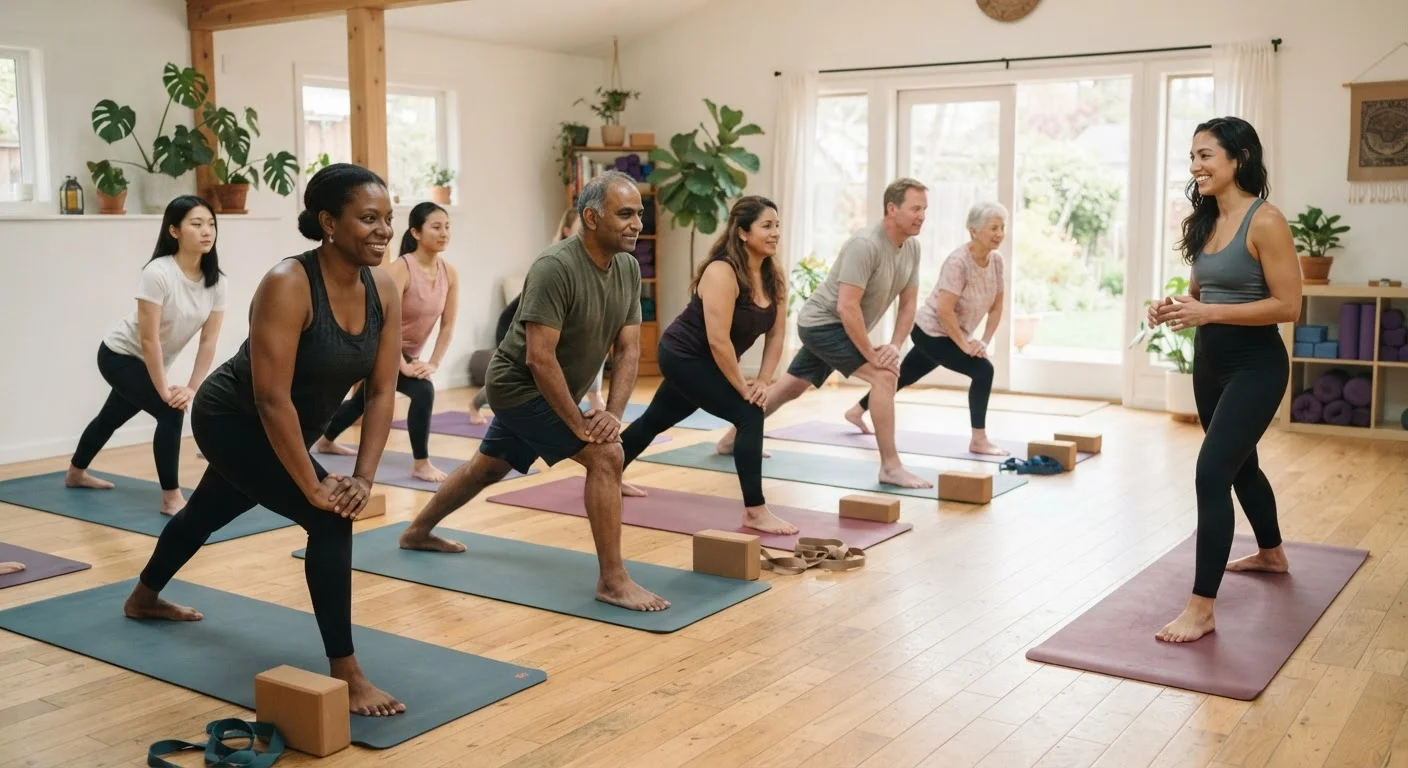
Yoga is only for thin, young, and physically fit people.
Fact
Yoga has been practiced across diverse body types, ages, and abilities for thousands of years, and modern evidence supports its broad accessibility.
Social media feeds can make yoga look like an elite pursuit for the lean and limber — but this is a distortion of both tradition and modern practice. Yoga originated as a system designed for personal transformation, not aesthetic performance. Today, adaptive yoga, chair yoga, and trauma-sensitive yoga programs serve people in wheelchairs, older adults, and individuals managing chronic conditions.
Studies exploring yoga in older adult populations have consistently found improvements in balance, quality of life, and functional mobility. If you're managing joint concerns and worry yoga might not be right for you, arthritis myths examined against current evidence may offer useful context about movement and joint health.
Myth
Yoga is a religion and conflicts with other beliefs.
Fact
Yoga's roots are philosophical and somatic, not doctrinal; millions of practitioners engage with it purely for its physical and mental health benefits.
Yoga originated within Indian philosophical traditions and does carry cultural and spiritual dimensions — which deserve respect. However, participation in yoga does not require adopting any belief system, performing any religious ritual, or abandoning existing faith commitments. Many hospitals, physical therapy practices, and secular wellness programs offer yoga precisely because its breathing techniques and movement sequences carry measurable, non-doctrinal benefits.
Practitioners are free to engage with as much or as little of the philosophical context as resonates with them. The physical postures and breathwork alone constitute a meaningful and complete practice for many people.
Myth
Yoga is too gentle to count as real exercise.
Fact
Depending on the style, yoga can be a vigorous, full-body workout that builds strength, cardiovascular endurance, and muscular stability.
Gentle Hatha or Yin yoga classes are intentionally slow-paced — but they represent only part of the yoga spectrum. Ashtanga, Power Yoga, and Vinyasa classes can elevate heart rate substantially, develop upper-body strength, and challenge core stability comparably to conventional resistance training. Research in Complementary Therapies in Medicine has found that regular yoga practice is associated with improvements in muscular endurance and cardiovascular markers.
The range of styles available means practitioners can choose intensity to match their goals, from restorative recovery sessions to challenging strength-building flows. This variety is a feature, not a limitation.
Myth
You need expensive equipment and a studio membership to practice yoga.
Fact
A mat and floor space are sufficient to begin; instructional resources are widely available at low or no cost.
A studio membership can be a wonderful source of community and guided instruction, but it is not a prerequisite. Many high-quality, teacher-led video classes are freely available online. A basic, non-slip mat is the only truly essential piece of equipment — household items such as a folded blanket or a sturdy book can substitute for blocks and bolsters initially.
The same principle applies to home fitness broadly: removing cost as a barrier opens the practice to far more people. Home workout myths that may be holding you back explores similar misconceptions in the broader fitness space.
Myth
If you have an injury, yoga will make it worse.
Fact
Many injuries can be safely accommodated in yoga through intelligent modifications, and some styles are specifically designed for rehabilitation contexts.
This myth conflates unrestricted practice with yoga as a whole. Like any physical activity, yoga carries some risk — but the practice is highly adaptable. An experienced teacher can help identify modifications that keep you moving without aggravating sensitive areas. Poses can be supported with props, shortened in range, or replaced with alternatives that avoid the affected region entirely.
For a thorough guide to navigating this, principles for modifying yoga with an injury outlines practical approaches. Always involve your healthcare provider when managing an active injury.
Making an Informed Start
Yoga is genuinely broad. It encompasses movement, breath, concentration, and, for those who choose, philosophical inquiry. No single class style, teacher, or tradition represents the whole of it. Beginners benefit most from starting with a style labeled Hatha, Gentle, or Beginner Vinyasa, where instructors typically offer more cues, slower pacing, and explicit modifications.
Pain Is Never a Yoga Goal
A common beginner mistake is pushing through sharp or acute pain to achieve a pose. Yoga should feel challenging at times, but never painful. If you experience pain during a pose, ease out of it immediately and seek guidance from a qualified instructor or healthcare professional.
Community classes at recreation centers and libraries are often low-cost options that provide in-person guidance — an important advantage when learning alignment basics. For a practical overview of what to expect in those first sessions, your first yoga class — what to expect walks through formats, etiquette, and common beginner questions.
36M+
Americans practicing yoga regularly
According to Yoga Alliance and Yoga Journal's 2023 national survey, more than 36 million Americans now practice yoga, up from 20 million a decade prior.
8 weeks
To measurable flexibility gains
Research in the Journal of Bodywork and Movement Therapies found significant hamstring flexibility improvements in sedentary adults after an eight-week yoga program.
55+
Fastest-growing age group in yoga
Industry surveys consistently report that adults over 55 represent one of the most rapidly expanding demographic groups taking up yoga for the first time.
Yoga's relationship to overall mind-body wellness is supported by a growing body of research spanning mental health, musculoskeletal function, and stress physiology. It is not a cure-all, but it is a practice with meaningful, well-documented benefits for a wide range of people — including, almost certainly, you.
Always Consult a Professional First
If you have an existing injury, chronic condition, or are pregnant, speak with a qualified healthcare provider before starting yoga. A certified yoga teacher can also help you identify appropriate modifications. This article is general educational information, not medical advice.
This article is for general informational and educational purposes only and does not constitute medical advice. Consult a qualified healthcare professional before beginning any new exercise program, particularly if you have existing health conditions.
The content on this site is for informational purposes only and is not a substitute for professional advice. Always consult a qualified professional for guidance specific to your situation.