

Our Verdict
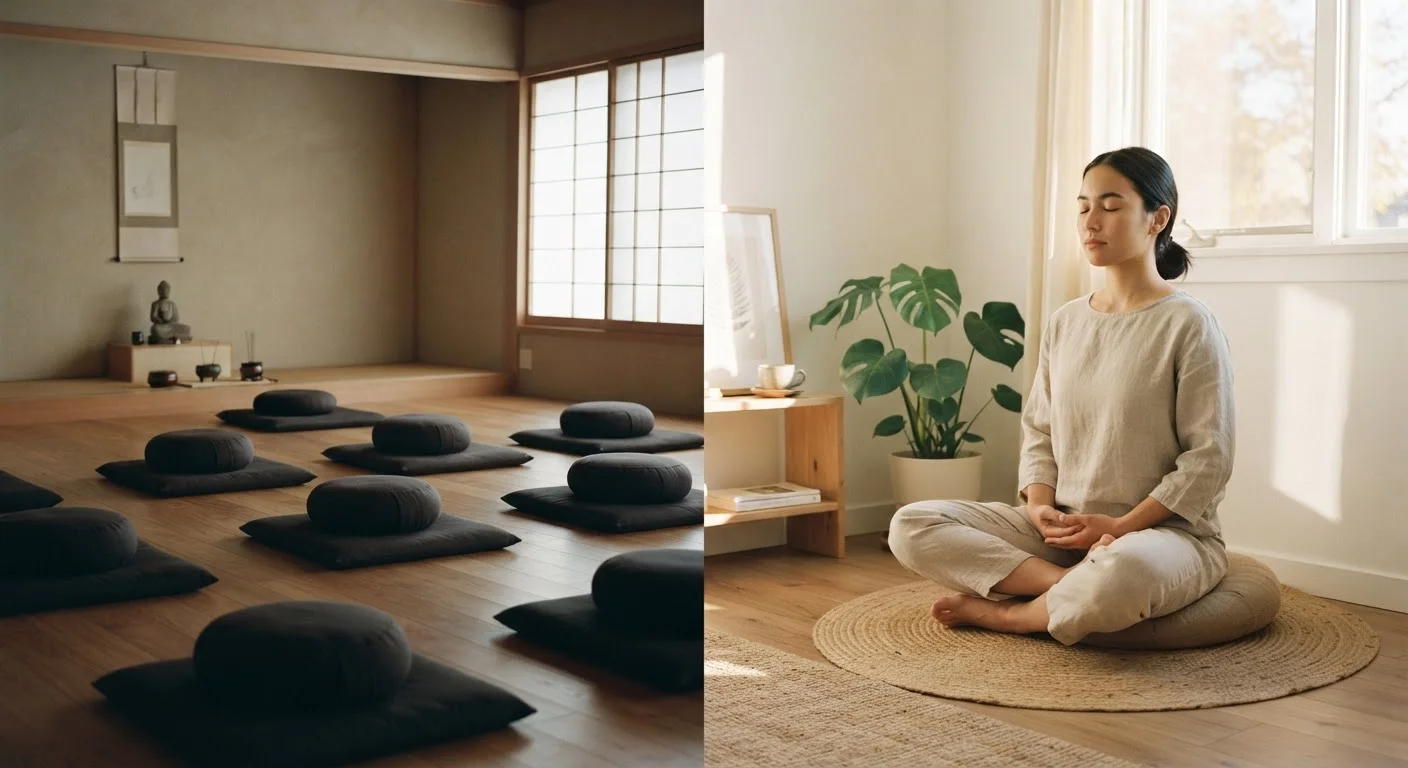
Both intensive retreats and daily short sessions are legitimate, evidence-informed paths to meditation depth. Retreats offer immersive conditions that can shift long-held patterns, while daily practice builds the steady, compounding foundation that sustains those shifts over time. The most resilient practitioners often combine both, using retreats as periodic deepening experiences anchored by an ongoing daily routine.
This exploration is ideal for meditators at any level who want to make a more intentional choice about how they structure their practice, whether they are considering their first multi-day retreat or refining an already consistent daily routine.
What Each Approach Actually Involves
An intensive retreat typically means stepping away from ordinary life for anywhere from a weekend to several weeks. Participants follow a structured schedule — often including multiple hours of sitting and walking meditation each day, periods of silence, and guidance from teachers. Vipassana, Zen sesshins, and yoga-based silent retreats are among the most common formats encountered in the US.
Daily short sessions, by contrast, involve setting aside 10 to 30 minutes each day — usually at home, before work, or during a lunch break — to practice breath awareness, body-scan meditation, or a similar technique. The emphasis is on consistency over intensity.
Understanding both approaches in concrete terms helps clarify what you are actually committing to before weighing the trade-offs.
A Note on Special Populations
Intensive retreat environments are not appropriate for everyone. Individuals experiencing active depression, anxiety disorders, trauma histories, or other mental health conditions should consult a qualified mental health professional before enrolling in a multi-day silent retreat. The same caution applies to people who are pregnant or managing significant physical health conditions. Daily short sessions are generally more adaptable and easier to modify for individual needs.
The Case for Intensive Retreats
Retreats strip away ordinary distractions in a way that even the most disciplined home practice rarely can. Without notifications, responsibilities, or social obligations, the mind has an unusual opportunity to settle at a deeper level.
Deep immersion accelerates progress in concentration
Sustained hours of practice without interruption allow the mind to move through surface restlessness into more refined states of calm and clarity, a process that can take months in fragmented daily sessions.
Structured guidance from experienced teachers
Most retreats provide access to qualified instructors who can address specific obstacles, correct technique, and offer context for difficult experiences as they arise.
Temporary removal from habitual triggers
Distance from ordinary environments — phones, routines, relationships — creates a temporary laboratory for observing mental patterns with greater objectivity.
Community support and shared motivation
Practicing alongside others in silence creates a collective energy that many meditators describe as one of the most sustaining aspects of retreat, even without direct interaction.
Research on intensive mindfulness training — including a widely cited study published in Psychological Science — has found improvements in sustained attention and emotional regulation following multi-day practice. These effects appear tied to the sheer volume of hours practiced in a compressed period, which is difficult to replicate piecemeal.
The Challenges Retreats Present
The same intensity that makes retreats powerful also introduces real difficulties. Days of continuous introspection can surface difficult emotions, unresolved memories, or physical discomfort. Reputable retreat centers offer teacher support for this, but it is worth knowing the terrain in advance.
Difficult emotions can surface unexpectedly
Prolonged introspection in a contained environment sometimes brings up unprocessed psychological material; reputable centers have protocols for this, but the experience can be disorienting.
High cost in time and money for many people
A five-day silent retreat, including travel and lodging, may be out of reach for those with limited vacation days, caregiving duties, or tight financial margins.
Benefits can erode without daily follow-through
Without a stable home practice to return to, the clarity and equanimity developed on retreat often diminishes within weeks as ordinary life reasserts its patterns.
Physical demands of long sitting periods
Hours of floor sitting can strain the knees, hips, and lower back, particularly for those who are new to meditation or managing musculoskeletal conditions.
Accessibility is another practical barrier. Multi-day retreats require both time off and, in many cases, travel and lodging costs. They are therefore unavailable to many people regardless of motivation. Additionally, without a stable daily practice to return to, the clarity gained during a retreat often diminishes within weeks — a phenomenon sometimes called the retreat glow fading.
The Cumulative Power of Daily Short Sessions
Neuroscience research, including studies using MRI imaging, has shown measurable structural brain changes associated with consistent meditation practice over months — even when individual sessions are brief. The key variable appears to be regularity rather than duration per session.
8 weeks
Minimum consistent practice linked to brain changes
A landmark study by Sara Lazar and colleagues at Harvard found measurable cortical thickening in attention-related brain regions after eight weeks of regular mindfulness practice.
13 min/day
Session length improving attention and memory
A 2018 study published in Psychological Science found that 13 minutes of daily meditation over eight weeks improved attention, working memory, and mood in novice practitioners.
Short daily sessions also lower the activation energy required to practice. When meditation is woven into an existing routine — paired with morning coffee or the few minutes before bed — the habit tends to stick. This integration effect is harder to achieve with a practice that exists outside daily life for most of the year.
For people managing chronic health conditions, caregiving responsibilities, or demanding work schedules, a sustainable 15-minute daily practice may deliver more long-term benefit than a single annual retreat with no consistent follow-up.
Making a Thoughtful Choice
The question is rarely which approach is better — it is which is better for you right now. Consider the following when deciding:
- Your current stability: Intensive retreat practice is generally not recommended for those navigating acute mental health challenges without professional guidance. Always discuss significant practice changes with your healthcare provider if relevant.
- Your schedule and resources: Honest assessment of time and financial capacity prevents over-commitment and eventual abandonment.
- Your practice stage: Many teachers suggest establishing a daily practice first, then attending a retreat to deepen it — rather than relying on retreats as the primary method.
Some practitioners find a hybrid rhythm most sustainable: daily 20-minute sessions throughout the year, with one longer retreat annually to recalibrate. Whatever the structure, continuity across time remains the most reliable predictor of lasting benefit.
This article is for general informational and educational purposes only. It is not a substitute for professional medical or mental health advice. If you have a health condition or are new to intensive meditation, consult a qualified healthcare or mental health professional before beginning retreat practice.
The content on this site is for informational purposes only and is not a substitute for professional advice. Always consult a qualified professional for guidance specific to your situation.