

Summary
18 items · 15–30 minutes
Why Herb–Drug Interactions Deserve Serious Attention
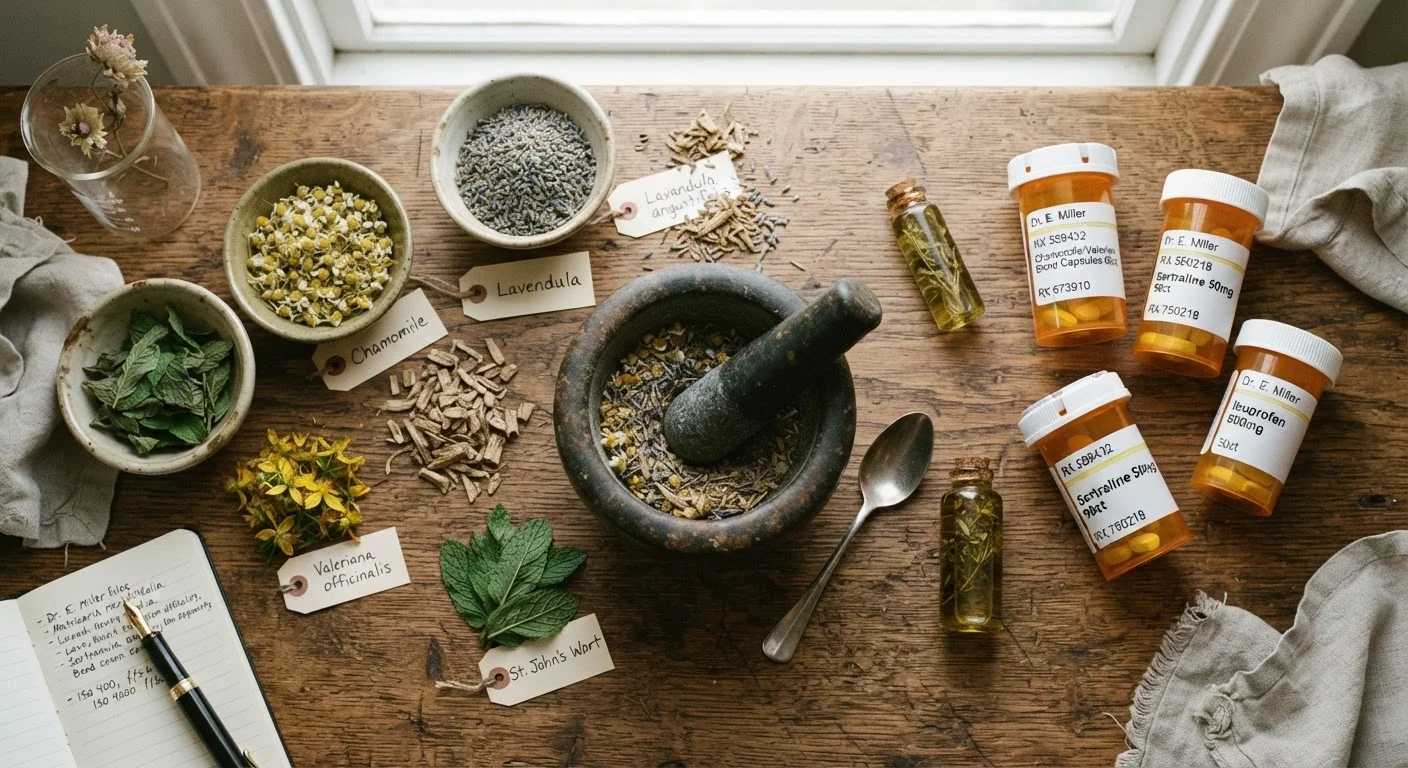
An estimated one in five adults in the United States who take prescription medications also use herbal supplements, yet surveys consistently show that most do not mention this to their doctors. This gap matters because plant-based compounds are pharmacologically active — they can speed up or slow down the liver enzymes responsible for metabolizing drugs, alter blood-clotting pathways, affect blood pressure, or shift blood glucose levels in ways that interfere with carefully calibrated drug dosages.
The consequences range from a medication becoming less effective to dangerously elevated drug concentrations in the bloodstream. St. John's Wort (Hypericum perforatum), for example, is one of the most thoroughly studied herbal interactions: it activates a key liver enzyme (CYP3A4) and the P-glycoprotein transporter, which can reduce plasma levels of antiretrovirals, oral contraceptives, cyclosporine, and certain anticoagulants. Ginkgo biloba, garlic, and high-dose fish oil may amplify bleeding risk when combined with warfarin or aspirin. These are not theoretical concerns — they appear in peer-reviewed pharmacology literature and clinical case reports.
Understanding the mechanisms does not require a pharmacy degree. What it does require is a structured, honest review before adding any plant remedy to a routine that already includes prescription or over-the-counter drugs. The checklist below gives you a framework to do exactly that.
"Natural" Does Not Mean Risk-Free
Plant compounds are biologically active substances. Many herbs have been shown to alter liver enzyme activity, blood-clotting factors, blood pressure, or blood glucose — effects that can directly interfere with prescription drug efficacy and safety. The absence of a drug approval status does not eliminate pharmacological interaction potential. Always apply the same caution you would to any new medication.
What You'll Need Before You Begin
Working through this checklist efficiently is easier when you gather the right materials first. Pull together your current medication list — including over-the-counter drugs, vitamins, and any supplements you already take — and have access to a reliable interaction database or a pharmacist who can run a check. For a broader look at supplement safety questions, see our questions to ask before starting any natural supplement for a chronic condition.
Complete Medication List
A written record of every prescription drug, OTC medication, vitamin, and supplement you currently take, including doses and frequency.
Herb–Drug Interaction Database
A peer-reviewed or clinically curated reference — such as Natural Medicines or a pharmacist-run check — used to identify known interactions between the herb and your medications.
Clinical Pharmacist or Integrative Medicine Provider
A qualified professional who can interpret interaction data in the context of your full health picture and recommend monitoring parameters.
Third-Party Testing Records
Certificates of analysis or seals from bodies such as USP or NSF International that verify product purity and potency.
Symptom Tracking Log
A simple notebook or app entry used to record any new symptoms, changes in wellbeing, or medication-effect shifts after starting the herb.
The Herb–Drug Interaction Checklist
Work through each group below before you introduce a new herbal remedy. Items marked must are non-negotiable safety steps; should items are strongly recommended; nice to have items improve your overall risk picture.
Before You Research the Herb
Researching the Herb Itself
Consulting a Healthcare Professional
Before You Start Taking the Herb
Monitoring After You Begin
Never Stop a Prescription to Take an Herb Instead
Do not discontinue, reduce, or substitute a prescribed medication with an herbal remedy without explicit guidance from your prescribing physician. Abruptly stopping certain drugs — including antidepressants, antiepileptics, anticoagulants, and corticosteroids — can be medically dangerous. If you are interested in exploring herbal alternatives, have that conversation openly with your provider so any transition can be managed safely.
This article is for general informational and educational purposes only and does not constitute medical advice. Always consult a qualified healthcare professional before making any changes to your medications, supplements, or health regimen.
The content on this site is for informational purposes only and is not a substitute for professional advice. Always consult a qualified professional for guidance specific to your situation.