

Our Verdict
Echinacea occupies a legitimate place in the herbal medicine landscape, supported by a reasonable body of clinical research for short-term cold symptom relief — though the effect sizes are modest and study quality is mixed. It is not a cure-all, and claims of profound immune 'boosting' outpace the evidence. Used appropriately and under informed guidance, it can be a reasonable complementary option for otherwise healthy adults.
Healthy adults seeking modest, evidence-informed support for cold symptom duration who have no contraindicated conditions and are not replacing conventional care.
What Is Echinacea and How Has It Been Used?
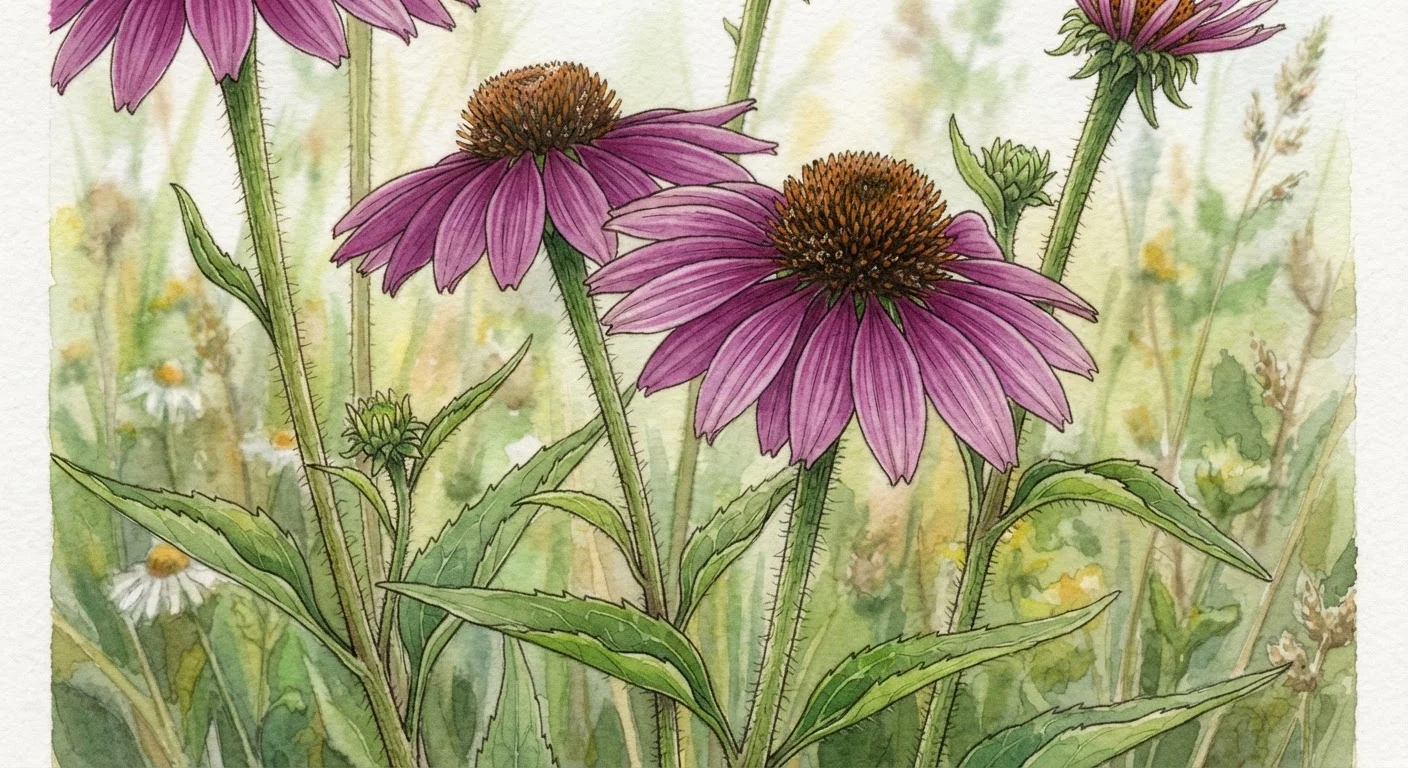
Echinacea is a genus of flowering plants native to North America, with three species — Echinacea purpurea, E. angustifolia, and E. pallida — most commonly used medicinally. Indigenous peoples of the Great Plains used echinacea preparations for a range of ailments, and it was later incorporated into European herbal traditions in the late 19th century.
Today, it is one of the most widely sold herbal supplements in the United States, most often marketed for immune support and cold prevention. Products appear as teas, tinctures, capsules, and extracts — a variety that makes direct comparisons between studies genuinely difficult.
Species and Preparation Matter Significantly
Not all echinacea products are interchangeable. Research findings for E. purpurea aerial parts, for example, may not apply to E. angustifolia root extracts. When reviewing evidence or considering use, the specific species and plant part are critical variables. Standardized extracts used in clinical trials may differ substantially from many over-the-counter formulations.
The Genuine Benefits: What Research Supports
The most consistent finding across clinical trials is that echinacea preparations may modestly reduce the duration and severity of upper respiratory tract infections, particularly the common cold. A widely cited Cochrane review analyzing over 24 randomized controlled trials found that some echinacea preparations reduced the incidence of colds and shortened their duration, though results varied substantially across studies.
May modestly shorten common cold duration
Multiple clinical trials and meta-analyses suggest some echinacea preparations can reduce cold duration by roughly half a day to a day, a meaningful benefit for symptomatic relief.
Well-established traditional use history
Centuries of use by Indigenous North American peoples and later adoption in European herbal medicine provide a long safety and application record alongside emerging clinical data.
Generally safe for short-term use in healthy adults
Most systematic reviews conclude that echinacea carries a low risk of serious adverse effects when used for short periods by people without contraindicated conditions.
Contains biologically active immune-relevant compounds
Alkylamides and polysaccharides in echinacea have shown immune-cell modulating activity in laboratory studies, providing a plausible mechanistic basis for its effects.
Mechanistically, echinacea contains bioactive compounds — including alkylamides, polysaccharides, and glycoproteins — that appear to interact with immune cell activity in laboratory settings. However, laboratory findings do not always translate directly into meaningful clinical outcomes in humans. It is also worth noting that its traditional use aligns with short-term, acute applications rather than continuous supplementation.
Limitations and Disadvantages to Weigh
Despite its popularity, echinacea's evidence base has meaningful gaps. Study heterogeneity — differences in plant species, preparation, dosage, and duration — makes it hard to draw firm, universal conclusions. Several well-designed trials have found no significant benefit over placebo.
Highly variable product quality and composition
Echinacea products differ significantly by species, plant part used, and extraction method, making it difficult to predict whether a given product will replicate study results.
Mixed and inconsistent clinical trial results
While some trials show benefit, others — including well-designed placebo-controlled studies — find no significant difference, leaving the overall evidence base genuinely uncertain.
Not appropriate for all populations
People with autoimmune disorders, allergies to Asteraceae plants, or those taking immunosuppressants face real contraindication risks that limit broad recommendations.
Not a replacement for evidence-based prevention
Echinacea should be considered a complementary option at best; it does not substitute for vaccination, proper hand hygiene, or other proven preventive measures.
Long-term safety data is limited
Most research focuses on short-term use of up to eight weeks; there is insufficient evidence to characterize the safety profile of continuous or prolonged supplementation.
It is also important to distinguish between immune modulation and genuine immune boosting — a term that has little precise scientific meaning. As explored in our look at overstated immune-food claims, marketing language often runs ahead of the actual science on immune support.
Population-Specific Cautions
Echinacea is generally regarded as safe for short-term use in healthy adults, but certain groups should exercise particular caution and consult a healthcare provider before use:
- People with autoimmune conditions (such as lupus, rheumatoid arthritis, or multiple sclerosis): Echinacea's immune-modulating activity may be inappropriate in these contexts.
- Individuals on immunosuppressant medications: Potential interactions could affect medication efficacy.
- People with plant allergies: Echinacea belongs to the daisy family (Asteraceae); those allergic to related plants may experience reactions.
- Pregnant or breastfeeding individuals and children: Evidence in these groups is limited; professional guidance is strongly recommended before use.
24+
Randomized trials reviewed in Cochrane analysis
A Cochrane systematic review on echinacea for preventing and treating the common cold examined more than 24 randomized controlled trials, highlighting the breadth — and variability — of available evidence.
~10%
Estimated reduction in cold incidence
Some analyses suggest echinacea preparations may reduce the likelihood of catching a cold by approximately 10–15%, though confidence intervals across studies are wide.
This article is for informational purposes only and does not constitute medical advice. Always consult a qualified healthcare professional before starting any supplement, especially if you have an existing health condition or take medications.
The content on this site is for informational purposes only and is not a substitute for professional advice. Always consult a qualified professional for guidance specific to your situation.