

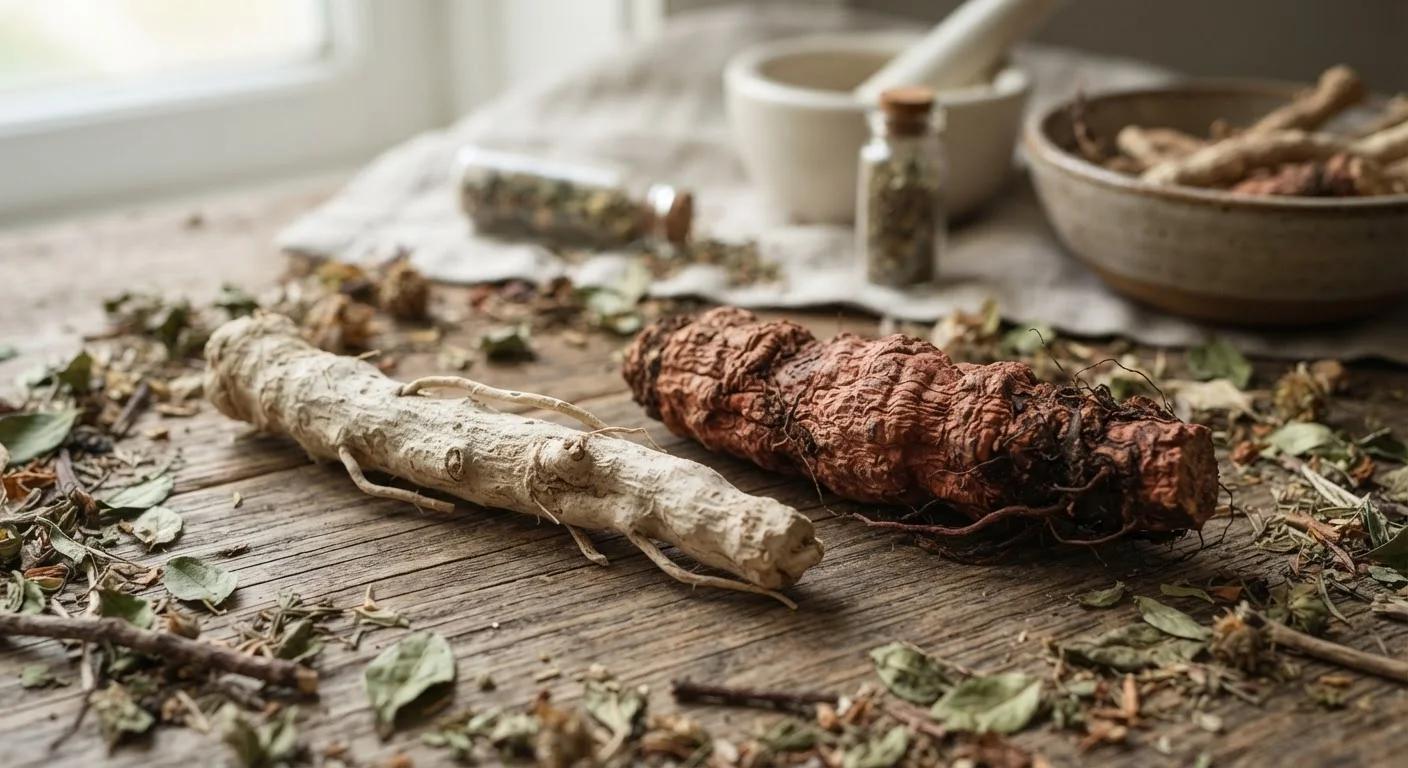
Option A
Ashwagandha (Withania somnifera)
The calming, restorative adaptogen rooted in Ayurvedic tradition.
Best for: People experiencing chronic stress, anxiety-related fatigue, or poor sleep who need a down-regulating, calming effect.
Option B
Rhodiola rosea
The energising, performance-oriented adaptogen from cold-climate herbal medicine.
Best for: People facing mental fatigue, burnout, or performance demands who need alertness and cognitive resilience without sedation.
What Makes an Adaptogen — and How These Two Differ
The term adaptogen describes a class of herbs thought to help the body resist physical and psychological stress without causing significant harm or disrupting normal function. Ashwagandha and rhodiola are among the most studied herbs in this category, yet they produce notably different physiological effects.
Ashwagandha (Withania somnifera) is a cornerstone of Ayurvedic medicine, used for centuries in South Asia as a rasayana — a restorative tonic. Its primary bioactive compounds, withanolides, appear to modulate the hypothalamic-pituitary-adrenal (HPA) axis, which governs the body's cortisol response. Research has also suggested ashwagandha may interact with GABA receptors, contributing to its calming, anxiolytic character.
Rhodiola rosea, by contrast, comes from traditional medicine systems in Scandinavia and Russia, where it was historically used to combat fatigue in harsh climates. Its key actives — rosavins and salidroside — are believed to influence serotonin, dopamine, and norepinephrine signalling, producing a more activating, anti-fatigue effect. The result is two herbs that both earn the adaptogen label but sit at opposite ends of the arousal spectrum.
| Criterion | Ashwagandha | Rhodiola rosea |
|---|---|---|
| Primary effect | Calming, cortisol-lowering | Energising, anti-fatigue |
| Traditional origin | Ayurvedic medicine (South Asia) | Scandinavian & Russian folk medicine |
| Key bioactive compounds | Withanolides | Rosavins, salidroside |
| Primary mechanism | HPA axis modulation, GABA activity | Serotonin, dopamine, norepinephrine modulation |
| Best-studied benefit | Stress & sleep quality | Mental fatigue & cognitive endurance |
| Arousal profile | Sedating / grounding | Mildly stimulating |
| Key caution | Liver health, thyroid conditions | Agitation, antidepressant interactions |
| Pregnancy suitability | Generally not recommended | Consult a professional |
The Evidence Base: What Research Actually Shows
Both adaptogens have been the subject of randomised controlled trials, though the research remains preliminary and limited in scale. It is important to interpret findings cautiously.
For ashwagandha, a frequently cited area of investigation involves cortisol levels and self-reported stress. A 2019 study published in Medicine found that participants taking ashwagandha root extract reported significant reductions in perceived stress and serum cortisol compared to placebo over eight weeks. Separate studies have also explored its potential effects on sleep quality, with some suggesting improvements in sleep onset latency and efficiency.
Rhodiola research has focused more on mental fatigue and cognitive performance. A European Medicines Agency review has acknowledged rhodiola's traditional use for reducing tiredness and supporting concentration. Several trials involving physicians on night shifts and students during exam periods reported reduced burnout scores and improved attention with rhodiola supplementation, though study sizes were small.
27%
Reduction in serum cortisol
A 2019 placebo-controlled study in Medicine reported a roughly 27% reduction in morning cortisol levels among ashwagandha recipients versus placebo over 8 weeks.
~400–600mg
Common ashwagandha dose studied
Most clinical trials have used root extract doses in this range daily, though optimal dosing has not been conclusively established.
20+
Controlled trials on rhodiola fatigue
The European Medicines Agency's assessment of rhodiola referenced over 20 clinical studies examining its effects on stress-related fatigue and cognitive function.
Neither herb has been rigorously tested at the scale required to make definitive clinical recommendations. Effects may vary considerably between individuals, and neither should be considered a replacement for evidence-based treatment of anxiety, depression, or chronic fatigue disorders.
Safety Considerations and Who Should Exercise Caution
Both herbs are generally described as well-tolerated in healthy adults at studied doses, but neither is without caveats — and supplement quality and dosing vary widely between products.
Ashwagandha has been associated with rare but documented cases of liver injury in case reports; those with liver conditions should exercise particular caution. It may also influence thyroid hormone levels, making it relevant for anyone with thyroid disorders. Because of its potential hormonal effects, it is generally not recommended during pregnancy.
Rhodiola is generally stimulating and may exacerbate agitation, insomnia, or irritability in sensitive individuals — particularly at higher intakes. It may interact with antidepressants, including MAO inhibitors and SSRIs, due to its monoaminergic activity.
Both herbs may interact with medications affecting the central nervous system, immune function, or blood sugar regulation. People with autoimmune conditions, those taking prescription medications, pregnant or breastfeeding individuals, and those with chronic health conditions should consult a qualified healthcare professional before use.
This article is for informational purposes only and does not constitute medical advice. Always seek guidance from a licensed healthcare provider before starting any herbal supplement.
The content on this site is for informational purposes only and is not a substitute for professional advice. Always consult a qualified professional for guidance specific to your situation.