

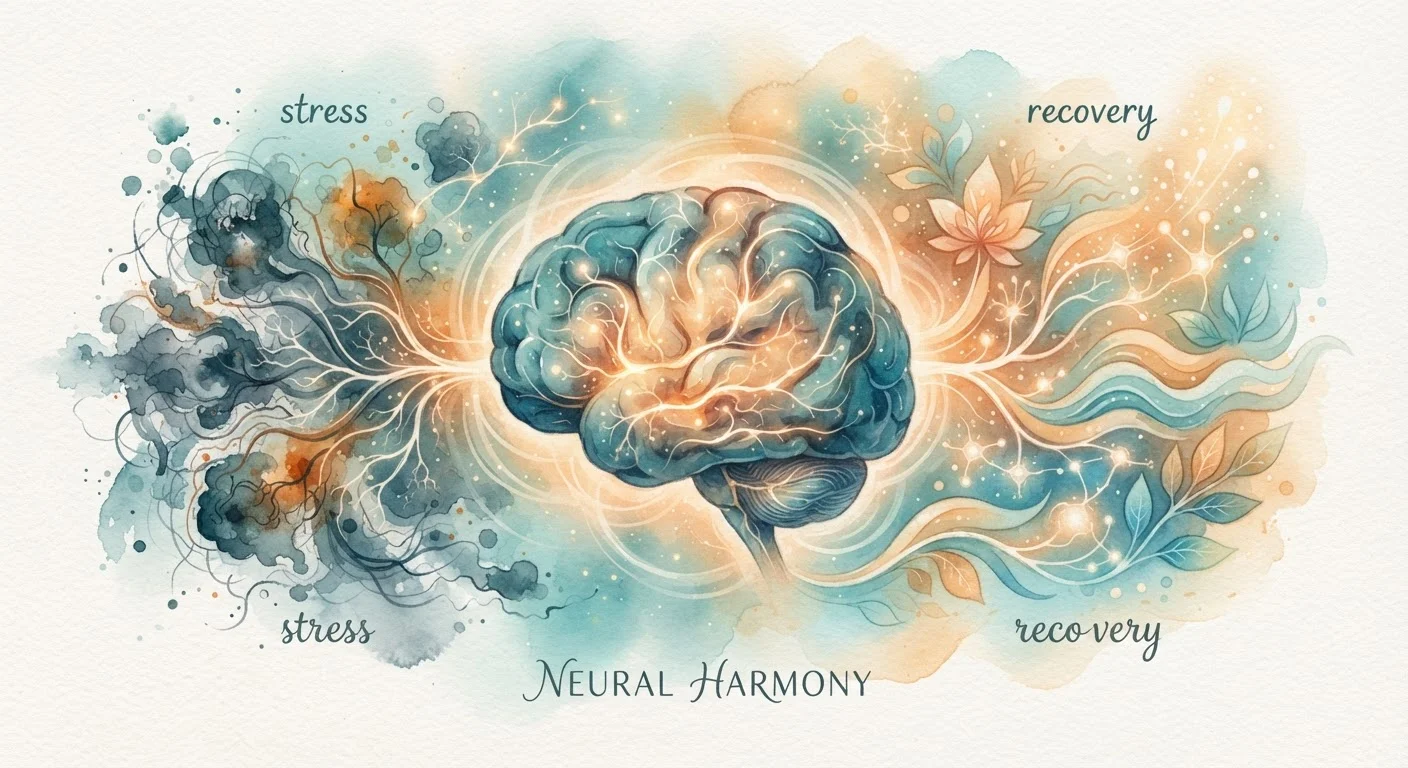
What Happens in the Brain During Adversity
When we encounter hardship — a loss, a failure, a traumatic event — the brain does not simply register it and move on. A cascade of neurochemical and structural events unfolds, beginning in the amygdala, the brain's threat-detection hub. Within milliseconds, the amygdala signals the hypothalamus to activate the sympathetic nervous system, flooding the body with cortisol and adrenaline.
This stress response is ancient and adaptive. In short bursts, cortisol sharpens attention and mobilizes energy. The challenge arises when stress is prolonged. Research published in peer-reviewed neuroscience journals has shown that chronic cortisol elevation is associated with structural changes in two critical regions: the hippocampus (involved in memory and context) and the prefrontal cortex (responsible for decision-making and emotional regulation). When these areas are compromised, bouncing back becomes harder — not because of weakness, but because of biology.
“Resilience is not about being unaffected by adversity — it is about the capacity of the nervous system to restore balance after it has been disrupted. That capacity can be cultivated.”
— Bessel van der Kolk, Psychiatrist and trauma researcher, author of widely cited work on trauma and the body
Neuroplasticity: The Brain's Built-In Recovery Mechanism
Neuroplasticity — the brain's lifelong ability to reorganize itself by forming new neural connections — is the cornerstone of resilience. Every time you navigate a difficult experience and recover, you are literally reshaping your brain. Stress-regulating pathways become more efficient, and the prefrontal cortex becomes better at moderating amygdala reactivity.
This is not merely motivational language. Studies using neuroimaging have documented measurable changes in brain structure and connectivity among people who practice evidence-based resilience strategies. Mindfulness meditation, for instance, has been associated with increased gray matter density in the prefrontal cortex and reduced amygdala reactivity in multiple peer-reviewed studies.
Start Small to Rewire Gradually
Neuroplasticity responds to consistency more than intensity. A five-minute daily mindfulness practice maintained for weeks produces more measurable neural change than an occasional hour-long session. Choose one small habit and anchor it to an existing routine — like mindful breathing after your morning coffee — to build momentum without overwhelm.
Crucially, neuroplasticity operates in both directions. Repeated exposure to unmanaged stress without recovery can entrench maladaptive patterns. This is why the quality of how we process adversity matters as much as the fact that we encounter it.
Habits That Actively Build Resilience Circuits
Understanding resilience as a brain-based skill reframes the role of everyday habits. The following lifestyle practices have credible research support for influencing the neural systems involved in stress recovery:
- Quality sleep: During deep sleep, the brain consolidates emotional memories and clears metabolic waste via the glymphatic system. Poor sleep impairs prefrontal cortex function the following day, making emotional regulation measurably harder.
- Physical movement: Aerobic exercise promotes the release of BDNF, a protein that supports the growth and maintenance of neurons, particularly in the hippocampus.
- Mindfulness practice: Even brief, consistent mindfulness sessions have been shown to reduce rumination and improve attentional control — both key elements of bouncing back from setbacks.
- Social connection: Meaningful relationships activate oxytocin pathways that buffer cortisol responses, effectively softening the biological impact of stress.
~30%
Reduced amygdala reactivity after mindfulness training
Multiple neuroimaging studies have documented reduced amygdala activation in response to emotional stimuli following structured mindfulness-based programs.
1 in 3
Adults report chronic stress impacting daily function
According to the American Psychological Association's recurring Stress in America surveys, a significant proportion of U.S. adults describe stress as having a strong impact on their physical and mental health.
20–30 min
Daily aerobic exercise linked to mood improvement
Research published in exercise psychology literature consistently associates moderate aerobic activity of this duration with measurable reductions in depression and anxiety symptoms.
This article is for general informational and educational purposes only. It is not a substitute for professional medical or mental health advice, diagnosis, or treatment. Please consult a qualified healthcare provider with any questions you may have about your mental health.
Frequently Asked Questions
Research strongly supports that resilience is largely learned and shaped by experience, not fixed at birth. While genetics play a modest role in temperament, neuroplasticity means the brain continuously rewires itself based on habits and environment. Practices like mindfulness, therapy, and physical activity can meaningfully increase resilience over time.
During adversity, the amygdala triggers a stress response that releases cortisol and adrenaline, preparing the body to react. The prefrontal cortex attempts to moderate this response with rational thinking. Over time, repeated recovery from setbacks strengthens these regulatory circuits, making future responses more measured.
Prolonged, unmanaged stress is associated with reduced volume in the hippocampus and impaired prefrontal cortex function, according to published neuroscience research. However, these changes are often reversible with appropriate intervention, lifestyle changes, and professional support. Early action is important for long-term brain health.
Evidence-informed habits include consistent quality sleep, regular physical movement, mindfulness or meditation practice, and maintaining meaningful social connections. Each of these has been shown to positively influence stress-regulation systems in the brain. No single habit works in isolation — a combined approach tends to be most effective.
If distress significantly interferes with daily functioning, relationships, or physical health for an extended period, consulting a licensed mental health professional is strongly recommended. Self-help strategies are valuable complements but are not substitutes for clinical care when symptoms are severe or persistent.
The content on this site is for informational purposes only and is not a substitute for professional advice. Always consult a qualified professional for guidance specific to your situation.