

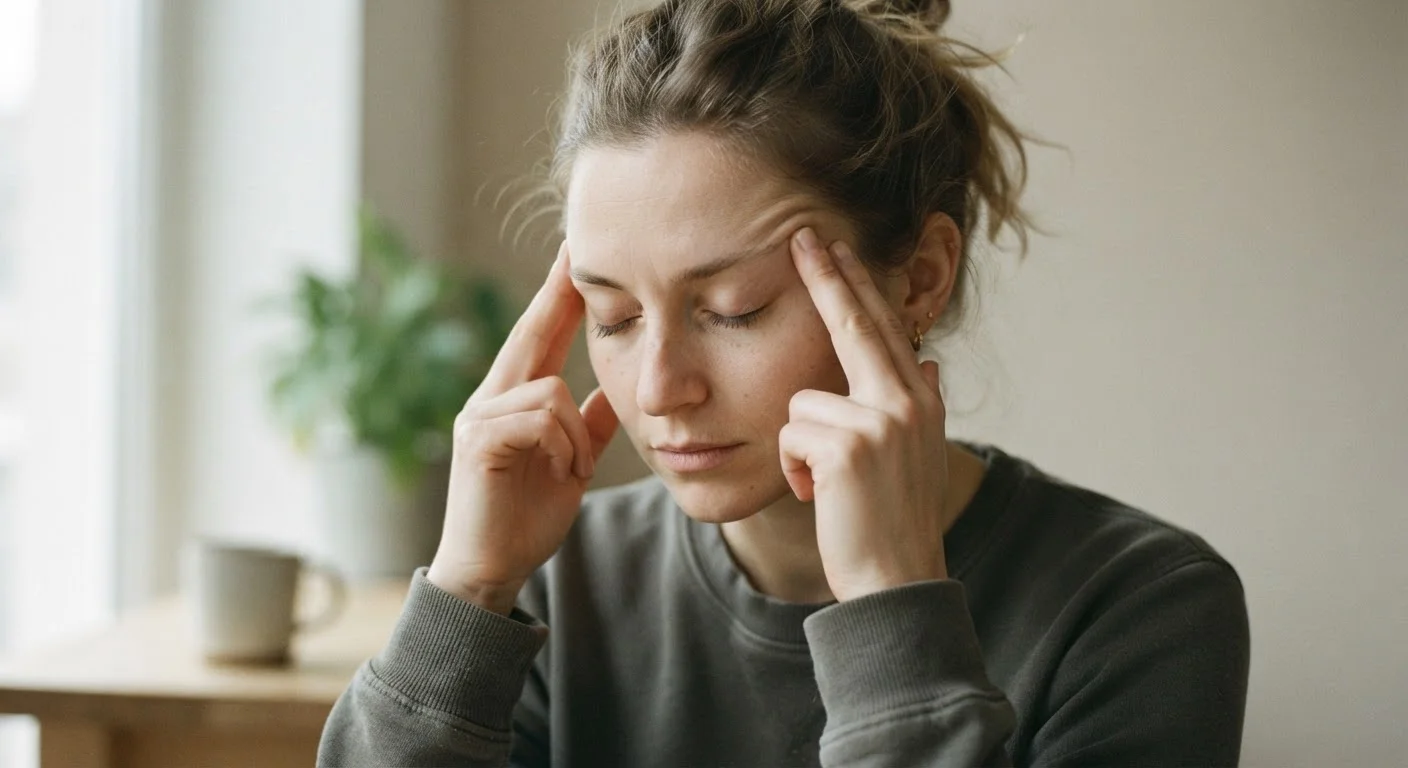
Option A
Tension Headache
The most common headache type, often linked to stress and muscle tension.
Best for: Understanding dull, band-like head pressure that typically doesn't worsen with activity.
Option B
Migraine
A neurological condition producing intense, often debilitating episodes.
Best for: Recognizing throbbing, one-sided pain accompanied by sensory sensitivity or nausea.
How These Two Headache Types Differ at Their Core
Headache is one of the most universal human experiences, yet not all headaches operate the same way. Tension headaches and migraines are the two most common types — but they differ fundamentally in their underlying mechanisms, symptom profiles, and how they respond to management approaches.
Tension headaches are thought to arise primarily from muscle tension and heightened pain sensitivity in the head, neck, and shoulder region. The International Headache Society describes them as producing a pressing or tightening quality — often described as a vice or tight band around the head — that is typically mild to moderate in intensity and affects both sides.
Migraines, by contrast, are a neurological disorder. Research points to complex changes in brain signaling, including activation of the trigeminal nerve pathway and the release of inflammatory neuropeptides. This is why migraines produce a far broader constellation of symptoms beyond head pain alone. Understanding this distinction is foundational, and it mirrors the broader conversation around pain types explored in our guide to acute vs. chronic pain.
| Criterion | Tension Headache | Migraine |
|---|---|---|
| Pain quality | Pressing, tightening, band-like | Throbbing, pulsating |
| Location | Both sides of head | Often one side |
| Intensity | Mild to moderate | Moderate to severe |
| Nausea/vomiting | Absent | Common |
| Light/sound sensitivity | Mild or absent | Pronounced |
| Effect of physical activity | Not worsened | Typically worsens pain |
| Aura possible | No | Yes (in ~25–30% of cases) |
| Typical duration | 30 minutes to several hours | 4 to 72 hours |
| Underlying mechanism | Muscle tension, pain sensitization | Neurological, trigeminal activation |
Recognizing the Symptoms: A Closer Look
The symptom profile of each headache type provides the clearest diagnostic signal — and knowing what to look for can be genuinely clarifying.
Tension Headache Symptoms
- Dull, aching, steady head pain
- Sensation of tightness or pressure across the forehead or sides and back of the head
- Tenderness in the scalp, neck, and shoulder muscles
- Pain is usually bilateral (affecting both sides)
- Activity typically does not worsen the pain
- No nausea, vomiting, or significant light/sound sensitivity
Migraine Symptoms
- Moderate to severe pulsating or throbbing pain, often one-sided
- Nausea or vomiting
- Heightened sensitivity to light (photophobia), sound (phonophobia), or smell
- Pain that worsens with routine physical activity
- Episodes lasting 4 to 72 hours without treatment
- Aura in some individuals — temporary visual, sensory, or speech disturbances preceding or accompanying pain
One useful clinical rule of thumb: if your headache makes you want to retreat to a dark, quiet room and lie still, that strongly suggests migraine rather than tension-type.
~38%
Global population affected by tension headaches
The Global Burden of Disease study identifies tension-type headache as the most prevalent headache disorder worldwide.
~15%
Adults affected by migraines globally
The World Health Organization estimates that roughly 1 in 7 adults experiences migraines, making it one of the leading causes of disability.
3:1
Female-to-male ratio for migraine
Migraines disproportionately affect women, a pattern largely attributed to hormonal influences, according to epidemiological research.
Common Triggers and Contributing Factors
While some triggers overlap, the two headache types have meaningfully distinct risk profiles.
Tension headache triggers are closely tied to lifestyle and musculoskeletal factors. These commonly include emotional stress, poor posture (particularly from prolonged screen use), disrupted sleep, eye strain, jaw clenching or grinding (bruxism), dehydration, and skipped meals. The episodic form is most prevalent, though some individuals experience chronic tension headaches, defined as occurring 15 or more days per month.
Migraine triggers are more varied and highly individual. Hormonal fluctuations, particularly around menstruation, are a well-documented factor for many women. Other established triggers include changes in sleep patterns, certain foods and beverages (such as aged cheeses, alcohol, or foods containing MSG), bright or flickering lights, strong odors, barometric pressure changes, and high stress. A headache diary — recording timing, duration, associated symptoms, and potential triggers — is a valuable tool that clinicians often recommend to help identify personal patterns.
When to Seek Immediate Medical Attention
Certain headache features require urgent evaluation and should not be self-managed. These include a sudden, severe 'thunderclap' headache (the worst of your life), headache following a head injury, headache with fever, stiff neck, confusion, or vision changes, and new headaches in adults over 50. These presentations may indicate conditions unrelated to tension or migraine that require prompt assessment by a healthcare professional.
General Approaches to Relief and Prevention
Effective management begins with an accurate understanding of which headache type you're dealing with — which is why a healthcare provider evaluation is the appropriate starting point for anyone experiencing frequent or debilitating headaches.
Tension Headache
Non-pharmacological strategies are widely used. Regular physical activity, stress-management techniques such as mindfulness or progressive muscle relaxation, maintaining consistent sleep schedules, staying hydrated, and ergonomic adjustments to workstations are all commonly discussed supportive approaches. Biofeedback, which teaches conscious control of physiological responses like muscle tension, has evidence supporting its use for tension headache management.
Migraine
Migraine care is typically divided into acute treatment (addressing pain once an episode starts) and preventive strategies (reducing frequency over time). A clinician can advise on both. From a lifestyle perspective, consistency is central: keeping sleep, meal timing, and hydration regular helps minimize fluctuations that can precipitate attacks. Relaxation techniques, cognitive behavioral therapy, and aerobic exercise have shown promise as adjunct preventive strategies in research settings. Some individuals explore complementary approaches such as magnesium-rich diets, riboflavin (vitamin B2), or acupuncture — each with varying levels of evidence — but any supplementation should be discussed with a healthcare provider before starting.
This article is for general informational and educational purposes only and does not constitute medical advice. If you experience frequent, severe, or sudden-onset headaches, or any headache that feels different from your usual pattern, please consult a qualified healthcare professional.
The content on this site is for informational purposes only and is not a substitute for professional advice. Always consult a qualified professional for guidance specific to your situation.