

Our Verdict
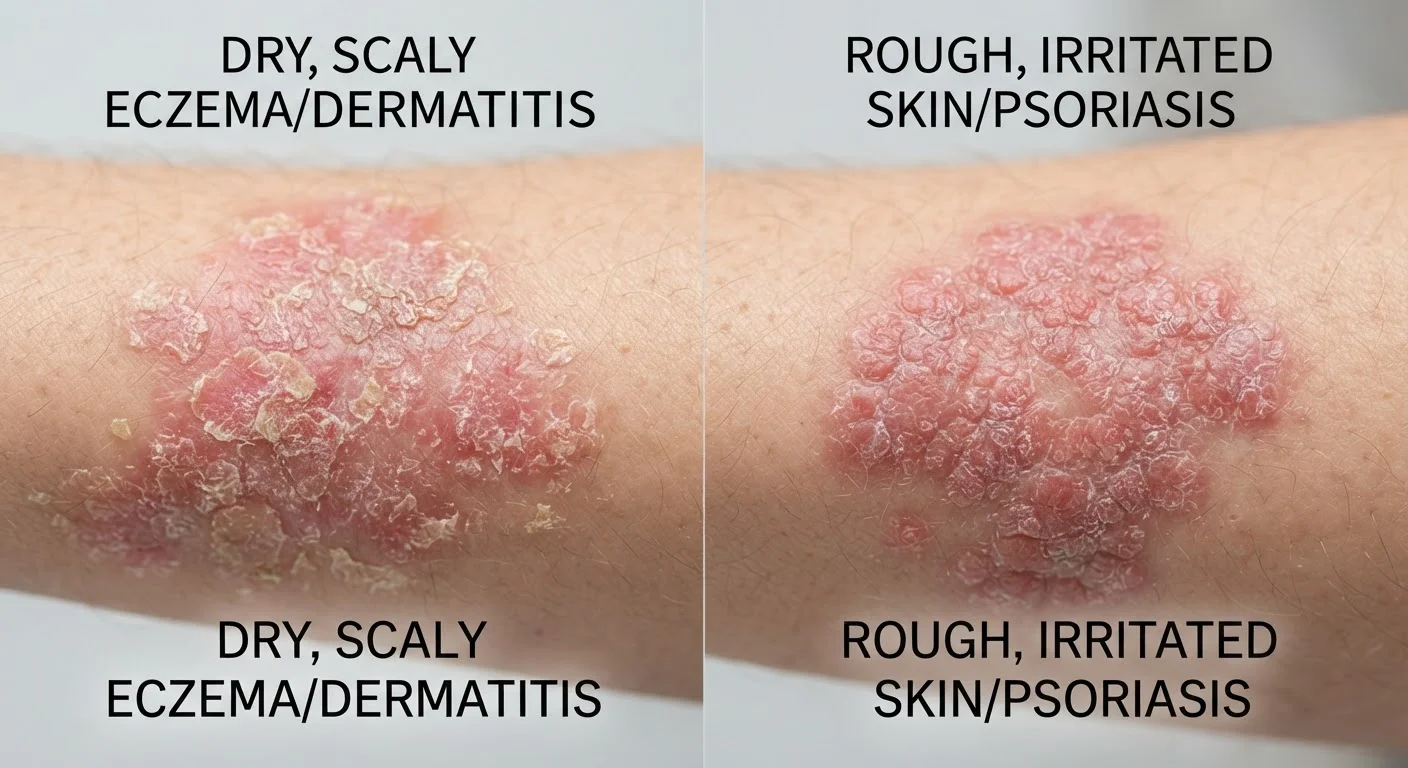
Eczema and psoriasis are both chronic inflammatory skin conditions, but they stem from fundamentally different immune mechanisms and require distinct management approaches. Eczema centers on a compromised skin barrier and hypersensitivity, while psoriasis is driven by an accelerated skin cell cycle triggered by autoimmune activity. Getting the right diagnosis is the critical first step before pursuing any management strategy.
| Best for | Recommended |
|---|---|
| Those whose flares are triggered by allergens, irritants, or stress and who have had symptoms since childhood | Eczema-focused evaluation and management |
| Those with thick, silvery-scaled plaques on elbows, knees, or scalp, especially with a family history | Psoriasis-focused evaluation and management |
| Anyone uncertain about their skin condition or managing flares without improvement | Consultation with a board-certified dermatologist |
What Makes Each Condition Unique
Despite their visual similarities, eczema (atopic dermatitis) and psoriasis arise from distinct biological processes. Understanding those differences helps explain why the same moisturizer or dietary change may soothe one condition while having little effect on the other.
Eczema is rooted in a dysfunctional skin barrier. In people with eczema, the outermost layer of skin fails to retain adequate moisture and cannot effectively block environmental irritants or allergens. This leads to an exaggerated immune response — specifically involving T-helper type 2 (Th2) cells — that produces inflammation, itching, and redness. The cycle of scratching and inflammation further damages the skin barrier, perpetuating flares.
Psoriasis, by contrast, is classified as an autoimmune condition. Immune cells — particularly T-helper type 17 (Th17) cells — mistakenly signal skin cells to multiply far faster than normal. Healthy skin renews itself over approximately 28 days; psoriatic skin can complete that cycle in as few as 3 to 5 days. The rapid buildup of cells creates the thick, silvery-white plaques that are characteristic of the condition.
| Feature | Eczema | Psoriasis | |
|---|---|---|---|
| Primary mechanism | Skin barrier dysfunction + Th2 immune response | Autoimmune Th17-driven accelerated skin cell growth | |
| Typical onset age | Infancy or early childhood | Ages 15–35 or after age 50 | |
| Appearance | Dry, red, weeping or crusted patches | Raised, well-defined plaques with silver scales | |
| Common locations | Inner elbows, knees, neck, face | Elbows, knees, scalp, lower back | |
| Key triggers | Allergens, irritants, stress, dry air | Infections, stress, trauma, smoking, alcohol | |
| Associated conditions | Asthma, allergic rhinitis, food allergies | Psoriatic arthritis, cardiovascular risk |
Triggers, Symptoms, and Where They Appear
Both conditions involve flares — periods of worsened symptoms — but what triggers them differs considerably.
Eczema triggers frequently include contact with irritants (soaps, detergents, synthetic fabrics), airborne allergens (pollen, pet dander, dust mites), food sensitivities, sweat, cold or dry air, and emotional stress. Symptoms typically involve intense itching, dry or weeping skin, and redness. In infants and young children, eczema tends to appear on the cheeks and scalp; in older children and adults, it commonly affects the inner elbows, behind the knees, and the neck.
Psoriasis triggers lean more systemic. Infections (particularly streptococcal throat infections), physical trauma to the skin, certain medications, alcohol, smoking, and psychological stress are well-documented precipitants. The resulting plaques — raised, well-defined, and covered by silvery scales — most often appear on the elbows, knees, lower back, and scalp. Unlike eczema, psoriasis can also affect the nails and, in some individuals, the joints (a condition called psoriatic arthritis).
Keep a Symptom and Trigger Diary
Tracking when flares occur, what you ate, environmental conditions, and stress levels can reveal patterns that are difficult to notice otherwise. Share this diary with your dermatologist — it provides valuable context for refining your management plan and confirming your diagnosis. Even two to four weeks of consistent logging can yield useful insights.
Natural and Lifestyle-Based Management Strategies
While neither condition has a definitive cure, evidence-informed lifestyle strategies can help reduce flare frequency and severity for many people. These approaches work best alongside — never instead of — a physician-guided treatment plan.
For Eczema
- Consistent moisturizing: Applying fragrance-free emollients immediately after bathing helps reinforce the skin barrier. Thicker ointments tend to be more effective than lotions.
- Identifying and avoiding triggers: Keeping a symptom diary can help pinpoint specific allergens or irritants contributing to flares.
- Probiotic-rich foods: Some research suggests gut microbiome diversity may influence atopic conditions, though evidence remains preliminary. Fermented foods like yogurt and kefir are generally well-tolerated.
- Stress reduction practices: Mindfulness-based stress reduction (MBSR) and gentle yoga have shown some benefit in managing stress-triggered flares in small studies.
For Psoriasis
- Anti-inflammatory dietary patterns: Mediterranean-style eating — emphasizing vegetables, legumes, fish, and olive oil — is associated with lower systemic inflammation in some research.
- Sun exposure (with caution): Moderate, controlled natural sunlight exposure may ease psoriatic plaques for some individuals, reflecting the basis for UV-based medical therapies. Sun safety practices remain essential.
- Smoking cessation and alcohol moderation: Both smoking and heavy alcohol use are associated with increased psoriasis severity according to published research.
- Weight management: Excess body weight is linked to more severe psoriasis; even modest reductions in BMI have been associated with symptom improvement in some clinical observations.
This article is for informational purposes only and does not constitute medical advice. Always consult a qualified healthcare professional for diagnosis, treatment decisions, or questions about your specific health situation.
The content on this site is for informational purposes only and is not a substitute for professional advice. Always consult a qualified professional for guidance specific to your situation.