

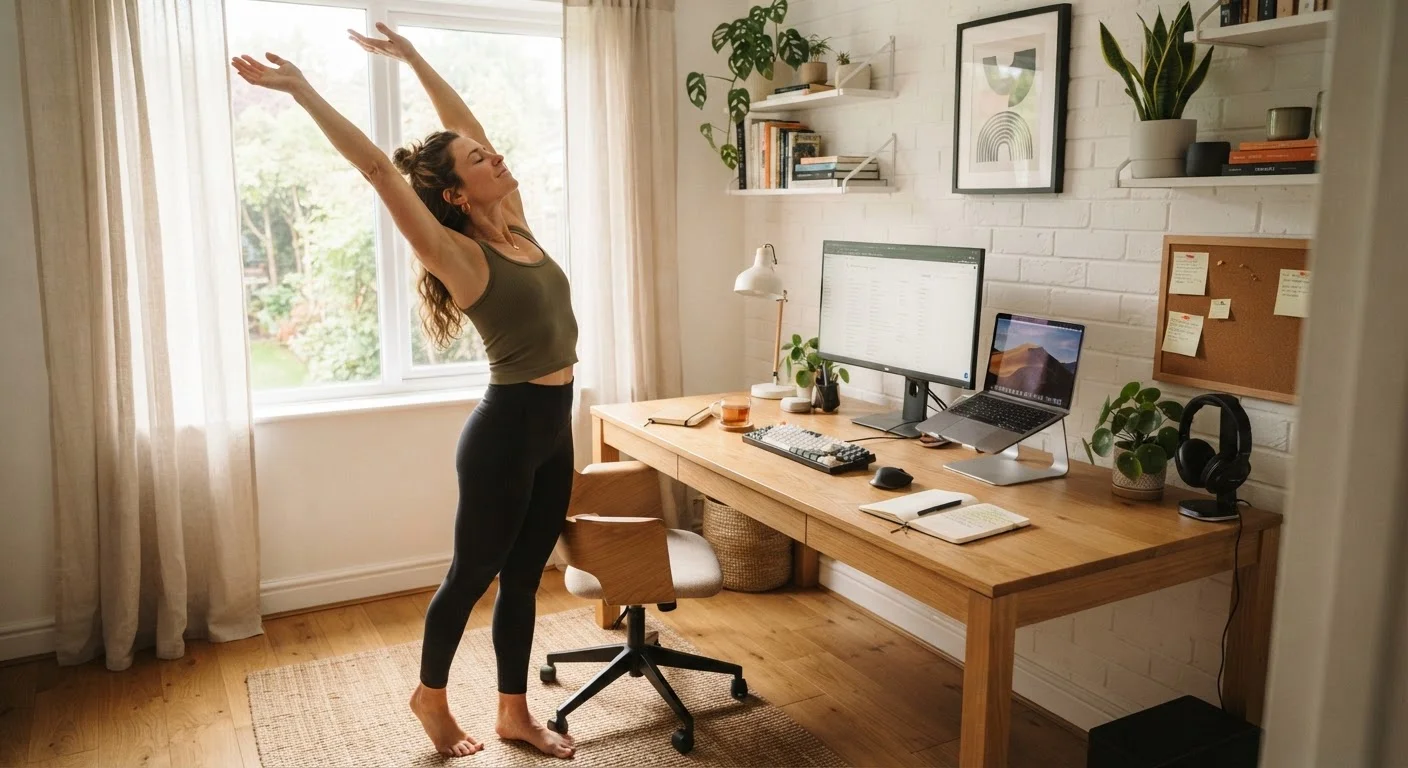
Why Desk Workers Need More Than a Lunch-Break Walk
A single 30-minute walk at midday is a worthwhile habit, but it does not fully offset the physiological effects of sitting uninterrupted for the remaining seven or eight hours of a workday. Research in occupational health consistently points to frequent, distributed movement — rather than one consolidated bout of exercise — as the more effective strategy for countering the effects of prolonged sedentary work.
The goal of this guide is not to add a workout to your calendar. It is to help you identify where movement can slot naturally into what you are already doing — leveraging existing routines, environmental design, and behavioral cues to raise your daily step count with minimal friction.
If your job involves a commute, there may be additional opportunities worth examining. Our guide on building movement into your daily commute covers practical options for both transit riders and remote workers.
What you will need
What You Will Need
The strategies here require minimal equipment. The most important tools are environmental tweaks and behavioral anchors — both free and immediately applicable.
Reusable water bottle
Placed away from your desk to create a mandatory short walk each time you refill or retrieve it.
Interval timer or phone alarm
Set recurring reminders every 45–60 minutes to prompt standing or a short movement break.
Comfortable, supportive footwear
Wearing appropriate shoes during the day lowers the barrier to spontaneous walking or standing.
Wearable step tracker or phone health app
Provides passive, real-time feedback on daily step count without requiring dedicated workout logging.
Not a Substitute for Medical Advice
The strategies in this article are general movement suggestions for healthy adults, not medical guidance. If you have a cardiovascular condition, musculoskeletal injury, or other health concern that may be affected by increased physical activity, consult a qualified healthcare professional before making changes to your routine.
Step-by-Step: Weaving Movement Into Your Workday
Audit where sitting dominates your day
Before changing anything, spend one workday noting when you sit without interruption for longer than 45 minutes. Calendar blocks, back-to-back video calls, and deep-focus work sessions are common culprits. This awareness tells you exactly where movement opportunities exist — rather than guessing.
Relocate objects to engineer short walks
Move your water bottle, charger, or printer to a spot that requires leaving your desk to use it. These friction-based environment changes generate steps automatically, without relying on motivation. Even three to four round trips per day add meaningful accumulated movement over a week.
Attach movement cues to existing triggers
Pair a short standing or walking burst with something that already happens — a meeting notification, a Slack message ping, or finishing a document. Behavioral research consistently supports attaching new habits to established cues rather than relying on separate reminders. For example: stand up every time a video call ends before moving to the next task.
Take walking meetings or phone calls on foot
Any call that does not require screen-sharing is a candidate for a walking meeting. Headphones or speakerphone free your hands and allow you to circle your home, walk the corridor, or step outside. Even a single 20-minute walking call can add several hundred steps without affecting call quality.
Use the 45-minute standing rule
Set a recurring timer for 45–60 minutes. When it fires, stand for at least two minutes before continuing work. You do not need to walk — simply breaking the seated posture changes blood flow dynamics. Over time, you can extend these standing intervals or combine them with a short walk around your space.
Build movement into transition moments
The minutes between tasks — switching from email to a report, heading to lunch, returning from a break — are low-resistance windows for extra steps. Take the long route to the kitchen, do a brief standing stretch at your desk, or walk an extra loop before sitting back down. Transitions are underused movement opportunities that require no additional time.
Use a Simple Step-Tracking App
Even a basic pedometer or phone health app gives you concrete feedback on daily movement. Seeing your step count gradually rise — without a formal workout — is a powerful motivator for sustaining these habits. Most smartphones track steps passively with no setup required.
Troubleshooting Common Obstacles
"I forget to stand up until hours have passed."
This is the most common barrier. A phone alarm or computer-based interval timer solves it more reliably than intention alone. Set the alarm to a label like "Move for 2 min" so the action is explicit, not vague.
"My work requires deep, uninterrupted focus."
Deep work sessions of 90 minutes or longer are legitimate — and protecting them is reasonable. Schedule these blocks deliberately, then build movement into the transitions surrounding them rather than interrupting them. A five-minute walk before and after a 90-minute focus block still generates meaningful activity.
"I feel self-conscious pacing in an open office."
Walking calls, stairwell loops, and outdoor circuits are all effective alternatives that feel less conspicuous. Building a movement practice around a sedentary job requires adapting to your specific environment — there is no single-size approach.
Avoid Overcomplicating Your System
Adding too many new habits at once often leads to abandoning all of them. Pick one or two strategies from this guide, practice them consistently for one to two weeks, and only then layer in additional changes.
This article is for general informational and educational purposes only and does not constitute medical advice. Always consult a qualified healthcare professional regarding any health concerns or before making significant changes to your physical activity habits.
The content on this site is for informational purposes only and is not a substitute for professional advice. Always consult a qualified professional for guidance specific to your situation.